
86 search results for “niet pollution” in the Student website
-
 Paul Vriend
p.vriend@cml.leidenuniv.nl | 071 5272727
-
 Anagnostis Theodoropoulos
a.theodoropoulos@biology.leidenuniv.nl | 071 5274882
-
How light and noise pollution disrupt aquatic life
Fish populations in lakes and rivers have declined in recent decades. This is probably due to light and noise pollution. The Horizon Europe grant enables ecologist Hans Slabbekoorn to investigate this and improve the situation for migrating fish. In order to do so, a seven-metre-long swimming tunnel…
-
 Berent Baris
b.t.baris@cml.leidenuniv.nl | 071 5272727
-
 Christina Galafton
c.galafton@cml.leidenuniv.nl | 071 5272727
-
How polluting buildings and machinery make rich countries ever richer
Rich countries are getting richer because of environmentally polluting (construction) investments from the past, largely at the expense of poor countries. This was shown by long-term economic and environmental data. 'The gap between poor and rich countries is widening.' Scientists from the Leiden Institute…
-
How polluting are the clothes in your closet?
Cotton is the most widely used natural fibre for clothes. But how polluting are our jeans and shirts actually? Environmental scientist Laura Scherer coordinated an international research project on the impacts of cotton. ‘The purchases of consumers in Europe can contribute to water scarcity in China…
-
 Dani Crowley
d.crowley@biology.leidenuniv.nl | 071 5274759
-
journalist to ecologist: PhD candidate researching light and noise pollution
Ecologist Sebastiaan Grosscurt became a successful wildlife journalist after graduating. But he decided to focus on science instead. He started his PhD research this year on the cumulative effect of light and noise pollution on animal behaviour.
-
Sustainability Challenge: students trace plastic pellet pollution in the Port of Rotterdam
In the Port of Rotterdam, tiny industrial pellets leak into the environment, causing a form of pollution that’s hard to trace but highly persistent. Three students of the LDE Sustainability Honours Programme took on the challenge to identify sources of this pollution.
-
Ecology PhD student wins Dutch award for investigative journalism
PhD student and research journalist Sebastiaan Grosscurt won a Tegel in May. In the data category, Grosscurt and his colleagues won the prestigious Dutch journalism award. 'For me, ecological research and journalism are two ways of achieving the same thing.'
-
 Jatmiko Wahyudi
j.w.wahyudi@cml.leidenuniv.nl | 071 5272727
-
New technology could make hard-to-recycle plastics recyclable
Cookware handles, electrical plugs, brake pads. Unlike other plastics, these ‘thermosets’ cannot simply be melted down and reshaped, making them difficult to recycle. Chemist Roxanne Kieltyka and her team are now exploring a way to make these materials recyclable, potentially transforming the way we…
-
'One in five bacteria we tested were capable of breaking down plastic'
Leiden PhD candidate Jo-Anne Verschoor discovered that nearly twenty percent of the bacterial strains she studied could degrade plastic, though they needed some encouragement to do so. ‘Bacteria are just like people,’ says Verschoor. Her research was published in the journal Communications Biology,…
-
Vergroot je zelfvertrouwen, werken aan je zelfbeeld
Study support
-
The lifecycle of a cigarette filter
The university is launching a campaign to focus extra attention on our smoke-free university locations. The University is using aptly named cigarette barrels to try to show clearly just how many cigarette filters are being saved from the environment. How harmful are these cigarette filters to the e…
-
From Steno to Snickers: the Anthropocene through the eyes of a coot
What looked like an ordinary coot’s nest turned out to be a five-star location with a remarkable backstory. Beneath a jetty on the Rokin in Amsterdam, biologist Auke-Florian Hiemstra discovered a true time capsule — complete with face masks from the COVID era and a Mars wrapper dating back to the 1994…
-
Plastic in cigarette filters: why smoking is bad for the environment too
We all know smoking is bad for our health. But we might not have known that the cigarette filters that litter our streets also impact the environment. Esther Kentin is a lecturer at Leiden Law School. She is raising awareness of the University’s cigarette butt problem.
-
Working together on the plastic problem: how to keep citizens engaged?
What motivates citizens to participate in a citizen science project on plastic pollution? And does that motivation change over time? Liselotte Rambonnet tried to answer these and other questions with her research on the Clean Rivers (‘Schone Rivieren’) project. Rambonnet is a PhD student at the Institute…
-
Kilotonnes of 'recycled' Dutch plastic waste end up in the sea
On paper it is recycled, but in reality enormous quantities of plastic waste from the Netherlands end up in Asian seas. Researchers from the Leiden Institute of Environmental Sciences charted the fate of plastic food packaging waste from the Netherlands. They published their results on July 8 in the…
-
Pim Arntzen
j.w.arntzen@biology.leidenuniv.nl | 071 5272727
-
Leiden biologists find nanoplastics in developing heart
Nanoplastics can accumulate in developing hearts, according to a study by biologist Meiru Wang from Leiden University. Her research on chicken embryos sheds new light on how these tiny plastic particles pose a threat to our health.
-
Canal Watch scoops communication prize
Canal Watch (De Grachtwacht), which has been cleaning canals since 2018, has received the Dutch Research Council (NWO) Communication Initiative Award.
-
Ammonia as a clean fuel: ‘Do not create a new nitrogen problem’
Ammonia has been feeding the world for decades as a fertiliser and is now rapidly emerging as a carbon free fuel for shipping and industry. But if we focus only on CO₂ emissions, we risk creating new nitrogen problems, warns nitrogen expert Jan Willem Erisman in the journal One Earth.
-
It is not easy to simplify your research
Defending your PhD research in front of nearly 300 elementary school students: that was the challenge faced by PhD candidates Jo-Anne Verschoor and Marinka de Willigen during the VUURVLIEGEN competition organised by the Centrum JongerenCommunicatie Chemie (C3). After an exciting competition, the children…
-
 Lisa Dörner
l.doerner@biology.leidenuniv.nl | 071 5275045
-
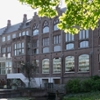 P.J. Veth
Nonnensteeg 1-3, Leiden
-
 Ronny Boogaart
Faculty of Humanities
r.j.u.boogaart@hum.leidenuniv.nl | 071 5272120
-
 Maarten van Leeuwen
Faculty of Humanities
m.van.leeuwen@hum.leidenuniv.nl | 071 5272073
-
Students work on bacterium that makes sustainable plastic
A group of biology students are working on a solution to the world’s plastics problem by getting bacteria to make biodegradable plastic.
-
Smart data for sustainable agriculture: less hassle, more green
In supermarkets, consumers are drowning in a sea of sustainability labels. Confusing for them, but also farmers can't see the forest for the trees. Obtaining these labels demands an enormous amount of time and effort. Berent Baris is investigating ways to simplify this process, benefiting both farmers…
-
LDE Sustainability Honours Programme
Gain the knowledge and skills you need to make an impact on sustainability issues.
-
What do complex molecules tell us about star formation?
How do you progress from an immense gas cloud somewhere in the universe to a star with planets? Research by Astronomy PhD student Martijn van Gelder sheds more light on the earliest phases of this process. He will receive his doctorate on November 24th.
-
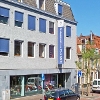 Plexus Student Centre
Kaiserstraat 25, Leiden
-
PhD Candidates: Get more success with less stress
Personal development, Working effectively
-
‘All of Leiden will join in with the Seeing Stars experiment’
What will happen if the lights in a large part of the city are switched off? How many stars can you see without all that light pollution? This is what researchers, artists and the residents of Leiden are going to investigate during Seeing Stars Leiden on 25 September. ‘Leiden is the ideal place for…
-
 Evelien Castrop
e.castrop@cml.leidenuniv.nl | 071 5272727
-
 Ben Wielstra
b.m.wielstra@biology.leidenuniv.nl | 071 5275135
-
Lights out, stars on: Daan Roosegaarde on Seeing Stars Leiden
‘What if we switch off all the lights one evening? That idea crossed my mind from time to time. And when I mentioned it to a taxi driver one day, he said: “Oh, you mean: lights out, stars on!” That’s not completely true, of course, because the stars are always on, but his phrase summed up the idea n…
-
Enchanting artwork with a message: ‘Cinquecento Medusae’ at KOG
Since 24 March, the Kamerlingh Onnes Building of the Faculty of Law has been full of hundreds of colourful jellyfish. But behind that enchanting sight is a serious message: the exhibition symbolises the loss of biodiversity in the oceans due to climate change.
-
Update Executive Board: Senate adopts education budget, cuts to go ahead
The Schoof cabinet has presented its budget. As expected, higher education is facing severe cuts. In the coming period, the Executive Board will regularly look at the consequences of what it deems an irresponsible policy.
-
Cod behave differently in noisy environment
Underwater noise from seismic surveys affects the behaviour of Atlantic cod. These are the results of research by Leiden biologists in collaboration with colleagues from Belgium. During such surveys the fish are less active than usual and their circadian rhythm is disrupted; soon after exposure they…
-
18 billion animals a year: they die, but never end up on our plate
Each year a staggering 18 billion chickens, turkeys, pigs, sheep, goats, and cows either die or are killed without making it onto someone's plate. Environmental scientists Juliane Klaura, Laura Scherer, and Gerard Breeman were the first to calculate this number on a global scale. 'Reducing these numbers…
-
Combining art and science in the recovery of Ukraine
How wonderful would it be to use art, technology and science in Ukraine's recovery? Young Ukrainians currently residing in Poland get guidance to develop creative programmes and activities that can later be implemented. Leiden astronomers Pedro Russo and Kateryna Frantseva cooperate in the project.
-
Buurtlab 070 launched – sustainability research in, by and for the community
Buurtlab 070 is a new Leiden University project in which residents, researchers and students from The Hague work together on climate, sustainability and biodiversity solutions. What do they expect of the lab?
-
Poor countries recycle far more of our plastic than we thought. But it's not enough.
Countries that import plastic waste recycle an average of at least 63 percent of it. This is surprising, as we previously believed that the vast majority was incinerated or ended up as litter. This was discovered by PhD candidate Kai Li and his colleagues from the Institute of Environmental Sciences in…
-
Studying with autism spectrum disorder (ASD)
Autism spectrum disorder, or ASD, is the term for a range of neurodevelopmental conditions or differences which can impact your studies at Leiden University.
-
Studying with dyslexia
Dyslexia is a learning disorder which is common among students and can impact your studies at Leiden University.
-
Studying with ADHD and ADD
AD(H)D stands for Attention Deficit(-Hyperactivity) Disorder, which is a common disorder that can impact your learning at Leiden University.
-
Satellite data and algorithms reveal which ships emit excessive nitrogen
Ships are still emitting too much nitrogen oxide. Till now it has been impossible to measure this at sea, but that is set to change. Solomiia Kurchaba combined satellite data and developed algorithms to identify which ships are emitting too much. Kurchaba received her PhD on 11 June.