211 search results for “organic chemist” in the Staff website
-
Walk-in concert University organ
Arts and culture
-
Walk-in concert University organ
Arts and culture
-
Walk-in concert University organ
Arts and culture
-
Walk-in concert University organ
Arts and culture
-
Walk-in concert University organ
Arts and culture
-
Walk-in concert University organ
Arts and culture
-
Leiden chemists discover new ways in which single-celled organisms organise their DNA
It has only recently been discovered that single-celled organisms (bacteria and archaea) also have histones—proteins that structure DNA. Now, Leiden PhD candidate Samuel Schwab has found that the histones in these organisms are much more diverse than previously thought. Schwab and his colleagues describe…
-
How chemist Marc Tijhuis left business to change the world
Halfway through his career alumnus Marc Tijhuis made a radical change: he left the corporate world to join the global battle against waste with the International Solid Waste Association.
-
Chemist Marc Koper receives Spinoza Prize for research on electrolysis
Professor Marc Koper researches how you can use electrical energy to make or break chemical bonds. He has just been awarded a Spinoza Prize, the Netherlands’ highest personal science award, for his fundamental research into how this form of electrolysis works.
-
 Sarita Koendjbiharie
Faculty of Humanities
s.r.koendjbiharie@hum.leidenuniv.nl | 070 8009535
-
Flentrop organ in Academy Building turns 25: ‘It’s a whole orchestra’
The organ in the Academy Building is 25 years old. University organist Jan Verschuren and tuner Bert Crama talk about the long history of university organs, improvising with short cortèges and their love for this organ.
-
 Elmer Maurits
e.maurits@lic.leidenuniv.nl | 071 5272727
-
Curing diseases with lab-grown organs
Organs and tissues grown in the lab may in the future be able to cure people with organ failures. Micha Drukker, professor of Stem Cells, Developmental Biology and Technology for Innovative Drug Research, is convinced that the use of stem cells will make this possible. He will deliver his inaugural…
-
 Willie Peijnenburg
peijnenburg@cml.leidenuniv.nl | 071 5272727
-
In Memoriam - associate professor Hans Brussee
On 15 April, our much-beloved and highly respected former colleague Dr Hans Brussee passed away from cancer. In January 2025, Hans began experiencing neck pain. Initially, it appeared to be a herniated disc, but sadly, the diagnosis was soon revised, and his condition proved untreatable. Hans was 77…
-
 Remus Dame
rtdame@chem.leidenuniv.nl | 071 5275605
-
 Tessa Hagens
t.m.s.hagens@lacdr.leidenuniv.nl | 071 5275706
-
International Symposium on Circuit Topology Organized by Leiden University
For the third consecutive year, LACDR organized the international symposium on topology, Circuit Topology III, on November 29, 2023. The event aimed to bring together experts from diverse fields, including mathematics, computer science, physics, chemistry, and biomedical sciences, to discuss cutting-edge…
-
From nanoscale to whole organism: at the Cell Observatory, researchers study life in detail
About forty microscopes, various laboratories, and some 15,000 zebrafish: that’s Sylvia le Dévédec's workplace. She is one of the managers of the Leiden Cell Observatory, a unique facility accessible to all researchers.
-
‘A donor organ is a precious gift that we should treat with care’
Professor André Baranski is a champion for improving organ procurement. He believes there should be standardised training and certification for procurement surgeons. This is what he said in his inaugural lecture on 16 April.
-
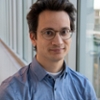 Sebastian Pomplun
s.j.pomplun@lacdr.leidenuniv.nl | 071 5274651
-
 Fernando Bordin
Faculteit der Rechtsgeleerdheid
f.bordin@law.leidenuniv.nl | 071 5272727
-
'Materiality, Religion and the Senses': L*CeSAR organizes its first workshop
On 11 December 2025, students and staff members from many fields of study had the opportunity to take part in a day-long workshop on the role of the senses in ancient religions.
-
Organ failure caused by viruses, how does it work? Now there are methods to find out
Dying from viral infection due to organ failure and blood loss: we still know little about how it can happen. Among other things, Huaqi Tang developed an organ-on-a-chip to figure it out. 'These technologies can offer unprecedented opportunities to fight the viruses that threaten our society.' Tang…
-
Walk-in concert University Organ
Arts and culture
-
Walk-in concert University Organ
Arts and culture
-
Walk-in concert University organ
Arts and culture
-
Walk-in concert University organ
Arts and culture
-
Walk-in concert University organ
Arts and culture
-
Walk-in concert University organ
Arts and culture
-
Walk-in concert University Organ
Arts and culture
-
Walk-in concert University Organ
Arts and culture
-
Walk-in concert University Organ
Arts and culture
-
Walk-in concert University Organ
Arts and culture
-
Walk-in concert University Organ
Arts and culture
-
Walk-in concert University Organ
Arts and culture
-
Walk-in concert University Organ
Arts and culture
-
Walk-in concert University Organ
Arts and culture
-
Walk-in concert University organ
Arts and culture
-
Walk-in concert University organ
Arts and culture
-
Sander van Kasteren: from molecule builder to Professor of Chemical Immunology
Sander van Kasteren only noticed some small, subtle changes since he was appointed professor on 1 May. Still, he has to get used to the idea, even though he had been working towards the professorship for a few years. ‘I don't quite see myself as a professor yet.'
-
 Tanja Ahlin
Faculty of Social and Behavioural Sciences
t.ahlin@fsw.leidenuniv.nl | 071 5272727
-
How to hijack natural destruction in cells: ‘We need to understand it through and through’
Destroying proteins from the Golgi apparatus of the cell in a controlled manner. That is the focus of chemist Marta Artola’s pioneering research. By developing a groundbreaking technology to target specific proteins in the Golgi, Artola aims to unlock new ways for drug development. For this ambitious…
-
Natalia Ortiz – Winner of the 2019 - 2020 KNCV Medicinal Chemistry & Chemical Biology thesis prize
Natalia Ortiz (Division of Drug Discovery and Safety) has been awarded the 2019-2020 PhD-thesis prize by the Division of Medicinal Chemistry & Chemical Biology, from the Royal Netherlands Chemical Society (KNCV-MCCB). The KNCV-MCCB thesis prize is a biannual award which is granted to the best PhD thesis…
-
Flu stops when you block the enzyme that cleaves off virus particles
A flu virus could cause a pandemic. And then we would be poorly armed because flu viruses are starting to become resistant to flu medications like Tamiflu. Chemist Merijn Vriends successfully worked on an improved version of such medications. He will be awarded his doctorate on September 12th.
-
Alex Geurds' first months as Dean: ‘It is important to be an organization without pain or scruples’
Since January 2026, Alex Geurds has been the new Dean of the Faculty of Archaeology. His start was calmer than many expected, but behind that calm lies a period of exploration, listening, and strategic forward thinking.
-
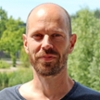 Sander van Kasteren
s.i.van.kasteren@chem.leidenuniv.nl | 071 5274725
-
In Memoriam Johan Lugtenburg
The fastest chemical reaction in the universe takes place inside our eyes.
-
Ingrid van Biezen
Faculty of Social and Behavioural Sciences
vanbiezen@fsw.leidenuniv.nl | 071 5273779
-
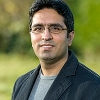 Alireza Mashaghi Tabari
a.mashaghi.tabari@lacdr.leidenuniv.nl | 071 5274425