
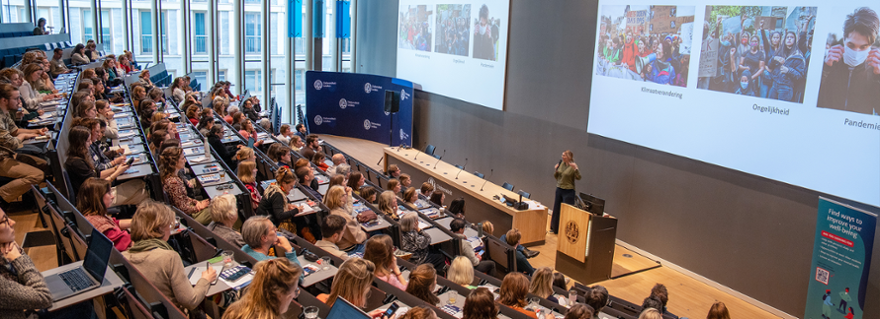
Staff symposium on student well-being: ‘Meaningful relationships help build resilience – at home and at university’
How do we create connection? And how can we build student resilience? These were just some of the questions explored by study advisers, teaching staff and student counsellors during the Staff Symposium on Student Well-being.
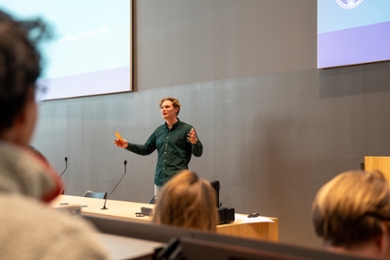
‘I give up.’ This probably isn’t the most conventional way to open a symposium, but these are the first words the over 150 staff members hear in the Wijnhaven building in The Hague. Because this is what host Jelle de Boer hears regularly, he explains: from students struggling with coursework, searching for housing or feeling scared of missing out in other ways. ‘That anxiety follows them around, making them more likely to stop trying their hardest and to give up more easily.’
Faster, less predictable and more intense
So there’s a good reason why the SEA expertise centre is now organising the student well-being symposium for the fifth consecutive year. ‘The topic remains as relevant as ever’, says Rector Magnificus Sarah de Rijcke. ‘Because students – all of us, in fact – live in a society where everything feels faster, less predictable and more intense.’
Students’ well-being cannot be viewed separately from academic success and engagement with the university. This is evident from our own community’s experience but also from numerous studies. De Rijcke gives the example of the Trimbos Institute’s recent Student Mental Health and Substance Use Monitor (in Dutch). ‘A resilient student is typically better able to navigate challenges, performs better academically and experiences their time at university as more meaningful and rewarding. Meaningful relationships help build resilience – at home and here at the university. The encouraging part is that we can all contribute.’
‘Involve young people in research’
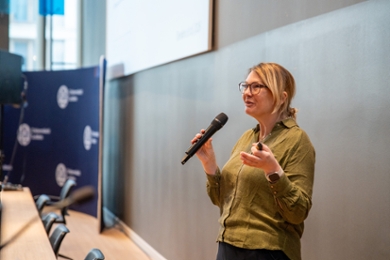
The keynote speaker, Eveline Crone, is Professor of Developmental Neuroscience in Society and leads the Society, Youth & Neuroscience Connected lab in Rotterdam. When discussing young people’s well-being, she notes, people tend to say: just take away their smartphones. ‘But that’s not the whole story’, Crone says. Today’s young people are growing up in an era of profound change: from climate change and growing social inequality and ongoing pressures on global health. ‘Add that to world leaders who start wars on a whim, and a technological revolution. It all affects how life works.’
Crone thinks it is a shame that even research about young people often only involves them in a small part of the chain. ‘Young people are experts in their own lives. We can only call ourselves good researchers if we involve them in all stages of our research.’
She urges social scientists to leave the well-trodden paths of the empirical cycle with their research proposals. ‘When Apple launches a new iPhone, it’s all about user testing, isn’t it?’
Fortunately, there are already good studies of what can help young people with low well-being: feeling that they belong and have something to contribute. ‘Young people experiencing stress or discomfort want to make an impact’, says Crone. They may even hold the key to positive change. ‘They’re the canaries in the coalmine. They feel the discomfort and say: “Something is wrong in our society. It affects my well-being and I want things to change.” Let’s help create opportunities for that.’
-
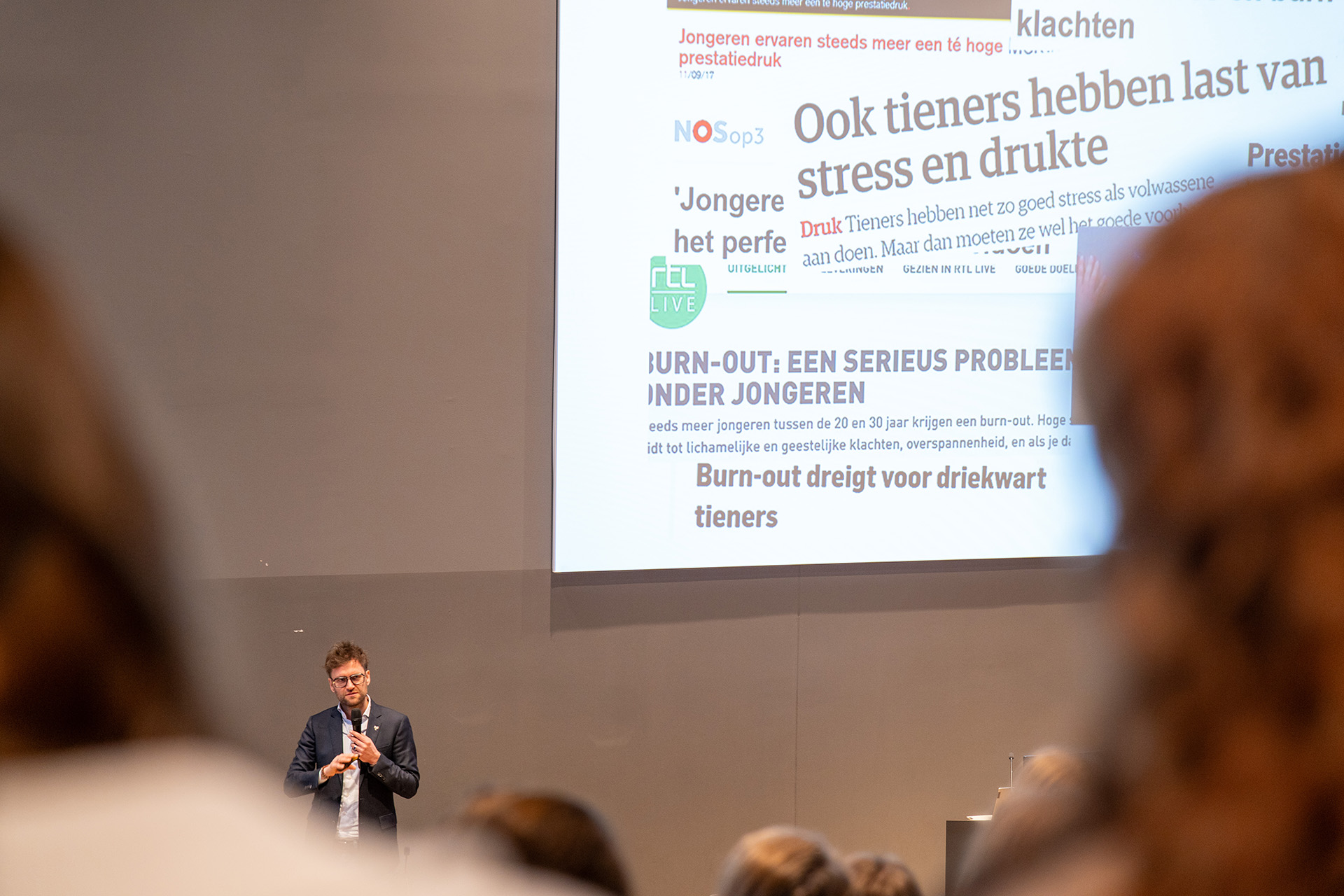
Levi van Dam, Professor by Special Appointment in Raising Resilient Children -
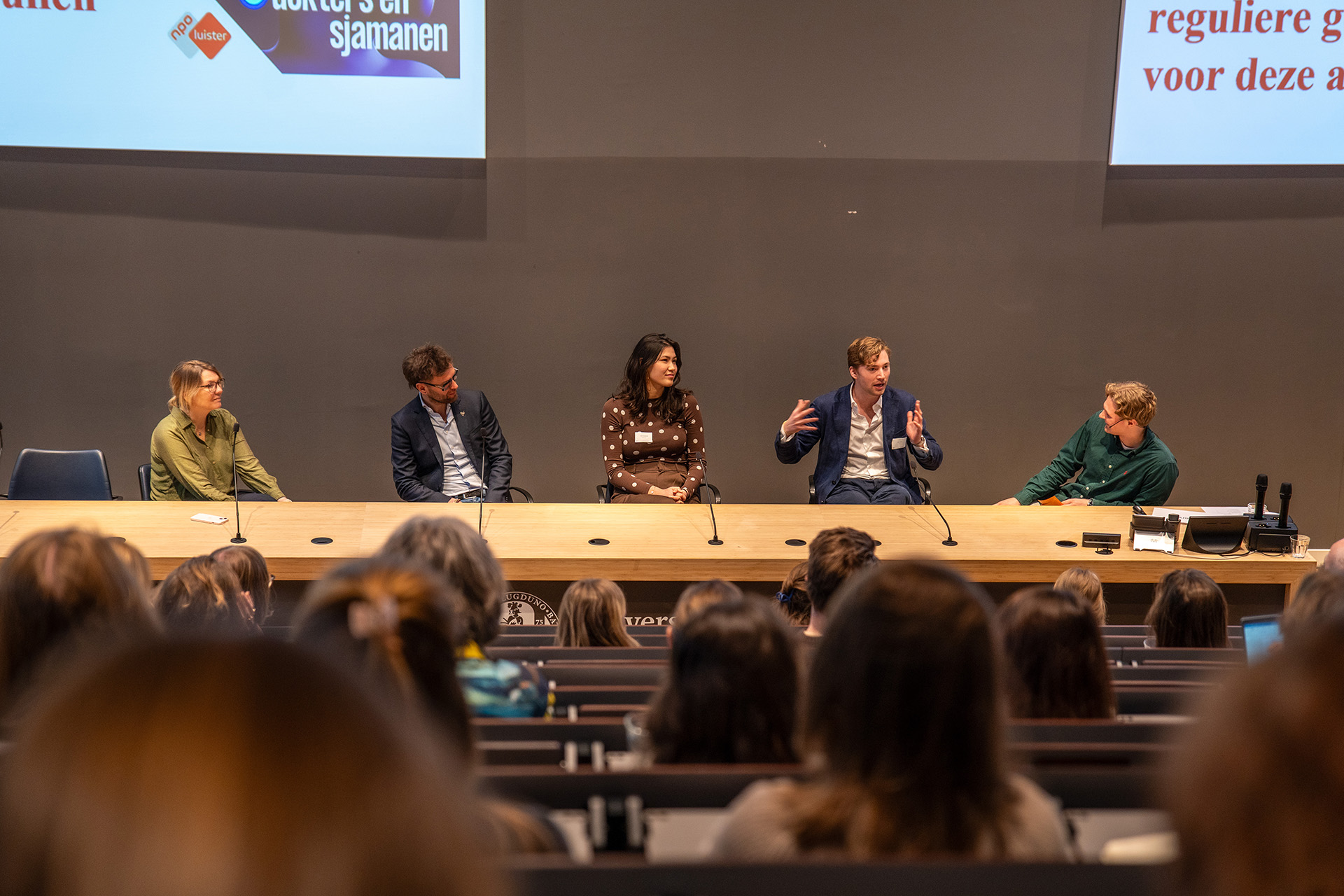
After the keynotes, Crone and Van Dam participated in a panel discussion with students Alissa Koerselman (student civil servant at the Municipality of Leiden) and Friso Croon Boucher (chair of the Leiden University Student Platform (LUS)) -
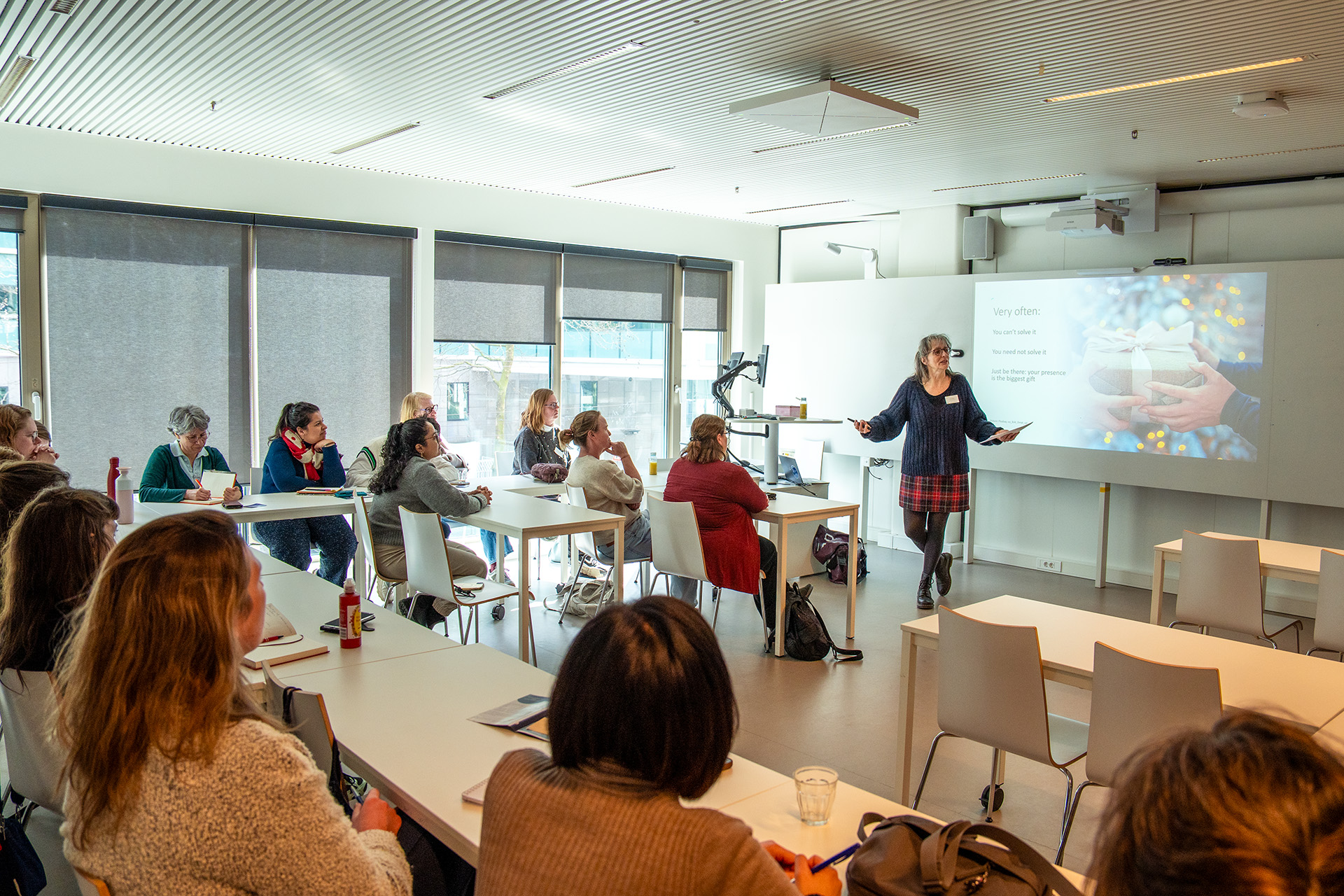
In the afternoon, the attendees took part in interactive workshops on current themes surrounding student well-being and resilience, led by various experts from the university -
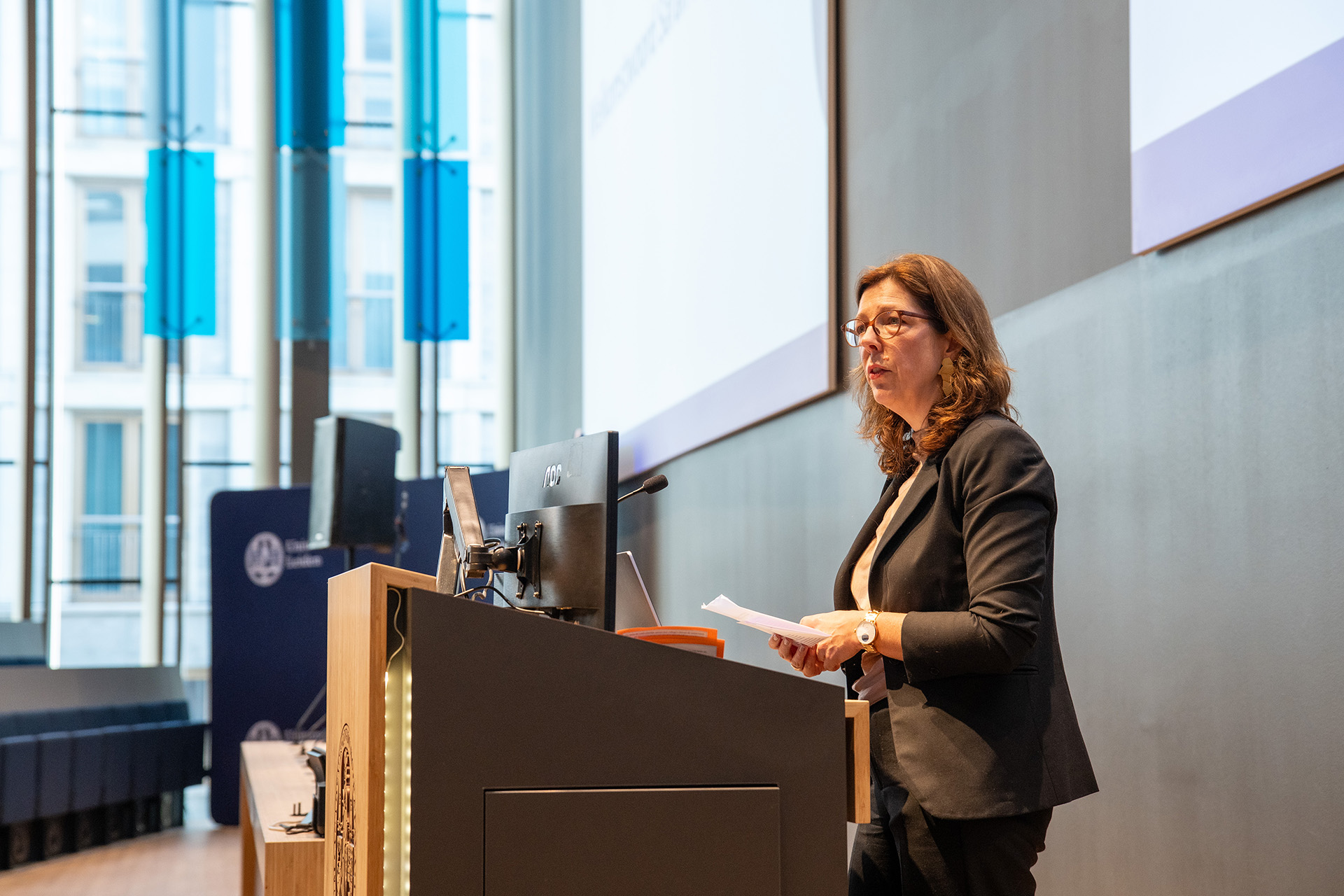
Rector magnificus Sarah de Rijcke -
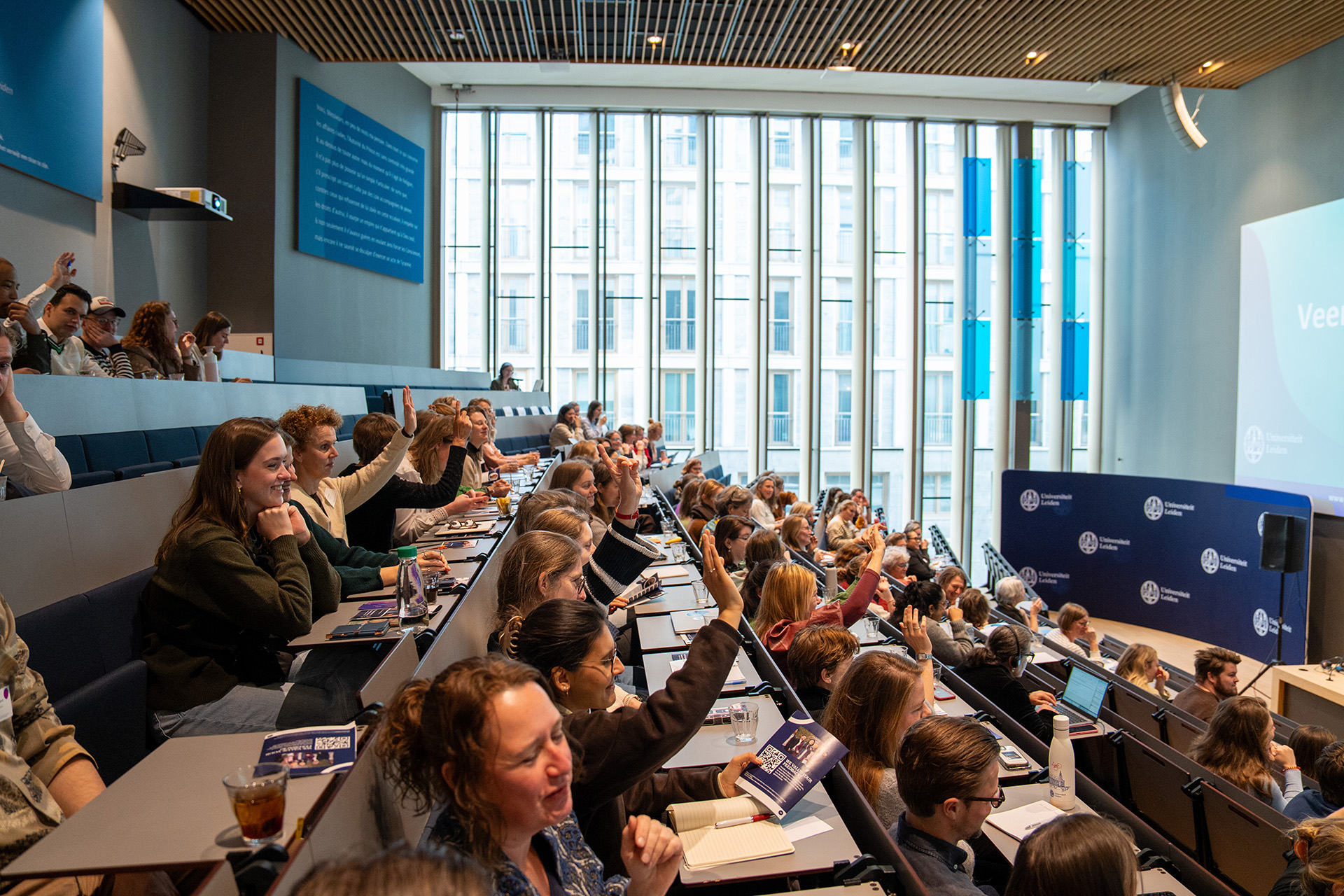
Who is your eight-minute person?
After a short energiser of squats and stretches (a tradition since the keynote by neuropsychologist Erik Scherder in 2024), the floor goes to Levi van Dam, Professor by Special Appointment in Raising Resilient Children. Behind him, the screen fills with headlines about rising levels of burnout, stress and performance pressure in young people. But Van Dam thinks it’s positive that young people are more willing to acknowledge mental health issues. ‘That’s a healthy response to complicated times, wouldn’t you say?’
Van Dam stresses the importance of helping young people name their emotions and understanding what others really mean. ‘If someone is feeling low but says that they are depressed, you might think: “I can’t treat depression, so I can’t help them.”
He also encourages staff to ask students whether they have an ‘eight-minute person’: someone they can call on at any time, who will be there for them for eight minutes.
Van Dam ends with a real-life example of how young people can work on their mental well-being and resilience in their free time rather than just in class. Together with event organiser Q-Dance, he founded Mentale Wasstraat (mental-health carwash). On the screen, a film shows young people in a festival-like setting practising breathing techniques, dancing, standing in sharing circles and stepping into an ice bath. ‘I’m always sceptical of woo-woo stuff’, a young woman admits in the film, ‘but this was really great.
What did visitors think of the symposium?
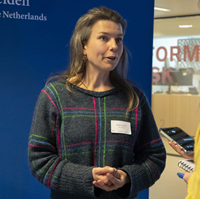
Cleody van der Eijk, study advisor and exchange coordinator at Archaeology
‘I don't know how visible resilience is. But when I see what some students have on their plate, I sometimes find it amazing how determined they are to continue their studies – or to take the brave step to stop for a while. So in practice, I see very resilient people in conversations with me. And sometimes they are still searching, but as we heard today during the plenary session, that is very much a part of this stage. I found both keynote speakers very inspiring, it was nice to get that scientific background. I am also the coordinator of our student mentorship, so perhaps I can use what I have heard here today for that as well. How can we involve students even better in certain decisions, so that they also feel more ownership of them?’
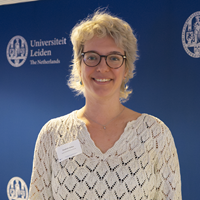
Rosalinde Spitters, Student Wellbeing Officer, Connector Student Plaza FSW and Skills Teacher at the Faculty Office FSW
‘I gave a workshop today about connective guidance and how it increases resilience, but I am also present as a participant. I found the keynotes very complementary. Eveline's story was strong from a research perspective and her enthusiasm was contagious. What I found powerful about Levi's keynote was the invitation to think about what certain numbers say, and whether that is a good or bad thing. I think it's a nice image that it is actually a good thing that many young people are working on their mental well-being in this phase. That is also something I try to pass on to students myself. Because the sooner you deal with these kinds of life themes with yourself, the more obvious it becomes that they are there and that you can seek help, for example. Then it doesn't suddenly come up like a skippy ball from a swimming pool in another part of your life.’
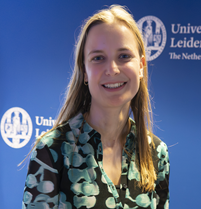
Elizabeth Buimer, Assistant Professor in the program group Forensic Family and Youth Care Studies
‘I have a dual role at this symposium. On behalf of the Resilience Center Leiden we hosted a workshop today together with the Augeo Foundation, in which we brought together scientific knowledge and experiential knowledge to strengthen resilience in students. And as a teacher, I'm here to get tips on how I can best support my students in their well-being. From my own workshop I especially take away the stories of the experience experts with childhood trauma. I learned a lot from that, for example that lectures can be very overstimulating. Furthermore, this day emphasizes for me how important it is that we as teachers are a kind of gatekeeper, even if we are not student psychologists or well-being officers. Students can be the first to come to us, so you have to be open to that.’
Text: Evelien Flink
Photos: Danique ter Horst (banner and main article) and Álvaro García López (portraits)
Video: Álvaro García López
Aftermovie: Staff symposium on student well-being 2026
Due to the selected cookie settings, we cannot show this video here.
Watch the video on the original website or