Universities and research institutes join forces to drive digital innovation
How can we use new digital technologies in research and teaching? And how far are we in developing independent cloud solutions? These questions took centre stage at Our Digital Future, where the university, the LUMC, Leiden University of Applied Sciences and Naturalis met to share their expertise.
The rapid pace of digital innovation is putting the independence and security of research and teaching under increasing pressure. Is research data safe in the hands of major commercial cloud providers? And what role can AI play in supporting students and staff in the classroom? These are key issues for universities and research institutes across the Leiden region.
Active innovation
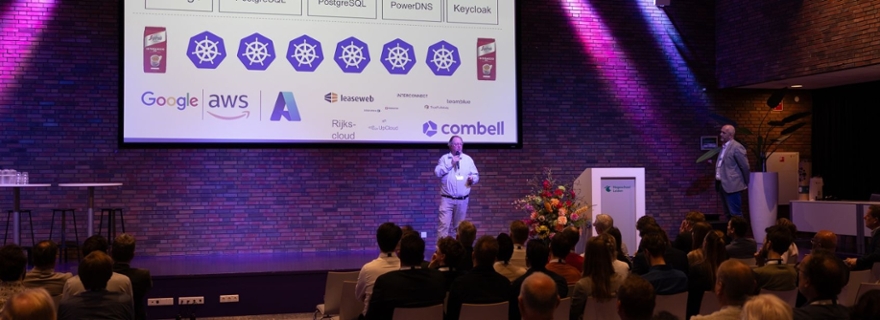
The good news is that a range of organisations in the region are actively exploring digital innovations and openly exchanging the insights they gain. This became particularly clear during the Our Digital Future event on Monday 23 March, where IT specialists from Leiden University of Applied Sciences, Leiden University Medical Center, Leiden University and Naturalis Biodiversity Centre gathered to discuss the latest developments.
Through presentations, staff from the partner organisations provided updates on key developments in AI, cloud technology and digital security. Keynote speaker Bert Hubert provided a frank assessment of today’s IT landscape, which continues to rely heavily on Big Tech in the United States, even when servers are physically located in the Netherlands.
This served as a wake-up call, encouraging participants to reflect on whether this is the digital future they want, and what alternatives might exist. Hubert also highlighted how the German state of Schleswig-Holstein has succeeded in becoming almost fully digitally independent – perhaps a promising example for the partners?
Experts from Leiden University of Applied Sciences, the LUMC and Leiden University gave concrete examples of the accelerating pace of AI innovation. At the LUMC, for instance, AI-supported data analysis enables radiologists to detect far more than is visible to the naked eye, leading to more accurate diagnoses and timely patient referrals.
Collaboration
A tangible result of this collaboration was the agreement signed between Leiden University and the LUMC, enabling the two to use each other’s IT infrastructure for research. This means staff from the two organisations can access each other’s high-performance computing for data-intensive projects and store research data securely.
Our Digital Future is an annual event hosted in turn by one of the partner institutions. Next year is the turn of Leiden University. Read about the 2023 session in Stadsgehoorzaal in Leiden.