
Ammonia as a clean fuel: ‘Do not create a new nitrogen problem’
Ammonia has been feeding the world for decades as a fertiliser and is now rapidly emerging as a carbon free fuel for shipping and industry. But if we focus only on CO₂ emissions, we risk creating new nitrogen problems, warns nitrogen expert Jan Willem Erisman in the journal One Earth.
Ammonia is one of the most important inventions of the last century. Thanks to the Haber-Bosch process, nitrogen from the air can be converted into ammonia. This made large-scale plastic production possible and contributed to a huge increase in global food production.
But the invention also has a downside. Large-scale use has disrupted the natural nitrogen cycle – the balance of nitrogen in soil, water and air. This has led to biodiversity loss, poorer water and air quality, and extra warming of the planet.
‘Ammonia is almost as energy-rich as hydrogen and easy to liquefy’
Ammonia as a new climate solution?
Ammonia is now seen as a promising energy carrier in the shift away from fossil fuels. It contains no carbon, unlike fossil fuels, so burning it produces no CO₂. ‘Ammonia is almost as energy-rich as hydrogen and easy to liquefy,’ Erisman says. ‘On top of that, we already have more than a century of experience with producing, storing, and transporting it. That makes it an attractive fuel, for example, for shipping and industry.’
According to scenarios from the International Energy Agency and others, global ammonia production could double or even triple by 2050, partly due to its use as a marine fuel.
Hidden dangers of ammonia
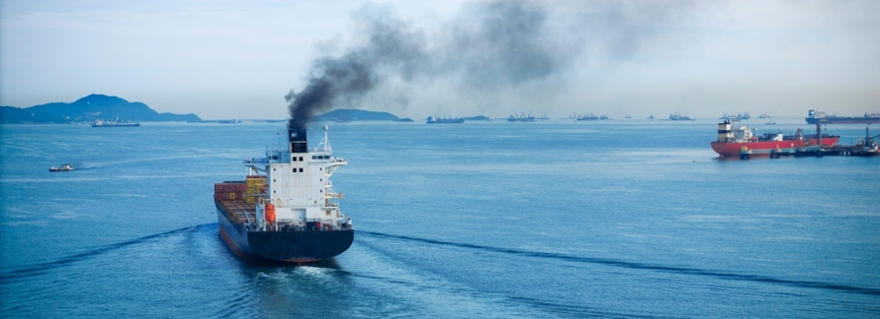
Still, Erisman warns against focusing only on ‘green’ production. ‘We mainly see ammonia as a climate-friendly fuel for ships, as it does not produce CO₂ emissions,’ he says. ‘But during use, ammonia can leak into soil, water, or air, and burning it releases nitrous oxide and nitrogen oxides.’
Nitrous oxide is a powerful greenhouse gas, while nitrogen oxides contribute to air pollution, such as ozone and fine particles. Through rainfall, nitrogen oxides end up in seas and oceans, causing over-fertilisation, which is another threat to biodiversity.
What needs to change?
According to Erisman, it’s not just the sustainable production of ammonia that matters, for example using solar and wind energy. We also need stricter regulation of its use. ‘We need policies to prevent nitrogen emissions, for example using cleaner technologies like fuel cells that convert ammonia into energy without harmful emissions. We also need stricter rules to limit losses across the whole chain, from production and storage to transport and use.’
‘My biggest concern is that nitrogen in the environment is once again receiving too little attention.’
‘My biggest concern is that nitrogen in the environment is once again receiving too little attention,’ Erisman says. Ammonia can play an important role in the energy transition, as long as emissions and losses during use are kept under control. ‘Only then can we reduce CO₂ emissions while avoiding new nitrogen problems.’
Want to know more?
Read the full article by Erisman on the website of One Earth: Ammonia for food and fuels in a sustainable future