

Roeland Merks runs a gallery from his home: ‘Science also begins with intuition’
By day, Roeland Merks works on mathematical models that describe cells and complex systems. In the evenings, he opens the door to a different world. In his home and art space De Spelonk, contemporary art, experimentation and curiosity come together — right at the intersection with his scientific perspective.
Anyone stepping into Professor Roeland Merks’s home in The Hague is immediately surrounded by art. The security camera above the front door turns out to be a ceramic object by Koos Buster. In the stairwell hangs a ‘leak on demand’ by Lizan Freijsen, and even the small window above a door is a work of art. ‘I made that myself,’ says Merks. It is a visualisation of a mathematical model for blood vessel formation, engraved in glass.

Collecting art as research: curiosity as a shared driving force
For this mathematical biologist, collecting art started as a hobby that grew out of hand. During the day, he focuses on complex scientific questions and his work as director of the Lorentz Centre, but in the evening, passers-by see something quite different: a small art space in his house where contemporary artworks quietly draw people in through two street‑facing windows. That is where another fascination comes to life after working hours.
Merks discovered art collecting together with his husband Bart Dirks, a journalist at de Volkskrant. It started with a single painting above the sofa — and soon became addictive. ‘We look for artists who do more than just make something beautiful,’ Merks says. ‘You want to see that someone has a vision, that there is research behind it. Someone who is trying to understand something.’ They know almost all the artists whose work they collect personally. ‘That matters to us.’
‘You want to see that someone has a vision, that there is research behind it. Someone who is trying to understand something.’
De Spelonk: a street gallery for contemporary installation art
In early 2020, the couple were able to incorporate part of the neighbouring property into their home, and the idea for an exhibition space on the ground floor took shape. De Spelonk — named after the narrow gap connecting the space to the house — presents a new installation every three months. Many works are created specifically for the space and can be viewed from the street through the windows.
The street gallery has not gone unnoticed in the neighbourhood. It sometimes leads to unexpected reactions. ‘People walked past for years and suddenly asked: did you make all this yourselves?’ Merks says. Others are disappointed when an artwork disappears. ‘That’s when you realise the impact it has.’
De Spelonk is truly a passion project for Merks and his husband. After work, his energy easily shifts from science to art. ‘They’re like two separate reserves I can draw from,’ he explains. ‘When one runs dry, the other turns out to be full again.’

Working with artists: from intuitive experiments to controlled decay
Collaborations with artists vary widely — from thoughtful and deliberate to intuitive and remarkably fast. ‘You quickly see who tends to struggle and who thrives on deadlines.’ This can create tension, especially as an opening approaches.
One of the most striking experiences began with an unexpected package on the doormat: a brick, accompanied by a letter. The sender turned out to be young artist Aldo Brinkhoff, who studies controlled decay in ceramics. ‘He calls himself an intuitive chemist,’ Merks says with a smile. ‘I recognise that. Science, too, begins with intuition.’
‘I’m interested in where art and science meet on a human level: fascination, investigation, doubt.’
Art and science as parallel worlds of wonder and doubt
For Merks, art and science are not separate worlds. ‘Both artists and scientists are driven by the same fundamental urge: to understand something,’ he says. ‘Only the approach is completely different.’ In both cases, it starts with curiosity and a sense of wonder. ‘I’m interested in where art and science meet on a human level: fascination, investigation, doubt.’
In the end, Merks sees artists and scientists as not so different. ‘It’s the same urge — to understand, to explore more deeply, and to devote part of your life to that.’
-
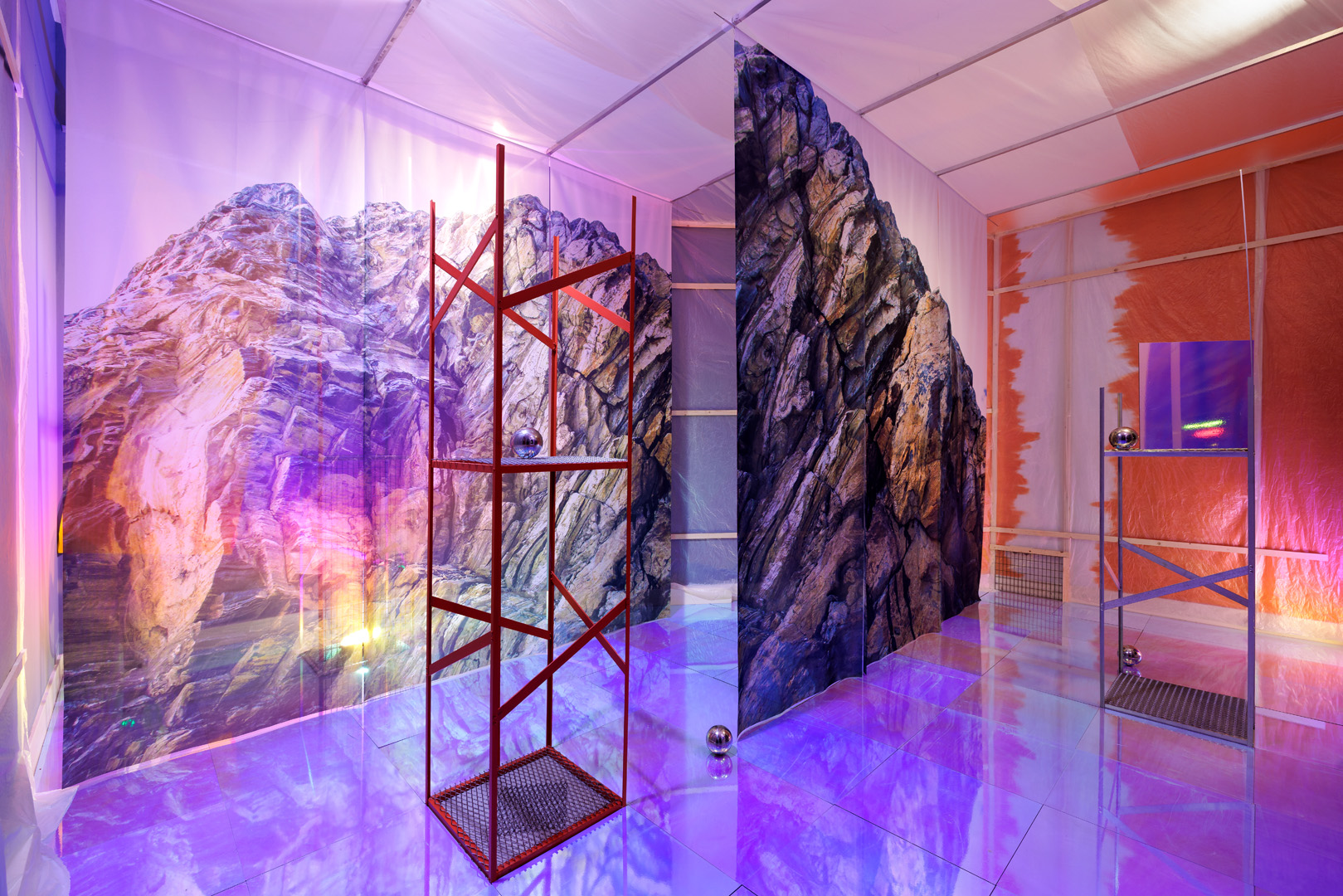
Frido Evers, Underworld I: Fragments, 7 March — 14 June 2026. The current exhibition. Photo: Aad Hoogendoorn. -
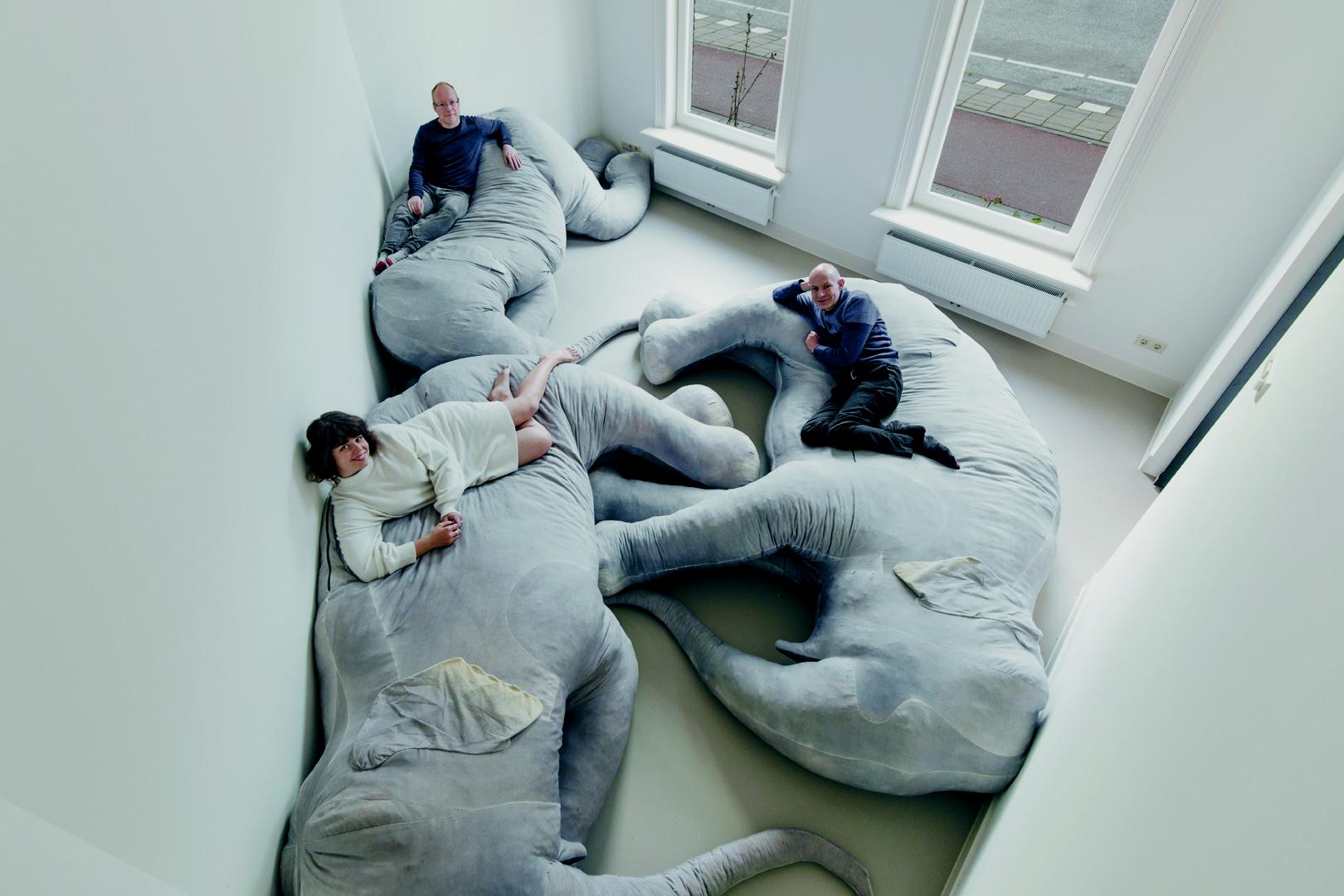
Catinka Kersten, Come To Me When Thou Hast Seen the Elephants Dance. 1 September 2020 — 20 January 2021. This was the Spelonk’s first exhibition. We limited visitors to ‘one elephant per household’. Photo: Aad Hoogendoorn. -
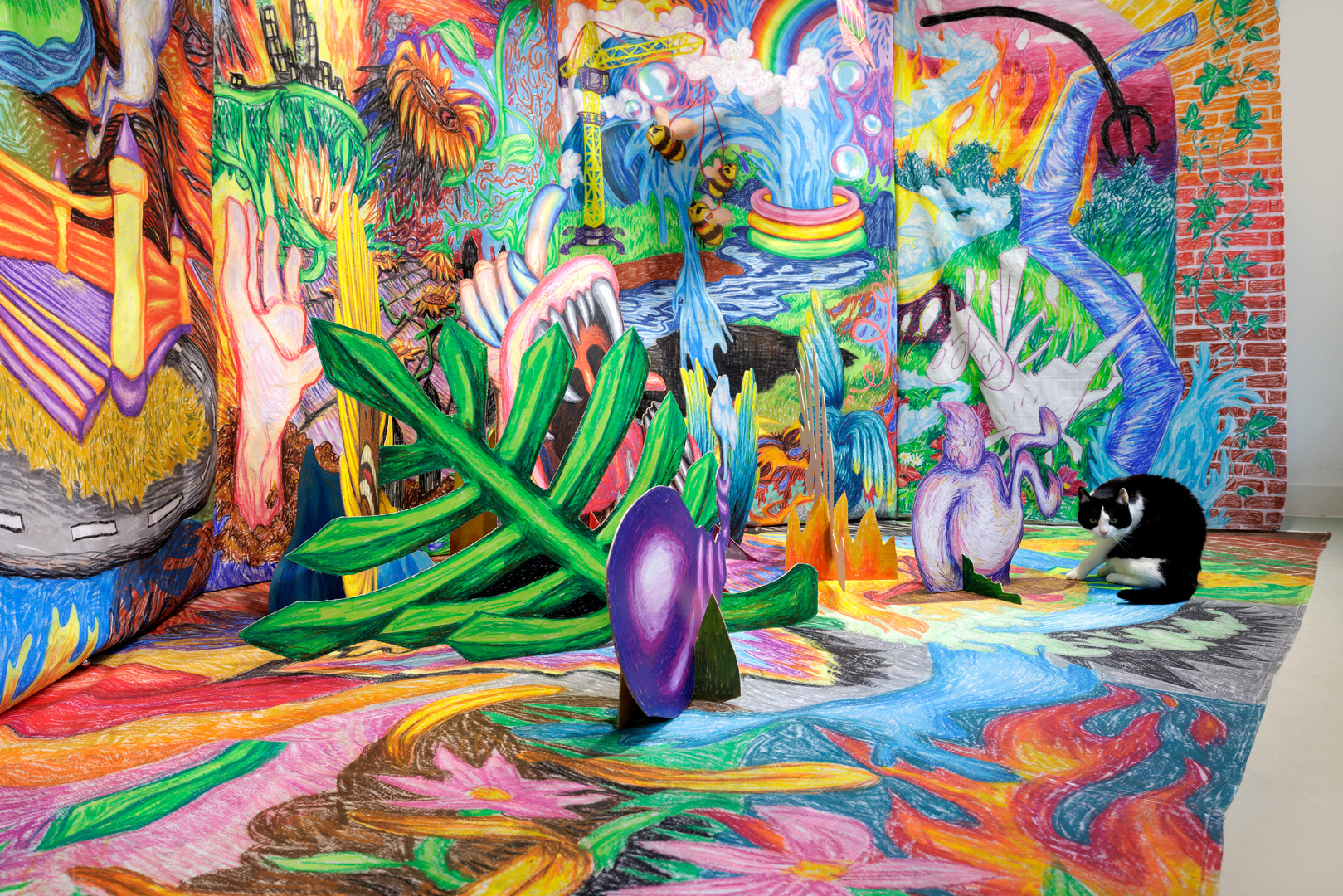
Bente Wilms, Floating from Earth or Falling Within, 10 January — 10 April 2025, with one of our cats, Jonas. Photo: Aad Hoogendoorn. -
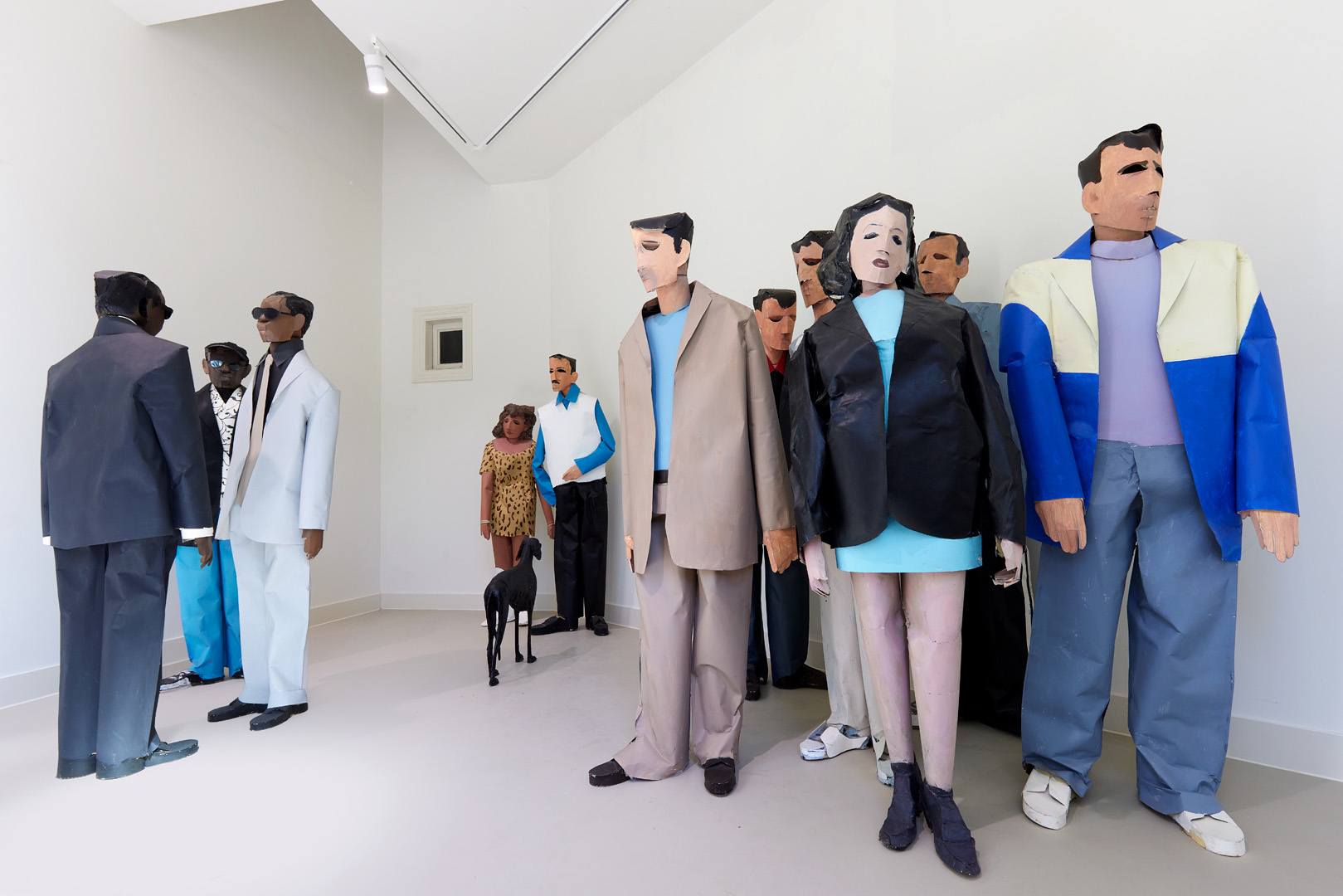
Peter Bes, From Where, 17 July — 30 October 2022. This work by Peter Bes (1945) referred to displaced souls on the streets. Photo: Aad Hoogendoorn. -
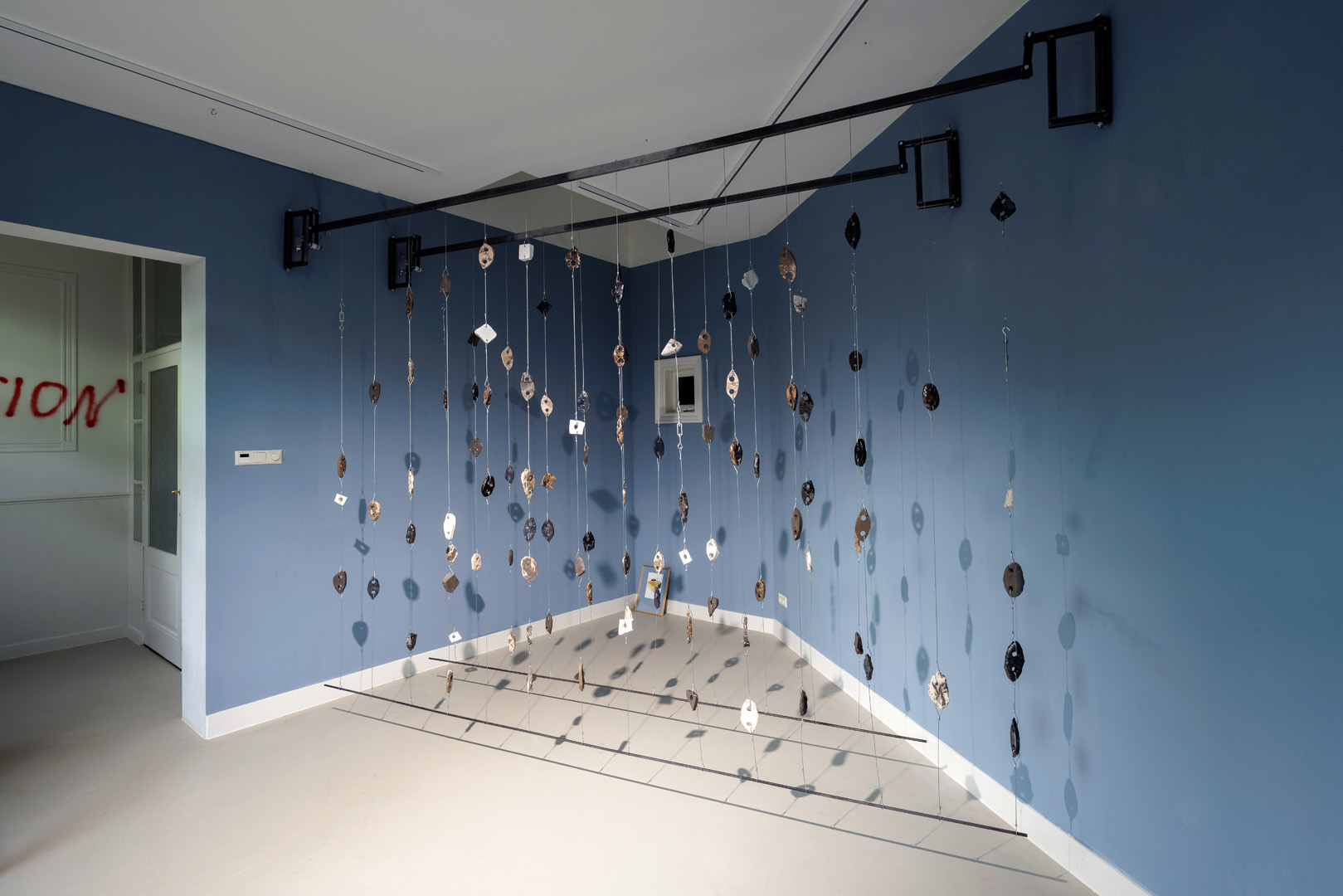
Katerina Sidorova, Fault Line, 26 april — 25 juli 2025. Dit werk was een referentie naar loopgraven, en bewoog in een ritme dat in morsecode de tekst “The soil never forgets” seinde. Foto: Aad Hoogendoorn.
Visit De Spelonk
Curious to see the street gallery of our colleague Roeland Merks? De Spelonk is located at Valkenboslaan 74 in The Hague. You can view the exhibition through the two street‑facing windows. Would you like to look inside? Email info@despelonk.nl of get in touch via instagram: @de_spelonk_den_haag.
The current exhibition is Underworld I: Fragments by Frido Evers.
More information is available on De Spelonk's website. A booklet is produced for each exhibition; these are also available from Roeland Merks while stocks last.