

Tomatoes, Swiss chard, and arugula: the vegetable gardens at the Reuvens and Huizinga buildings provide snacks and a sense of community
The observant passerby has probably already spotted them: the vegetable gardens near the Reuvens and Huizinga buildings. Staff members from the LUCL and the Institute of History grow their own vegetables here.
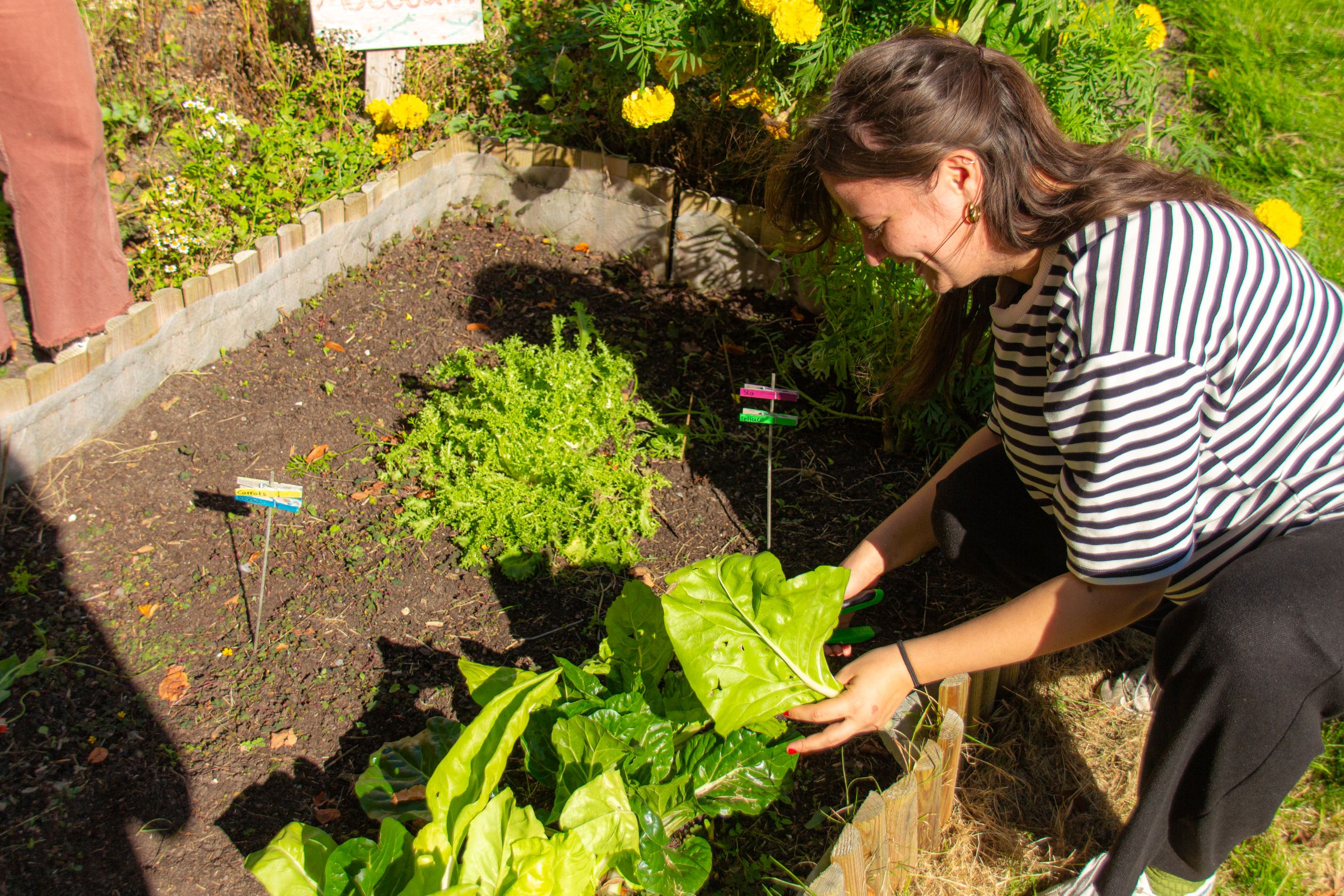
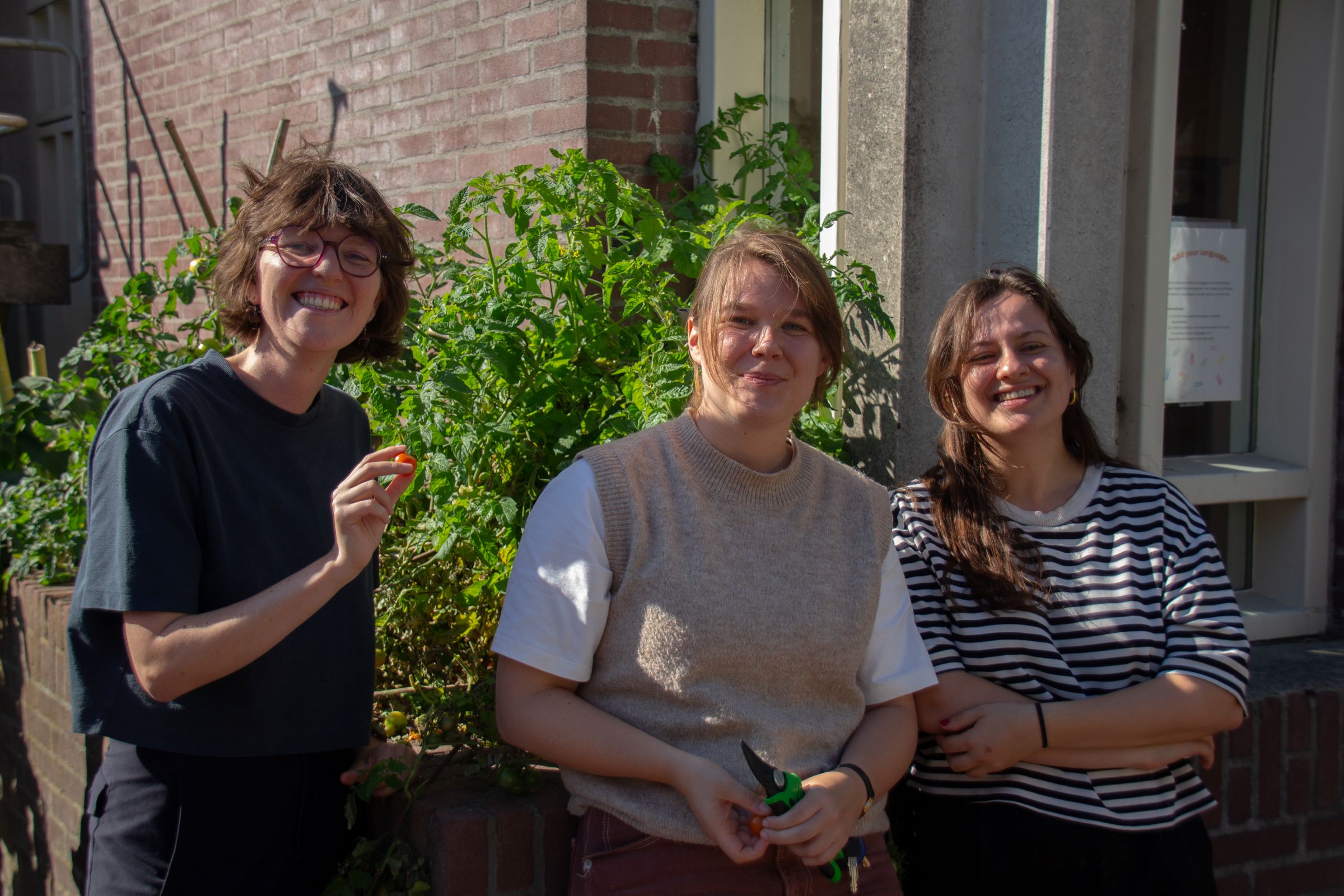
Ph.D. candidates Hester Groot, Ariëlle Reitsema, and Sophia Nauta have been gardening in the courtyard of the Reuvens Building since last year.
Ph.D. candidates Hester Groot, Ariëlle Reitsema, and Sophia Nauta have been gardening in the courtyard of the Reuvens Building since last year.
‘We all live in small apartments without gardens,’ says Groot. ‘When we were at the Reuvens Building, we’d often joke with each other that we could start a vegetable garden right here.” “Eventually, last year, we decided to find out if it was actually possible,’ adds Nauta. ‘We were passed around a few times by the university and the city, but once we found the right person, we were able to start drawing up a plan pretty quickly.’
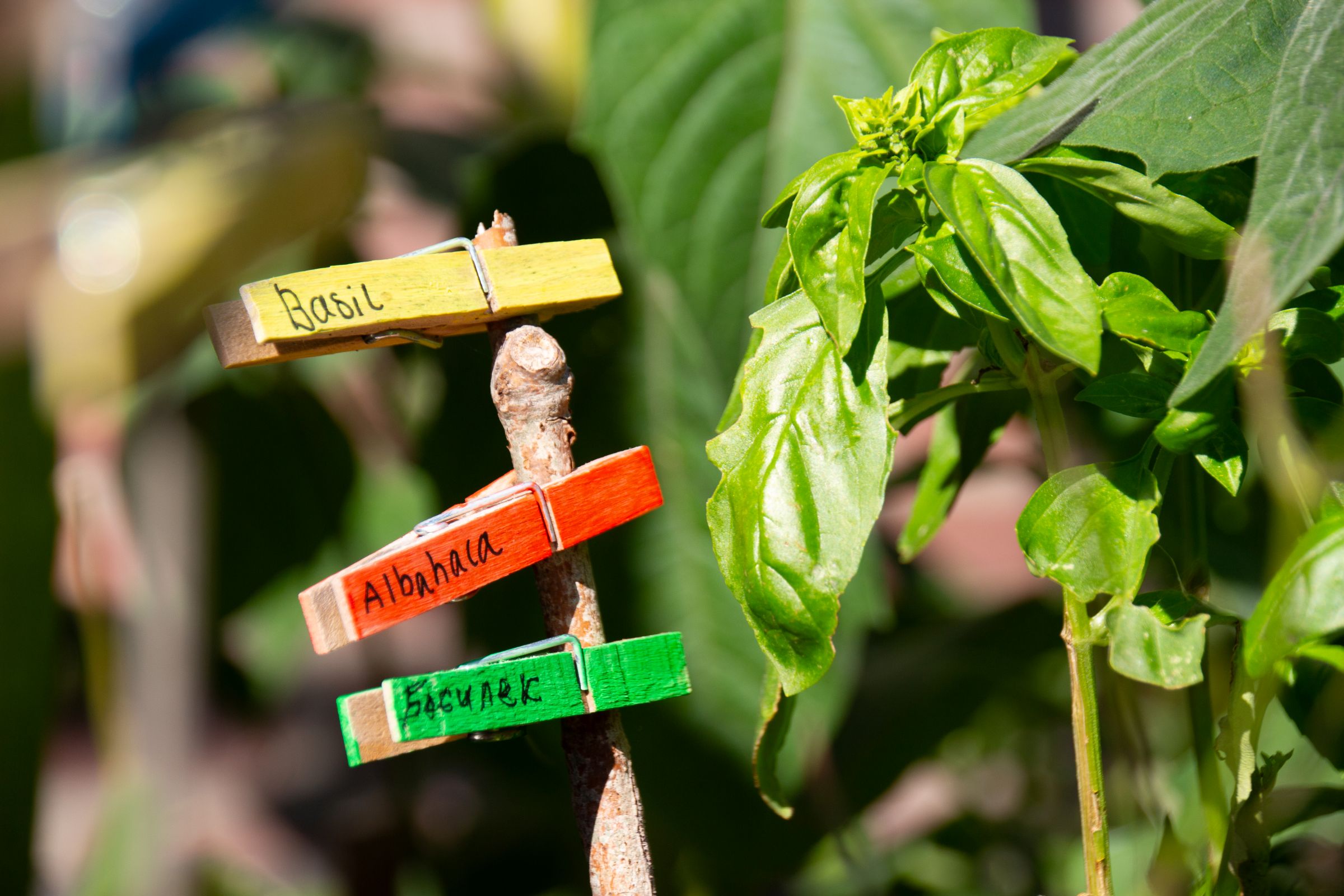
Sjef Barbiers, who was the scientific director at the time, did impose one additional requirement on the garden. ‘We’re a linguistic institute, of course, so he thought the garden should include at least one linguistic element,’ Reitsema explains. ‘We ended up using clothespins, on which anyone can write the name of the vegetable in their own language. Last year, we had as many as twenty of those clothespins by the tomatoes, but the Swiss chard only had two or three. People probably have no idea what that’s called in their language.’
In addition to Swiss chard, this year’s two garden sections feature carrots, cucumbers, lettuce, and bottle gourds, among other things. The sunflowers had just finished blooming at the time of the interview, but the tomatoes are coming along nicely. ‘We try to choose plants that you can also eat raw,” says Groot. “At lunch, we can then share tomatoes or carrots from our own garden with coworkers. That really brings people together. I’ve definitely been talking to a lot more coworkers since I’ve been gardening here from time to time.’
‘You really notice that the whole institute is getting involved,’ says Nauta. ‘Last year in particular, a lot of people helped us water the garden, and since you automatically pass by the garden on your way to the building, many people pick a tomato along the way as a snack.’


Student Affairs staff member Femke Warnar and academic advisor Jaap de Witte have been responsible for the vegetable garden in the Huizinga Garden since this year.
‘Like all good ideas, this plan came about during a get-together,’ says De Witte. ‘When I mentioned in the spring that I thought it would be fun to start a vegetable garden, there turned out to be quite a bit of enthusiasm for it. Usually, everyone forgets about a plan like that the very next day, but this one kept coming up. Eventually, Karen, a management assistant at the institute, floated the idea with Housing. It turned out they had the—by university standards—astronomical sum of 750 euros available.’
The money was invested in a high-tech vegetable garden box with a built-in irrigation system. ‘The seeds come with it,’ says Warnar. ‘So we didn’t really choose what we wanted to plant; we just divided up what we received among our colleagues. They grew the seedlings on their windowsills, and then we planted them here. We don’t have a plan yet for how to divide up the harvest. To be honest, we’re actually pretty surprised that everything came up so well, especially since it was such a hot, dry summer.’
‘I think we also owe that in part to our custodian, Michel,’ says De Witte. ‘At first, he was a bit worried about what we’d do to his pride and joy—the courtyard garden—but now he’s completely on board, and I think the garden has been watered much more often than we realise.’
In addition to the custodian, the vegetable garden can count on about fourteen volunteers to help with watering. ‘At work, we’re teachers, academic advisors, and educational administration staff,’ says Warnar. ‘Here, that hierarchy disappears, and you get to know people you wouldn’t normally come into contact with. It also helps that you immediately have something to talk about.’
Meanwhile, De Witte is already dreaming of next year’s garden. ‘Of course, we hope they’ll say: “That silly planter next to the vegetable garden—the one that’s currently filled with all those boring ornamental plants—you’re welcome to use that, too.”’