783 search results for “clinical diversity” in the Staff website
-
Autism with borders
Autistic people have problems communicating their borders towards the non-autistic community and often do not feel respected. To not only change daily life for autistic people, but also the scientific community from within Carolien Rieffe (Developmental Psychology) addresses this issue in her research…
-
At the forefront of AI innovation: in conversation with Julian van der Kraats
AI-related activities and programmes are springing up throughout the university. In research, for example, at SAILS, and for staff in workshops and co-creation labs. As an AI champion at the ISSC, Julian van der Kraats is involved in various AI developments.
-
How NeCEN helped develop the Johnson & Johnson Covid-19 vaccine
The Phase 3 clinical trial results of the promising Covid-19 vaccine of Johnson & Johnson are expected this month. The Dutch electron microscopy facility NeCEN helped develop the company’s vaccine, and they have now published their scientific findings in Nature Communications.
-
Do you have a hard time with uncertainty? This may influence how you perceive the world
Always taking the same route to work, going for that one dish in restaurants and going on the same holiday each summer: this may ring a bell for those who don’t like uncertainty. Researchers are now discovering that this aversion affects how we understand the world.
-
Dutch Cancer Society allocates funds to a mathematician: for treating Ewing sarcoma with the help of an app
If doctors could better estimate a patient's chances of survival, this would help in choosing a specific treatment. It would be particularly beneficial for the rare and malignant Ewing sarcoma, which mainly affects children and adolescents. Mathematics professor Marta Fiocco has been awarded a substantial…
-
From innovative idea to start-up: during new workshops psychology students learn about doing business
In the ‘Educatips’ column, psychology lecturers share their valuable insights about lecturing. This month: Franz Wurm is developing entrepreneurship workshops together with PLNT for master’s students of Clinical Psychology. ‘We want to teach students to develop from passive consumers to become active…
-
Medical Delta professor Marco van Vulpen: ‘I advocate the introduction of the share factor’
Proton therapy is a new way of treating cancer in which radiation doses are delivered more precisely. This results in less damage to surrounding tissue and fewer side effects. Professor Marco van Vulpen is medical director of HollandPTC in Delft, where the social value of this therapy is studied. Van…
-
Medical Delta professor Marcel Reinders: ‘You need collaboration to make a real impact’
Prof. Marcel Reinders is a data science specialist at Delft University of technology. Using smart algorithms, he searches for links in complex data. For example, he studies patterns in DNA that lead to aberrant cell behaviour. This knowledge will help detect serious diseases such as Alzheimer's and…
-
Eight professors receive double appointment simultaneously
Delft, Nov. 15th, 2022 – Today, eight professors were simultaneously inaugurated as ‘Medical Delta professors’ at Leiden University, LUMC, TU Delft, Erasmus University and/or Erasmus MC. With an appointment of two or more of these five academic institutions, they combine technology and healthcare in…
-
A tail with a twist: how the tokay gecko grows a completely new body part
When the tokay gecko loses its tail, a new one grows from resident stem cells at the stump. Each tissue type - muscle, bone, blood vessels and skin - develops from specific stem cells. This discovery by Luthfi Nurhidayat holds potential implications for advancing regenerative medicine in humans. Nurhidayat…
-
Psychology Connected over gender differences: 'More research done on extraterrestrial life than the female body'
In medical and psychological sciences, little research has been specifically conducted on women. Hormonal fluctuations were considered too intricate. Yes, research into sex and gender differences is complex, acknowledge neuroscientists Ellen de Bruijn and Lara Wierenga, but that’s precisely why it's…
-
Curing diseases with lab-grown organs
Organs and tissues grown in the lab may in the future be able to cure people with organ failures. Micha Drukker, professor of Stem Cells, Developmental Biology and Technology for Innovative Drug Research, is convinced that the use of stem cells will make this possible. He will deliver his inaugural…
-
Leiden scientists join national effort to advance nanomedicine
A Dutch consortium has received €6.7 million to accelerate the development of nanomedicines together with patients. Researchers from Leiden University play a key role in the project.
-
Smarter hypothesis testing with statistics: how e-values can improve scientific research
During his PhD research, mathematician Tyron Lardy worked on a new approach to hypothesis testing. Instead of the traditional p-value, he uses so-called e-values. These turn out to be more flexible – especially when you want to look at your results midway through the study.
-
Why is it now that the Left has momentum in Latin America (and how long it will last)
The left is gaining more and more ground on the political map of Latin America, with the elections in Colombia as the most recent example. But what’s behind this pull to the left? Professor of Modern Latin American History Patricio Silva talks about the current political situation in the region.
-
Leiden University academics pursue international projects with Una Europa grants
Seven interdisciplinary projects involving Leiden University academics have been awarded up to €27,000 in seed funding. They will work with Una Europa alliance partners to advance topics including academic freedom, AI in the humanities, sustainable mining and maternal health care.
-
Meetups, day trips and discounts galore: join the Staff Association
Did you know that Leiden University has an active staff association? As a member you can get to know colleagues in an informal setting during activities such as cooking, playing padel, going on a boat trip or doing Christmas shopping. But, say board members Tom Stapper and Jeanine Rosheuvel, it’s fine…
-
With 30 million dollars, this consortium aims to tackle tuberculosis
Thanks to a clever research method, progress is being made in the quest for better tuberculosis medications. Within an American consortium that received a 30 million dollars grant, Leiden researcher Rob van Wijk plays a significant role. ‘The next breakthrough in tuberculosis research will come much…
-
On exchange abroad as staff member of the Faculty of Law
As an employee, the Faculty of Law at Leiden University also allows you to go on an exchange. Read here how Esther Kentin experienced this and where to find more information.
-
Why do vulnerable groups miss out on benefits? Research nominated for thesis prize
Why do vulnerable groups fail to make use of benefits that they are entitled to? This is what Max ten Velde researched in his Master’s in Management of the Public Sector thesis, which has been nominated for the Netherlands Court of Audit’s thesis prize.
-
Professor of Urology Maxime Kummeling: ‘The human dimension should guide us’
As technology transforms healthcare and services come under mounting pressure, one question remains the same: Will the advice or treatment offered help patients lead the lives they want to live? In her inaugural lecture, Professor Maxime Kummeling stresses the importance of quality.
-
‘Ultimately, the goal is to develop antibiotics for tuberculosis with a lower risk of resistance’
Tuberculosis stands as one of the most lethal infectious diseases worldwide. A significant challenge in combatting tuberculosis lies in the emergence of antibiotic resistance triggered by genetic alterations, commonly known as mutations. These mutations can diminish the responsiveness to antibiotics,…
-
What works in suicide prevention? Lessons from the 113 Helpline
113 Suicide Prevention gave a guest lecture about suicide prevention at the Spanish Steps in Wijnhaven
-
LUMC research improves risk assessment for hereditary breast cancer
Researchers at LUMC have made a breakthrough in understanding PALB2 mutations, an important cause of hereditary breast cancer.
-
Better treatment of systemic autoimmune diseases requires close collaboration
Exceptional collaboration between physicians is needed to better understand and treat autoimmune diseases that cause inflammation in various organ systems.
-
Rethinking Responsible Scholarship: ‘It is in so many day-to-day decisions, we forget to pause and reflect sometimes’
Psychologists Anna van ‘t Veer and Eiko Fried will start a scientific integrity workshop tour after the summer, called Responsible Scholarship: Psychology. Their aim: giving the subject a more prominent position in the academic’s mind.
-
50 jaar MRI: Hoe het LUMC dit betaalbaar maakt
50 years ago Lauterbur published the basic principle of MRI. Sine then MRI has become more expensive. Professor Andrew Webb describes what is needed to make MRI available for everybody.
-
Oh no, a mistake! Investigating the constant performance monitoring in our heads
Psychologist Myrthe Jansen conducted research into the performance monitoring that constantly takes place in our heads. People with obsessive-compulsive symptoms are more afraid to make a mistake that harms others, than when they make a mistake that only harms themselves. Jansen received her PhD on…
-
First time in the cortège: ‘I wanted to be part of it’
Is my cap on straight? Where in the cortège will I be walking? These are some of the questions asked by professors joining the Dies Natalis procession for the first time.
-
Hall of Fame Social and Behavioural Sciences 2025
The past year was once again a year of outstanding achievements and strong engagement for the Faculty of Social Sciences. In this hall of fame, we proudly highlight a selection of awards, grants and appointments as part of the many valuable contributions — visible and behind the scenes — that together…
-
Subsidy for development of tools for rheumatic diagnosis
Digital diagnostic tools should improve the diagnostic process of patients with musculoskeletal complaints, so that they can receive the right treatment more quickly.
-
What the Leiden Teaching Prize has meant for three past winners
You win the Leiden Teaching Prize and suddenly all eyes are on you. Three past recipients reflect on how this student-awarded prize has changed how they work and improved their teaching – and how they chose to spend the money.
-
Fear and silence at Lowlands: Festival visitors take part in Leiden research
Last week’s sunny Lowlands festival was not just an occasion for partying and dancing. Visitors were also given a glimpse – as test volunteers – into scientific research. How do you conduct research on fear and silent communication at a festival?
-
Practising with AI: a chatbot for suicide prevention
In the ‘Educatips’ column, Psychology lecturers share their most important insights about teaching. This month, Joanne Mouthaan and Anna Hudson talk about an AI chatbot they are developing with which students can practise their suicide prevention skills. ‘It’s not really feasible to use actual people,…
-
Tailored solutions for older people with cancer: ‘We need to look at the individual’
Half of all people with cancer in the Netherlands are aged 70 or older, and as the population continues to age, this number will only rise. Yet vulnerable older people with cancer are often overlooked, says PhD candidate Joosje Baltussen.
-
‘To truly understand the brain, we must understand the chemistry’
How do fats and enzymes in the brain contribute to multiple sclerosis? In his PhD research, Daan van der Vliet combined chemistry and neuroscience to gain new insights into how brain disorders develop.
-
Colours and symbols to support dyslexic students
In the very first Korean class that teacher Eun-ju Kim taught, there were already students with dyslexia. With a background in special education and clinical developmental psychology, she developed a new method to help them, partly based on teaching methods from Dutch first language education.
-
New clue to severe MS progression: ‘Overloaded cleanup cells’ in the brain
Researcher Daan van der Vliet, together with colleagues from the Netherlands Institute for Neuroscience, Leiden University and Utrecht University, has discovered an important mechanism that may be linked to severe cases of multiple sclerosis (MS): the brain contains large numbers of abnormal immune…
- European Week Against Racism
-
Award Ceremony of the Betto Deelman Prize – Sophie van Rijn
Laureates’ Ceremony
-
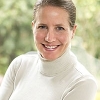 Sophie van Rijn
Faculty of Social and Behavioural Sciences
srijn@fsw.leidenuniv.nl | 071 5272727
-
Veni grants for 18 Leiden researchers
Eighteen researchers from Leiden University have been awarded a Veni grant by the Dutch Research Council (NWO). This grant gives promising young researchers the opportunity to develop their ideas for a period of three years.
-
Michiel Westenberg advocates prevention for social anxiety: ‘Why wait until the damage has been done?’
Shyness is perfectly normal, Michiel Westenberg stated in his farewell lecture. But that doesn’t mean that social anxiety shouldn’t be identified and addressed in good time. ‘Serious shyness has strong genetic roots; you don’t just get over it.’
-
Psychology Science Day
Science day
-
Dutch Brain Cognition and Behavior Day
Conference
-
How Oncode-PACT is bringing new cancer medicines closer with 325 million in Growth Fund money
How can you ensure that more experimental drugs reach the finish line? At the moment, only one in twenty cancer drugs that are tested on humans makes it to the market. This is an enormous loss for patients and society. With a grant from the National Growth Fund, Oncode-PACT aims to efficiently select…
-
Can extreme antisocial behaviour be traced back to the brain?
The brain structure of young people with conduct disorder differs significantly from that of their typically developing peers. This is the conclusion of an international study that analysed more than two thousand MRI scans, recently published in The Lancet Psychiatry. Dr Moji Aghajani, one of the principal…
-
‘It’s a great motivator if your research can be life-changing in the real world’
Our university labs are bursting with cutting-edge research, but how do you commercialise these inventions and discoveries or translate them into outcomes that benefit society? Professor of biological chemistry Nathaniel Martin started a spin-off company with his team. ‘When it comes to valorisation…
-
Success with NWO for social and behavioural scientists
Ten Leiden social and behavioural scientists have successfully applied for the NWO Open Competition. With this Open Competition, NWO gives researchers the chance to start small, high-risk, innovative or promising research projects.
-
An app to help children overcome anxiety
Anke Klein and her team have devised a fun and useful app to help anxious children. In the app, children can upload a video of themselves showing, for example, something that went well for them and share their success with parents, granny or grandad. Developmental psychologist Klein talks about the…