601 search results for “roman provinciale archaeology” in the Staff website
- Daring questions in Islam
-
 Rafal Matuszewski
Faculty of Humanities
r.matuszewski@hum.leidenuniv.nl | 071 5272701
-
 Manon Post
Faculty of Humanities
m.j.j.post@hum.leidenuniv.nl | 071 5271257
-
 Marjolein Jorna
Faculty of Humanities
m.jorna@hum.leidenuniv.nl | 071 5271646
-
Leiden archaeologist investigates washed up plastics with National Geographic grant
Roberto Arciero is part of RESPIRE project (Research Educational and Storytelling Project in Italian Remote Ecosystem), an international and interdisciplinary research team led by Martina Capriotti (University of Camerino) that received the National Geographic Meridian grant. Among the different topics,…
-
End of Academic Year Event Archaeology
Social event
-
Archaeologist Alejandra Roche Recinos investigates ancient immigration in Southern Guatemala
In June 2024 the Faculty of Archaeology welcomed a new Assistant Professor. Dr Alejandra Roche Recinos, originally from Guatemala, will strengthen the Faculty’s expertise on the archaeology of Central America. ‘I want to explore the lesser known archaeology of Southern Guatemala.’
-
Disorienting Empire
Conference, Workshop
-
Throwback to Faculty Lecture 'Water Legacy: Mayan World Meets the Netherlands'
On March 11, a travelling photo exposition on the Mayan archaeological site El Mirador, in Guatemala, saw its festive opening at the Van Steenis building. For the occasion a special Faculty Lecture was organised, entitled 'Water Legacy: Mayan World Meets the Netherlands'. We were honored to receive…
-
Citizen science project Heritage Quest wins European Heritage Award / Europa Nostra Award 2022
Gelderland Heritage and Leiden University’s Faculty of Archaeology have won the European Heritage Award / Europa Nostra Award 2022 in the ‘research’ category with the Heritage Quest citizen science project. ‘Heritage Quest has shown that citizens can play an active role in protecting cultural heritage…
-
New technique makes it easier to determine how our ancestors used fire
The use of fire can tell us a lot about human evolution. Archaeologist Femke Reidsma has developed a more accurate technique to identify how our ancestors used fire. Existing archaeological studies will need to be revised. Reidsma’s study was published in Nature Scientific Reports on 2 November.
-
Book Launch: Archaeological Perspectives on Contested and Political Landscapes
Book Launch
-
Archaeological Forum: Maaike de Waal | Jason Laffoon and Lisa Anderson
Lecture
-
 Peter Lode
p.lode@science.leidenuniv.nl | 071 5272727
-
 Cleody van der Eijk
c.van.der.eijk@arch.leidenuniv.nl | 071 5272727
-
 Leah Powell
l.r.powell@arch.leidenuniv.nl | 071 5272727
-
Maia Casna
m.casna@arch.leidenuniv.nl | 071 5272727
-
 Lotte Nagelhout
l.nagelhout@arch.leidenuniv.nl | 071 5272727
-
 Jan Kolen
j.c.a.kolen@arch.leidenuniv.nl | 071 5271284
-
 Pieter ter Keurs
Faculty of Humanities
p.j.ter.keurs@hum.leidenuniv.nl | 071 5272727
-
Archaeologist Natalia Donner receives an award from Panamanian Embassy
In the context of Panama’s independence month, the Panamanian Embassy in the Kingdom of The Netherlands decided to recognize Natalia Donner’s contributions to the study of Panamanian history and culture, as well as her role in a massive repatriation project.
-
 Bjørn Peare Bartholdy
b.p.bartholdy@arch.leidenuniv.nl | 071 5277843
-
 Lucas da Costa Maciel
l.da.costa.maciel@arch.leidenuniv.nl | 071 5272727
-
 Irini Sifogeorgakis
e.sifogeorgakis@arch.leidenuniv.nl | 071 5272727
-
 Ilse Kamerling
i.m.kamerling@arch.leidenuniv.nl | 071 5272394
-
 Alicia Walsh
a.s.c.walsh@arch.leidenuniv.nl | 071 5272727
-
 Carolina Pereira De Queiroz Monteiro
c.monteiro@arch.leidenuniv.nl | 071 5272727
-
 Laura Llorente Rodriguez
l.llorente.rodriguez@arch.leidenuniv.nl | 071 5275389
-
 Marie Soressi
m.a.soressi@arch.leidenuniv.nl | 071 5275355
-
Open Science Week at Archaeology: Let's talk about publishing
Festival
-
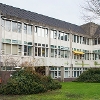 Reuvens
Reuvensplaats 2-4, Leiden
-
Bleda Düring investigates social inequality in Cyprus with ERC Advanced Grant
Archaeologist Prof Bleda Düring has been awarded a prestigious ERC Advanced Grant for his research on the emergence of social inequalities in the transition from the Copper Age to the Bronze Age in Cyprus. Using excavations, isotope analysis and cultural interpretations, he investigates how and why…
-
Tentoonstelling: Het onvertelde Caribische verhaal
Het zichtbaar maken van ongeschreven verhalen van inheemse culturen en volken van de Cariben. Dat doet de tentoonstelling ‘Caribbean Ties’ in de Oude UB.
-
Arjan Louwen wins LUS Teaching Prize: 'He stands out for his passion and dedication'
During the ceremony of the Opening of the Academic Year, University Lecturer Arjan Louwen has won Leiden University's prestigious LUS Teaching Award. The prize, awarded annually by the Leiden University Student Platform (LUS), honours lecturers who excel in their teaching. For Louwen, the nomination…
-
Archaeologist at Binnenhof: ‘Even the staff ate heron’
An Iron Age skull, a unicorn for cleaning your ear and thousands of beer jugs. Alumnus and archaeologist Chris Muysson has made remarkable discoveries at the Binnenhof government complex in The Hague. ‘Each puzzle piece tells us more about its history.’
-
Austrian Studies Fund Lunch Talk: “The Early Modern Discovery of the Roman limes along the Danube and its impact on 16th-Cen. Austrian Architecture”
Lecture, Austrian Studies Fund Lunch Talk
-
Investigating Caribbean migrations with a Vidi grant: ‘With isotope analysis we can look at individual behaviors and long term patterns’
Archaeologist Jason Laffoon was awarded an NWO Vidi grant for an innovative investigation into ancient migrations in the western Caribbean. The innovative character of this research project lies in the wide-scale application of isotope analysis and isotope mapping. ‘We aim at further developing methods…
-
Amanda Henry appointed Full Professor in Evolution of Hominin Diets
As of 1 September, archaeologist Amanda Henry has been appointed Full Professor at the Faculty of Archaeology, where she will hold the chair in Evolution in Hominin Diets. The appointment marks a new chapter in her academic journey, building on her longstanding research into ancient human diets and…
-
Preserving Syrian excavation data: ‘the documentation here in Leiden is the only thing that’s left’
The Faculty of Archaeology used to be involved in several excavations in Syria, before the outbreak of civil war made travel to the region impossible. One of these excavations is the one of tell Hammam al-Turkman, which started in 1981. Student Ruben Hartman, together with archaeologist Dr Diederik…
-
PhD candidate Marie Kolbenstetter helps repatriate Honduran heritage
In a significant step toward restoring cultural heritage, PhD candidate Marie Kolbenstetter has played a pivotal role in repatriating a collection of 133 archaeological artefacts from the prestigious Musée du quai Branly in Paris back to their place of origin in southern Honduras. Her efforts underscore…
-
Leiden archaeologists play a role in repatriating Central and South American heritage
On 3 September 2025, more than 30 archaeological objects were returned to Peru, Panama and Costa Rica. The objects come from a private collection belonging to the descendants of physician and amateur archaeologist Dr Hans Feriz. In her will, his daughter stipulated that the objects collected by her…
-
Millions in grant funding for research on traumascapes: sites of pain and loss
A consortium led by Leiden University has been awarded 6.75 million euros to research traumascapes: physical places associated with collective trauma and loss. The research team aims to make these places more visible, accessible and inclusive.
-
Maarten Jansen compares ancient Mexican writing systems as Distinguished Emeritus Professor in Bonn
Maarten Jansen, professor emeritus at the Faculty of Archaeology, was appointed as Distinguished Emeritus Professor for two years at the University of Bonn. In this position, Jansen, a world-renowned specialist on ancient Mexican pictorial manuscripts, will further expand upon the long-standing collaboration…
-
Looking for the earliest European home with an ERC Consolidator Grant
During the Late Pleistocene, Europe was a cold and unforgiving place to live. Even so, groups of early modern humans roamed around, just like their Neanderthal counterparts. It is unclear what kind of dwellings these people inhabited to shelter them against the elements, especially in regions without…
-
Research by Leiden archaeologists in The Jordan Times
Recent fieldwork at the vast desert region in north-eastern Jordan has revealed an immensely rich heritage of an area that is difficult to access and archaeologically less known. Professor Peter Akkermans was interviewed about his groundbreaking research in this area, known as the Black Desert.
-
 Cornelis van Tilburg
Faculty of Humanities
c.r.van.tilburg@hum.leidenuniv.nl | 071 5272727
-
Widespread cultural diffusion of knowledge started 400,000 years ago
Different groups of hominins probably learned from one another much earlier than was previously thought, and that knowledge was also distributed much further. A study by archaeologists at Leiden University on the use of fire shows that 400,000 years ago knowledge and skills must already have been exchanged…
-
Import in the Stone Age? How object biographies shed new light on the Neolithic
On April 22, Lasse van den Dikkenberg defended his dissertation: Living with Flint. For this, he examined flint finds from the Rhine-Meuse Delta. These finds belong to the Vlaardingen culture, which existed here from 3400-2500 BC. His research revealed that import played a larger role in the Neolithic…
-
Local Panama communities work with archaeologists on historic land rights
The question of land property titles is a common source of conflict between indigenous communities and federal authorities all over the Americas. A new Panamanian law have led indigenous communities to reach out to archaeologist Dr Natalia Donner. A grant from the Centre for Indigenous American Studies…
-
Researcher develops Google for archaeologists
An incredible quantity of archaeological reports are stored in digital archives. If you want to search for information in them, you have to do this manually. And that is a real chore. Archaeologist Alex Brandsen has now used deep learning, a form of artificial intelligence, to develop a search engine…