
1,071 search results for “vascular and regenerative medicine” in the Public website
-
Why Leiden University?
We are committed to provide you with meaningful, rigorous and quality graduate experiences in a personalized environment with a cutting edge research infrastructure and internationally renowned supervisors.
-
Brazil
This is an Erasmus+ International Credit Mobility project of Leiden University’s Faculty of Medicine with Fundacao Oswaldo Cruz in Brazil.
-
Tanzania
This is an Erasmus+ International Credit Mobility project of Leiden University’s Faculty of Medicine with Kilimanjaro Christian Medical Center in Tanzania.
-
Contact
Leiden University-European Center for Chinese Medicine
-
Leiden Academic Centre for Drug Research
Drug development is a complex process in which many parties work together. Every day, the researchers at LACDR devote their energies to developing drugs that are new, better, more efficient and easier to produce. And thus to the millions of patients who know all too well why this research in Leiden…
-
Leiden Early Drug Discovery & Development
Despite recent advances in medicine, many devastating disorders like cancer and cardiovascular, neurodegenerative and infectious diseases still lack effective treatments. In order to address this challenge, we, as scientists from Leiden University, joined hands in the LED3 network. LED3, for Leiden…
-
Robert Verpoorte
Emeritus professor at the Natural Products Laboratory, Institute of Biology, Leiden University - the Netherlands
-
Industrial Pharmacy (MSc)
The master’s specialisation Industrial Pharmacy at Leiden University examines safety and quality control in the production of medicinal products, and prepares students for a career in Quality Assurance and Quality Control in the biotechnological and pharmaceutical industry.
-
Indanes-Properties, Preparation, and Presence in Ligands for G Protein Coupled Receptors
The indane (2,3-dihydro-1H-indene) ring system is an attractive scaffold for biologically active compounds due to the combination of aromatic and aliphatic properties fused together in one rigid system.
-
Science Based Business
Business Studies spans science, medicine, and business, focusing on areas such as technology management, innovation, entrepreneurship, operations, and decision making.
-
Teaching
At Molecular Physiology we teach the following courses within the Leiden Institute of Chemistry's Chemistry and Life Science and Technology programmes.
-
Strategy
The Division of Systems Pharmacology and Pharmacy (SPP) aims to develop precision medicine approaches to characterize and predict variation in treatment response and enhance translational drug development strategies.
-
Alvaro Viljoen
Professor at the Department of Pharmaceutical Sciences, Tshwane University of Technology, Pretoria - South Africa
-
Systems Pharmacology
The aim of the research programme Systems Pharmacology lies in the development of personalised medicine strategies, and development of new systems-based approaches in translational and clinical pharmacology.
-
Diversity and inclusion at the faculties
The D&I Expertise Office works closely with the faculties of Leiden University.
-
Information activities
Get to know us through our online events for prospective students!
-
Cardiovascular and Metabolic Therapeutics
This research group, headed by Miranda van Eck, focusses on understanding the molecular mechanisms underlying cardiovascular and metabolic diseases. Cardiovascular disease constitutes a major health issue worldwide. Although significant knowledge has been obtained on the development of atherosclerotic…
-
Overview
The Division of Systems Pharmacology and Pharmacy (SPP) aims to develop precision medicine approaches to characterise and predict variation in treatment response and enhance translational drug development strategies.
-
Biologics Formulation
A major challenge in the formulation of biopharmaceuticals is to overcome their inherent instability during production, storage, transportation, handling and administration. We are studying underlying mechanisms of degradation of biopharmaceuticals (including therapeutic proteins, vaccines and advanced…
-
Technology and Operation Management (TOM)
The Technology and Operation Management (TOM) group focuses on the operational challenges of adopting new cutting-edge technologies in areas such as artificial intelligence, precision medicine, and high-tech instrumentation.
-
GMP facility for innovative drugs (KFT-J10 / IGFL)
The GMP Facility facilitates development and production of Advanced Therapy Medicinal Products (ATMPs) and chemical (peptide) synthesis.
-
Translational drug discovery and development
We cover the entire spectrum from target identification to the evaluation of the efficacy and safety of novel medicines in clinical practice.
- About this minor
-
Online Course Clinical Kidney, Pancreas and Islet Transplantation
Kidney transplantation is a major advance of modern medicine. This course will give you state of the art updates about what used to be an experimental, risky, and very limited treatment option more than 50 years ago and is now routinely performed in many countries worldwide.
-
Collaborating on big data to unravel disease processes
Patients with the same illness often receive the same treatment, even if the cause of the illness is different for each person. This represents a new step towards ultimately being able to offer every patient more personalised treatment.
-
Awards and Grants 2017
An overview of awards and prizes granted to our staff and students in 2017, as well as special appointments and royal distinctions.
- Admission requirements
-
Indonesia
This is an Erasmus+ International Credit Mobility project of the Leiden University Medical Center with the University of Indonesia.
-
Metabolomics Facility
The Metabolomics Facility of the University of Leiden has brought together two research groups from the Faculty of Science that are well-known for their expertise in two different fields: the Biomedical Metabolomics Facility Leiden, experts in clinical metabolomics and the Natural Products Laboratory,…
-
VSBfonds Beurs
Bachelor, Master, PhD
-
Population Health Management
Are you thinking about studying Population Health Management? Learn more and watch our video with a short introduction on the Master Population Health Management at the Faculty of Medicine by the Educational Director of this programme Marc Bruijnzeels.
-
Molecular Science & Technology (BSc)
Chemistry is all around us: from nutrition and smartphones to medicine. The field is developing rapidly, as the world population continues to grow and resources become scarce. MST will educate you on the basics of working towards a clean and healthy world.
-
Hortus botanicus
Leiden heeft de oudste botanische tuin van Nederland, gesticht in 1590.
- Internship
-
Ethiopia
This is an Erasmus+ International Credit Mobility project of Leiden University’s Faculty of Medicine with Haramaya University in Ethiopia.
-
Erica G. Wilson
PhD at the Natural Products Laboratory, Institute of Biology, Leiden University - the Netherlands
-
Science based business
The mission of science based business (SBB) connects the domains of science, business, and policy. Scientific research we focus on at Leiden in areas such as artificial intelligence promises to reshape our societies for the better. Translating science into positive societal impact however requires new…
-
Polymers in the Liver: Metabolism and Regulation
Metabolic diseases are a burden on the European population and health care system. It is increasingly recognised that individual differences with respect to history, lifestyle, and genetic make-up affect disease progression and treatment response. A Systems Medicine approach, based on computational…
-
Bioorthogonal Antigens as Tool for Investigation of Antigen Processing and Presentation
In order to be able to develop effective medicine and treatments to prevent or cure autoimmune diseases or cancer we need to understand the mechanisms how they arise and what drives their course.Unravelling the fundamental molecular mechanisms influencing the onset and course of diseases such as allergies,…
-
Vision
The Pharmacy research group focusses on the development of predictive models to improve clinical drug efficacy and safety. We work on clinical problems that require further mechanistic understanding and strive for ultimate benefit to patients.
-
Data mining and algorithm development
Due to the modern techniques of combinatorial chemistry and high-throughput screening, data on the biological activity of many millions of compounds is known. However, it is still very difficult to transfer this data into knowledge: if we know that compounds A and B bind to a certain protein with high…
-
Translational Immuno-Pharmacology
The Translational Immuno-Pharmacology group works on translating the efficacy of anti-infective therapy from preclinical (e.g. in vivo) to clinical, and is led by Rob van Wijk. Infectious diseases, such as tuberculosis, are in constant need of new therapies that work better, faster, and with less risk…
-
Apply for new diploma
A diploma is a valuable document that the University issues only once. If somebody loses his or her diploma, he or she can download a copy in the diploma register.
-
Leideners and researchers learn from each other at the Science Market
3 October University has become something of a tradition: a bit of science among the Leidens Ontzet celebrations. During the new and improved edition, the WetenschapsWarenMarkt (Science Market), visitors spoke to researchers about the nitrogen problem, making organs and the city’s connections with A…
-
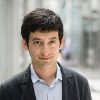 Simcha Jong Kon Chin
Science
s.jong@liacs.leidenuniv.nl | +31 71 527 7201
-
Our people
Some examples of AI-research done at Leiden.
-
Japan
This is an Erasmus+ International Credit Mobility project of the Leiden University Medical Center with Nagasaki University.
-
More effective blocking of CCR2 receptor
The discovery of new medicines is a tedious and lengthy process. On average, over 10,000 molecules need to be studied for one to become a drug and reach the patient. Part of that process are the very costly clinical trials in humans, and candidate drugs often fail due to side effects or lack of efficacy.…
-
University women in Leiden Top 50
International Women's Day (8 March) saw the announcement of the first Leiden Top 50: fifty Leiden women who have made a difference over the past year through their activities. Many of the women in the list are affiliated with our University.
-
Leiden scientists map cell types in fetal kidney
Kidney failure is a serious issue because kidneys cannot regenerate themselves after injury. A possible solution consists of artificially growing healthy kidney tissue. To achieve that, scientists first need to understand kidney development during the earliest stages, in the fetus. Leiden researchers…