
31 search results for “cognitieve impairment” in the Staff website
-
 David Bezpalec
Faculty of Social and Behavioural Sciences
d.b.bezpalec@fsw.leidenuniv.nl | 071 5272727
-
 Jennifer Becker
Faculty of Social and Behavioural Sciences
j.m.becker@fsw.leidenuniv.nl | 071 5272727
-
 Shannon Yuen
 -
 Hanneke Hulst
Faculty of Social and Behavioural Sciences
h.e.hulst@fsw.leidenuniv.nl | 071 5272727
-
 Oort
OortNiels Bohrweg 2, Leiden
-
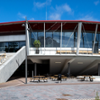 Lecture Hall
Einsteinweg 57, Leiden
-
Help and support
Leiden University supports lecturers in organizing and conducting their teaching. Here you will find more information on practical facilities, technical tools, and didactic advice, as well as answers to questions such as: How do I make literature available? Who can I turn to for ICT support? And how…
-
 Huygens
Niels Bohrweg 2, Leiden
-
 Poortgebouw
Rijnsburgerweg 10, Leiden
-
Organisational Development programme
Leiden University needs space to be able to innovate, and the Organisational Development programme is working on this.
-
 Van Steenis
Einsteinweg 2, Leiden
-
Search engine optimisation
Search engine optimisation (SEO) is the optimisation of website content and other technical aspects to ensure that a site ranks higher in the results of search engines such as Google. As a web editor, you do not have much influence on the technology, but there are points that you can consider when writing…
-
Astronomers and surgeons join forces in the operating theatre
Astronomers and surgeons from Leiden are collaborating with industry to develop an optical instrument that delivers faster, more accurate imaging of tumour tissue and abnormal blood flow during surgery.
-
Creating a mailing or newsletter
Follow these steps to start a new mailing or newsletter.
-
 Jochanan Veerbeek
Faculty of Social and Behavioural Sciences
j.veerbeek@fsw.leidenuniv.nl | 071 5273399
-
What happens on the schoolyard? Sensors on clothing reveal painful patterns
Wat gebeurt er op het schoolplein? Sensoren op kleding openbaren pijnlijke patronen
-
Combining high-level sports and work: ‘It makes me better at both’
She works four days a week as a project manager at LIACS and trains six days a week with the Dutch Para Climbing team. Christiane Luttikhuizen balances her role at the Faculty of Science with competing at a high level in climbing.
-
How accessible are our buildings?
Towards the end of February, three Leiden University buildings will be assessed for their accessibility to people with a disability. The assessment will be carried out by Ongehinderd, a social enterprise committed to making the Netherlands more accessible. Its founder and director, Gerard de Nooij,…
-
TEMPORAL project helps improving hearing of the deaf
Electrical inner ear prostheses like Cochlear Implants (CIs) help deaf and severely hearing-impaired persons to regain many of their communication abilities. The performance of CI in social environments is, however, not optimal. The new "Machine learning To Enhance teMPoral cOding foR cochleAr impLants“…
-
Research projects launched into biodiversity in food and horticulture production
Two Leiden research projects that focus on increasing the biodiversity of Dutch production systems for food and ornamental horticulture have started thanks to funding from the Dutch Research Council's KIC research programme.
-
 Carolien Rieffe
Faculty of Social and Behavioural Sciences
crieffe@fsw.leidenuniv.nl | 071 5273674
-
Can humans observe a single particle of light? (And what does that say about our brain?)
Hoping to learn something about the human brain, Leiden researchers are creating a setup to shoot single photons, particles of light, into someone’s eye. ‘The eye is a passageway to the brain.’
-
Higher CO2 levels are making our food more calorific and less nutritious Food crops
More CO2 in the atmosphere is making food crops more calorific, less nutritious and potentially more toxic.
-
How does the ethics committee work? Suzan Verberne gives an insight
How ethical is research involving humans and robots? And can research on artificial intelligence cause problems when it ends up in the wrong hands? In any research involving humans or their data, the ethics committee assesses where the issues are. Associate professor at LIACS Suzan Verberne chairs the…
-
Satellites reveal: these ecosystems are the most vulnerable to drought
More severe droughts that will also last longer: this will primarily be a problem for irrigated croplands, as discovered by environmental scientist Qi Chen. Mixed forests with a variety of plant species will be the least vulnerable. Chen compared the effects of drought on different ecosystems across…
-
Skin researcher calls for multidisciplinary collaboration: ‘I want to pool expertise’
In dermatology, there should be a high level of multidisciplinary collaboration among institutes and specialists, Professor of Translational Dermatology, Robert Rissmann, will say in his inaugural lecture on 8 July. He is building an infrastructure that will put pre-clinical and clinical skin research…
-
Healthy soil for a healthy gut
How does the soil we grow our vegetables in, affects the health of our gut? And does a healthy soil gives crops a better quality and taste? These are some of the questions Soil ecologist Emilia Hannula and a big consortium will work on. With an NWO-KIC grant of 1.8 million, CML, IBL, FGGA, the LUMC,…
-
When Deafness Enters the System: Family Dynamics and Psychosocial Functioning of Preschool Children
PhD defence
-
LCN2 seminar November 2025
Lecture
-
D&I Symposium 2024: What have we achieved with a decade of diversity policy?
How has progress been made on diversity and inclusion at Leiden University over the past decade? Attendees reflected on this at the D&I Symposium 2024: Untold Stories. And in the workshops, students and staff discussed the next steps toward a more inclusive community.
-
University diversity policy is alive and kicking: ‘We need to acknowledge each other’s experiences’
Leiden University has had a diversity policy since 2014. The aim is to create a diverse and inclusive learning and working environment for all students and staff. Diversity Officer Aya Ezawa updates us on the process and the results. It’s now 2022, what has already changed?