1,679 search results for “metals world” in the Public website
-
What’s wrong? Ancient Corrections in Greek Papyri from Egypt
This project looks at the Ancient Greek language from the perspective of the ordinary writer. A large corpus of more than 60.000 Greek texts on papyrus, from private letters to petitions and contracts, offers an excellent opportunity to study the Greek language as written by non-literary writers in…
-
The Chinese diaspora, race and US foreign policy
The project focusses on how US views of the Chinese diaspora in Southeast Asia influenced its strategic interpretations of the region.
-
between Viruswaarheid and Extremist-right in Dutch News Magazine One World
Jelle van Buuren, Assistant Professor Institute of Security and Global Affairs, discusses why extremist-right activists can be found in the corona-sceptic movement in Dutch News Magazine One World.
-
PRINS introduces students to the world of practice: ‘I’m now even considering a career at the Ministry’
The successful PRINS (PRactising INternational Studies) project offers International Studies students an introduction to the world of practice. In the last semester of their bachelor’s programme, they work as consultants for real-life clients, ranging from Rabobank to Greenpeace. We took a look at the…
-
Security Studies, you learn about everything that is going wrong in the world right now
Four students who completed the Bachelor's in Security Studies share their experiences. What did they learn? Where did they end up after graduating? And do they still use the skills they acquired during their studies?
-
Reflecting on Professor Carrie Vout's Masterclass on Classical Art
From March 27 to 31 Byvanck Professor Carrie Vout gave the intensive masterclass Classical Art - Definitions, Politics, Limits. This special lecture series was open to students and PhD candidates in Archaeology and Classics. One of the attendees, Nicky Schreuder, on the class: 'It was a critical and…
-
Erkens presents a paper at the World Congress of the International Society for Labour and Social Security Law (ISLSSL) in Turin
Last week Hanneke Bennaars and Yvonne Erkens visited the World Congress of the International Society for Labour and Social Security Law (ISLSSL) which was held from 4 to 7 September 2018 in Turin, Italy. The theme of the congress was “Transformations of Work: Challenges for the National Systems…
-
A Roman camp or not? How our archaeologists found the answer
Archaeologists from Leiden University find what is clearly an earth wall and ditch structure in the woods near Ermelo. They suspect it may be the remains of a Roman military camp, but as yet have no conclusive evidence. Will they be able to solve the puzzle?
-
New measuring method reveals: more plastic ón than ín your salad
It's now possible to measure how many plastic particles there are in our food. Chinese scientists and Leiden professor Willie Peijnenburg applied their new method to lettuce and wheat. Their results were published January 20 in Nature Nanotechnology.
-
Chemotherapy without side effects? It’s possible, with light
Nausea, neurologic pain and hair loss: some of the severe side effects of chemotherapy. Not necessary, biochemist Liyan Zhang showed. Together with Leiden biologists and others, she achieved great results with a drug that is only active in combination with light. Zhang will defend her PhD on 4 July.
-
Rebellious birds make nests from anti-bird spikes
Innovation in nest building: bird nests made from anti-bird spikes. Researchers from Naturalis Biodiversity Center and the Natural History Museum Rotterdam describe this behaviour in a publication.
-
Light and nanoparticles against cancer
Leiden PhD student Xuequan Zhou has designed a new promising molecule that efficiently kills cancer cells, but does not harm healthy tissue. The trick: the drug is only active when irradiated with light. Zhou’s new compound does this extra efficiently by cleverly self-organising into nanoparticles.…
-
Will soap and sunlight solve the energy problem?
A consortium of international researchers comes with a unique solution to the energy problem. By mimicking photosynthesis, they aim to produce sustainable fuels out of sunlight, water, and CO2. Their secret? ‘Soap bubbles’, says Leiden chemist Sylvestre Bonnet, who is part of the consortium.
-
a great motivator if your research can be life-changing in the real world’
Our university labs are bursting with cutting-edge research, but how do you commercialise these inventions and discoveries or translate them into outcomes that benefit society? Professor of biological chemistry Nathaniel Martin started a spin-off company with his team. ‘When it comes to valorisation…
-
‘There are great similarities between drama as an art form and the legal world’
The Lucia de Berk case or the suicide of Slobodan Praljak at the International Criminal Tribunal for the former Yugoslavia: certain trials keep popping up in media. In her dissertation, Tessa de Zeeuw examines the cultural appeal of such cases and analyses artistic responses. ‘Artworks sometimes have…
-
'If you think astronomy is a man's world, then it's your job to make a change'
During her master's thesis, Nashanty Brunken (24) worked in a team with five other women. With this female team, they discovered the largest molecule so far identified in a disc. 'I have learned so much and because we are all women, it is incredibly empowering. It's very cool to see how far we've come…
-
Together towards a Circular System: Leiden contributes to Growing with Green Steel
A complete transformation of the steel cycle in the Netherlands with the ultimate goal of a CO2 neutral steel sector by 2050. For this purpose, the Growing with Green Steel program receives €100 million from the National Growth Fund. From Leiden, Professor of Industrial Ecology René Kleijn is involv…
-
How polluting buildings and machinery make rich countries ever richer
Rich countries are getting richer because of environmentally polluting (construction) investments from the past, largely at the expense of poor countries. This was shown by long-term economic and environmental data. 'The gap between poor and rich countries is widening.' Scientists from the Leiden Institute…
-
Dutch Research Council Open Competition grant for three projects with Leiden researchers
Three research projects with researchers from Leiden University have received a Dutch Research Council Open Competition Science-M grant. This is for innovative, high-quality fundamental research within the science domain.
-
Bronze Age Bling
In January 2015, during an excavation ahead of a road-building project in the west of the Netherlands, archaeologists from the Faculty of Archaeology at Leiden, ARCHOL BV and ADC Archeoprojects recovered an extraordinary set of Bronze Age artefacts.
-
How a bachelor’s student contributed to better chemical simulations
Doğukan Yilmaz chose a study that aligned with his favourite subjects, and it paid off. For his bachelor thesis, he developed a new model to better predict an important chemical reaction. ‘On the edge of what is possible at the bachelor level,’ his supervisors write. Thanks to his impressive achievements,…
-
Three awarded research projects in NWO-XS call
Cryogenic memories, antibiotic treatment for urinary tract infections and recycling plastic sustainably. These are the subjects of the three NWO-XS grants awarded to Leiden Science researchers.
-
Leiden chemists discover exceptionally efficient catalyst for hydrogen peroxide production
Research of the Leiden Institute of Chemistry into the development of a sustainable fuel cell has accidentally resulted in an exceptionally efficient catalyst for the production of hydrogen peroxide. The catalyst, discovered by Dennis Hetterscheid and PhD candidate Michiel Langerman, may lead to a more…
-
The hunt for nanoplastics is on
How do you count the nanoplastics in your body? Leiden researchers published a method in Nature Protocols today that should make this easier. Important for both environmental and medicine research.
-
Hoe ontstonden handelsnetwerken in het derde millennium voor Christus?
Grondstoffen werden vroeger over duizenden kilometers afstand vervoerd. Waarvoor werden ze geruild en waarom sloten mensen in West-Azië zich aan bij deze handelsnetwerken?
-
Converting CO2 to store renewable energy
Yuvraj Birdja converted CO2 to formic acid to store energy in a sustainable way, with different catalysts. With this new knowledge, scientists are a step closer in industrially converting CO2 to chemicals and fuels. This can help reduce CO2 emission and the greenhouse effect.
-
Leiden celebrates tenth anniversary of ERC
The European Research Council, better known as the ERC, turns ten this year, and researchers from Leiden celebrated this on 23 June. The ERC is an important provider of research funding, also to Leiden University. Over the past ten years researchers from the University have been awarded over 70 ERC…
-
Cutting and pasting with graphene
To date it has proved very difficult to convert the promises of the miracle material graphene into practical applications. Amedeo Bellunato, PhD candidate at the Leiden Institute of Chemistry, has developed a method of cutting graphene into smaller fragments using a diamond knife. He can then construct…
-
How a Dutchman contributed to the rapid development of Singapore
Frans Stoelinga defended his thesis on 19 November 2020.
- World Education Expos 2021
-
Language variation at home and abroad: the case of P'urhepecha in Mexico and its US diaspora
By documenting lexical and morpho-syntactic patterns among P’urhepecha speakers in Mexico and the US diaspora, this project will investigate the sources of language variation. The ensuing online dialect atlas will serve as an online resource for speakers, learners and researchers of the language.
-
Beyond Post-Communism: Imagining the Future in Times of Transition
How did people across Central and Eastern Europe imagine the future during the transitions of the 1980s and 1990s? The umbrella term ‘post-communism’ does not provide an answer to this question. This project explores how writers and cultural theorists saw the potential future of their societies during…
-
Celia Fonseca Guerra appointed as Professor of Applied Theoretical Chemistry
Since February 1st, 2017 Célia Fonseca Guerra is appointed as professor at the LIC with a chair in applied theoretical chemistry. She will be a member of the Theoretical Chemistry group. Her research interests are related to bioinorganic chemistry and catalysis and her appointment at the LIC will strengthen…
-
'Unions have less clout if a call to strike receives little support'
Recently more than five hundred workers at metal companies in Dutch cities Zwolle and Kampen went on strike. Their aim is better pay and the workers have now been on strike for twelve weeks. Just how effective is striking in collective bargaining?
-
Archaeology in Leiden #10 in QS ranking 2016
The faculty ranks as the best in The Netherlands for the subject Archaeology. Among European institutions we rank 5th.
-
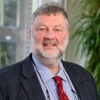 Jürgen Zangenberg
Faculty of Humanities
j.k.zangenberg@hum.leidenuniv.nl | 071 5272579
-
Languages as Lifelines: The Multilingual Coping Strategies of Refugees from the Early Modern Low Countries
From ca. 1540 to 1600, thousands fled the war-stricken Southern Low Countries to the British Isles, Germany, and the Northern Low Countries. Research on this displacement crisis, central to the formation of the Netherlands and Belgium, reflects 21st-century debates on migration and language: language…
-
Civic Continuities in an Age of Revolutionary Change, c.1750–1850
This open access book explores the role of continuity in political processes and practices during the Age of Revolutions.
-
Cecily Rose participated in Symposium on 'A Court for the World? Trust in the ICJ 50 years after South West Africa'
On 30 November 2016, Cecily Rose participated in a Symposium held at the T.M.C. Asser Institute on 'A Court for the World? Trust in the ICJ 50 years after South West Africa'.
-
South American population history revisited: multidisciplinary perspectives on the Upper Amazon
This project, South American population history revisited: multidisciplinary perspectives on the Upper Amazon (SAPPHIRE), investigates population dynamics in western South America on the basis of traces in the geographical, genetic, archaeological, ethnological, and linguistic record.
-
Roman Fake News? Documentary Fictions in the Roman Empire
How can theories about modern disinformation help to understand how Roman documentary fictions functioned?
-
Leiden Law School #24 in QS ranking 2016
This year, Leiden Law School ranks #24 in the QS World University Rankings by Subject. With this, the faculty ranks as the best in the Netherlands for the subject Law.
-
The interplay of syntax and semantics in processing Mandarin Chinese
This PhD project mainly investigates in what way (i.e., serial or parallel mode or other mode) the parser processes the Mandarin Chinese. In addition, are there any specific linguistic features governing the decoding of Mandarin Chinese that are different from other languages? Are there any processing…
-
 Ruhama Yilma Abebe
Faculteit der Rechtsgeleerdheid
r.y.abebe@law.leidenuniv.nl | 071 5272727
-
 Michael McCabe III
Faculty of Archaeology
m.d.mccabe.iii@arch.leidenuniv.nl | 071 5272727
-
 Djibrila Tetereou
Faculty of Humanities
d.tetereou@hum.leidenuniv.nl | 071 5274132
-
 Lianne Otten
Faculteit der Rechtsgeleerdheid
c.a.otten@law.leidenuniv.nl | 071 5272727
-
 Heleen van Amerongen
Faculteit der Rechtsgeleerdheid
n.h.van.amerongen@law.leidenuniv.nl | 071 5272727
-
 Marina den Houdijker
Administration and Central Services
f.m.j.den.houdijker@bb.leidenuniv.nl | 071 5278118
-
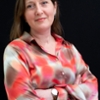 Ymre Schuurmans
Faculteit der Rechtsgeleerdheid
y.e.schuurmans@law.leidenuniv.nl | 071 5272727