
455 search results for “machine” in the Staff website
-
Meet archaeologist Tuna Kalayci: ‘How can we integrate robots into archaeology?’
In the course of 2020 the Faculty of Archaeology was bolstered by some new staff members. Due to the coronavirus situation, sadly, this went for a large part unnoticed. In a series of interviews we are catching up, giving the floor to our new colleagues. We kick off with Dr Tuna Kalayci, who joined…
-
Hybrid Intelligence: Making the unknown visible for Humans and AI
A consortium made up of Leiden University (Institute of Public Administration/Digitalisation & Public Policy, Bram Klievink, Sarah Giest, Bart Schermer), VU (Professor Fabio Massacci), TU Delft, TNO, and Thales has been awarded a NWO grant of 1.5 million euros. This research project looks into the ‘metadata…
-
A quick call with Ella Picavet on affordable period products
Many will add them to their shopping list without a second thought, but what if you don't have enough money to buy period products each month? The university has recently started providing packs of affordable sanitary pads and tampons in the SchoolSupply vending machines. ‘It's just like providing toilet…
-
Carole Tiberius appointed professor of Computational Linguistics: 'If you know how systems work, you can better assess their limitations'
ChatGPT, translation machines and bots: for Carole Tiberius, they are a piece of cake. On 1 January, she was appointed professor of Computational Linguistics. 'There ae two elements to the field: computer science and linguistics.'
-
In Ovo raises 34 million to stop the killing of day-old male chicks
Dutch scale-up In Ovo, a spin-off of Leiden University, has raised 34 million euros to accelerate its international growth and scale-up plans. The new funding is supported by Leiden University’s Libertatis Ergo Holding. The funding has also been provided by, among others, impact investors ECBF and ABN…
-
TEMPORAL project helps improving hearing of the deaf
Electrical inner ear prostheses like Cochlear Implants (CIs) help deaf and severely hearing-impaired persons to regain many of their communication abilities. The performance of CI in social environments is, however, not optimal. The new "Machine learning To Enhance teMPoral cOding foR cochleAr impLants“…
-
ERC Consolidator Grants for Leiden researchers
Five Leiden researchers have been awarded a Consolidator Grant by the European Research Council (ERC). This grant of up to two million euros will enable them to continue and expand their scientific research.
-
The future of quantum
What does the future of quantum look like? Vedran Dunjko (Assistant professor at LIACS and LION) is co-founder of the applied quantum algorithms (aQa) leiden interdepartmental initiative research that will investigate this. They are part of the Quantum Delta NL consortium that was recently awarded substantial…
-
Two Leiden professors appointed KNAW members
The Royal Netherlands Academy of Arts and Sciences (KNAW) announced on 25 April that it has appointed 18 new members. These include Leiden professors Andrew Webb and Jos Raaijmakers.
-
Using data science to promote a healthy life style
Movement behaviours, such as physical activity, sleep, and the amount of time we sit each day, impact our health. Recently, more researchers are looking at the influence of these behaviours combined, but this is a challenging task. For example, it is difficult to monitor in what way movement behaviours…
-
Firefighting robots must be developed responsibly
As robotics advances in the field of emergency response, firefighting robots – or 'firebots' – offer promising improvements in safety and operational efficiency. However, to ensure these technologies truly benefit society, non-technological factors must be considered from the outset.
-
Angkor region was actually a large Medieval city
The Greater Angkor Region in contemporary Cambodia was dramatically more urbanized in the 13th century than previously thought, and home to 700.000 to 900.000 people. These discoveries were made by a research team led by Sarah Klassen. Their findings are published in Science Advances.
-
Five pilot interdisciplinary modules for professionals to start in 2024
Leiden University is known for its pioneering research and teaching. By offering education to professionals (lifelong learning), we want to bring this research and teaching expertise to the field and thus further increase our impact on society. With the aid of a grant from Leiden University Academy,…
-
Secrets of the skull
The Research Institute for Mathematics & Computer Science in Amsterdam hosts a unique X-ray machine that creates 3D scans of the most diverse objects. This allows them to reveal details that remain hidden in regular scans. In a series of articles they showcase examples of what happens in the lab. Leiden…
-
Creating space for dignity and empathy: examining algorithms in government decisions
Automated government decisions can be cost-effective. But using algorithms also makes understanding the reasons behind decisions particularly complicated. Dr Melanie Fink, Assistant Professor at Leiden Law School, has received a Veni grant to fund her research into this.
-
FLAMINGO: dark matter, ordinary matter, and neutrinos in the biggest cosmological simulation ever
Not only dark matter, but also ordinary matter and dark energy are tracked in the largest ever cosmological computer simulation ever. In the FLAMINGO simulations, you can see virtual galaxies and clusters of galaxies emerging over the course of billions of years. This is no easy task: with more than…
-
‘Humans are storytellers’: the power of stories in language development of children and AI models
What do ten-year-old children and chatbots have in common? PhD researcher Bram van Dijk studied language development in both children and AI language models. ‘It’s actually quite practical that we attribute human traits to a chatbot.’
-
When you know how your brain works, you better understand who you are
On Sept. 29, Lara Wierenga, together with graphic designer Dirma Janse, presented their new book Atlas of our Brain. In the presence of fellow scientists and other interested parties, they shared some of the stunning illustrations and mind-boggling facts that can be found in the book.
-
A peek inside art objects: new algorithm makes CT scan more accessible
An X-ray scanner, some small metal balls, and a newly developed algorithm. That is all you need to make a 3D model that enables you to look inside art objects without dismantling them. Thanks to the research of Francien Bossema (Centrum Wiskunde & Informatica and Leiden Institute of Advanced Computer…
-
 Wijnhaven
Turfmarkt 99, The Hague
-
Global network puts spotlight on quantum software
Quantum software is essential to make quantum technology work. Research centers QuSoft and aQa work together at the forefront of the Netherlands’ quantum software efforts. With the launch of the Quantum Software Alliance (QSA), this collaboration now scales globally.
-
 Anna van Buerenplein
Anna van Buerenplein 301, The Hague
-
 Lipsius
Cleveringaplaats 1, Leiden
- Why still learn?
-
Internal communication tools
An organisation the size of Leiden University requires careful internal communication.
-
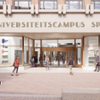 Spui Campus
Spui 5, The Hague
-
COIn grant enables Leiden researchers to improve their research infrastructure.
The COIn grants enable researchers to improve the infrastructure for their research. The initiators of two projects explain how the grant has helped them.
-
Google gift for quantum research
Assistant Professor Vedran Dunjko and his team receive a €100,000 gift from Google to support them in their quantum research. The research focuses on whether quantum computers can provide new ways of understanding the mysteries of high-energy physics. Google is committed to supporting ambitious research…
-
Working together for a safer workplace - 10 - 14 November inspection of electrical devices
Facility, Organisation
-
Vici grants for three Leiden researchers
Three Leiden researchers have been awarded a prestigious Vici grant, the Dutch Research Council (NWO) announced on Tuesday. Two of the researchers work at Leiden University and the third at the Leiden University Medical Center (LUMC).
-
Twee onderzoeksprojecten van ISGA krijgen subsidie NWO Open Competitie
In totaal hebben 21 Leidse onderzoekers succesvol een aanvraag ingediend voor de NWO SGW Open Competitie XS. Twee van de beloonde projecten komen van onderzoekers van FGGA: Silvia D’Amato en Jaroslaw Kantorowicz.
-
AI Journal prominent paper award winners
Professor of Machine learning Holger Hoos together with Frank Hutter, Lin Xu and Kevin Leyton-Brown won the prestigious Artificial Intelligence Journal (AIJ) Prominent Paper Award of this year.
-
Guidelines for the use of GenAI in assessment
Education
-
Pilot with cleaning robot in the Gorlaeus Building
Facility
-
Medical Delta professor Andrew Webb: ‘In The Netherlands, people are much more open to cooperation’
Commercial MRI systems cost millions of euros to purchase and require highly trained technicians to operate. Prof. Andrew Webb works on accessible MRI techniques that offer new opportunities in both developed and developing countries. Webb is a professor at the Radiology Department of the LUMC and,…
-
Leiden University researchers receive Vidi grants
The Dutch Research Council (NWO) has awarded Vidi grants to Leiden researchers.
-
Opinion: AI is taking over our jobs – or is the reality more nuanced?
Following the news that TomTom is cutting 300 jobs due to the use of artificial intelligence (AI), FGGA researchers Friso Selten and Alex Ingrams responded with opinion pieces. They place the news in a broader context and call for a more nuanced debate on AI and job losses.
-
First eLaw Conference: Law and/versus Technology
The first eLaw Conference held at Leiden University was a success and fostered timely discussions on the legal challenges and opportunities presented by digital technologies.
-
‘Digital services lean heavily on the social infrastructure’
Governments worldwide invest huge sums in their digital services and data strategies. Efficiency and effectiveness are key. But these are not achieved for some people at least, says Professor of Public Policy Sarah Giest. This makes the intended digital inclusion far from inclusive, as she will explain…
-
‘Scientists should be careful when interpreting results of AI models’
Anthropologist Rodrigo Ochigame studies how AI is changing the practice of scientific research. From astrophysics to mathematics to climate science, they find that the adoption of new AI models is raising questions about what counts as reliable scientific evidence.
-
Inventors with a nose for technology
Amidst the lathes and welding machines of the Fine Mechanics Department, Emiel Wiegers is working concentratedly on a metal cylinder. He and his colleagues design and construct components for researchers' set-ups. ‘We are a bunch of inventors who enjoy helping the researchers in our Faculty.’
-
Protest against classroom scanners at Lipsius building
On Tuesday a few dozen students and staff from Leiden University protested on the square in front of the Lipsius building against the classroom scanners that have been installed in buildings and lecture halls. They are demanding that the scanners be removed.
-
Dag van de duurzaamheid: Launch Billiecup
Op de dag van de duurzaamheid van 10 oktober startte de 'Billiecup' pre-pilot op de Faculteit der Rechtsgeleerdheid. Aanwezig waren 'plastic soup surfer' Merijn Tinga, Bart Hemmes van het Leiden University Green Office (LUGO) en Esther Kentin, docent bij instituut Metajuridica & projectleider Leiden…
-
ChatGPT has left-wing bias in Stemwijzer voting advice application
The AI chatbot ChatGPT has a clear left-liberal bias when filling in the Stemwijzer voting advice application. This was discovered by master's student Merel van den Broek during an assignment for the Machine Learning for Natural Language Processing course.
-
Peter Grünwald develops a revolutionary statistical theory with an ERC Advanced Grant
Using mathematics to determine whether scientific results are significant or not. Peter Grünwald, full professor of Statistical Learning at the Mathematical Institute (MI) and senior researcher in the Machine Learning group of Centrum Wiskunde & Informatica (CWI), has been awarded an ERC Advanced Grant…
-
Jasper’s Day
On January 1st Jasper Knoester started as our new dean. How is he finding it? What kinds of things is he doing and what does his day look like? In each newsletter Jasper gives a peek into his life as dean.
-
Towards no more glass in the jam with better X-ray scanners
X-ray and CT scanners are widely used devices in research, diagnostics and the industrial sector. And yet they are not nearly as fast and accurate as we would like. Mathé Zeegers is researching the newest technique in the field at the Centre for Mathematics and Computer Science: spectral X-ray imaging.…
-
Applications that never crash again
Doing your taxes, Netflixing or driving a car: more and more daily activities are supported by computer applications. It is challenging and expensive to test software thoroughly, leading to errors in most applications. PhD candidate Benjamin Lion made a mathematical framework to deal with this problem.…
-
Exchange and inspiration at the Education Showcase
On Friday 20 May, from 1 p.m. to 6 p.m., approximately sixty lecturers met at the Faculty Club for the 2022 Education Showcase.
-
Dutch armed forces were willing to accept high casualties in Indonesia
The decolonisation war in Indonesia was violent partly because the Dutch military operated on the conviction that ‘an uprising had to be forcibly suppressed.’ This what historian Christiaan Harinck from the KITLV discovered in his PhD research.