2,423 search results for “board history” in the Public website
-
Executive Board column: Our institutes abroad are part of our international DNA
Ever since its foundation, Leiden University has turned its gaze outwards to other cultures, languages and forms of academic practice. It is only natural, therefore, that we as a university have four institutes abroad: the Royal Netherlands Institute of Southeast Asian and Caribbean Studies (KITLV-KNAW)…
-
 Carolien Stolte
Faculty of Humanities
c.m.stolte@hum.leidenuniv.nl | 071 5277308
-
A Persistent Revolution: History, Nationalism, and Politics in Mexico since 1968
A Persistent Revolution: History, Nationalism, and Politics in Mexico since 1968
-
Challenging monopolies, building global empires in the early modern period
How did free agents in the Dutch Republic react to the creation of colonial monopolies (VOC and WIC) by the States-General? This project answers this question by looking at the role individuals played in the construction of an informal global empire parallel to the institutional empire devised by the…
-
 Alicia Schrikker
Faculty of Humanities
a.f.schrikker@hum.leidenuniv.nl | 071 5272769
-
New History of Fishes. A long-term approach to fishes in science and culture, 1550-1880
From 1550 onwards, a great interest in the natural world developed across Europe. This interest was not only stimulated by a growing knowledge of local flora and fauna, but also by the import of numerous exotic animal and plant species. Think, for instance, of researches and collectors like Gessner…
-
 Maud Rijks
Faculty of Humanities
m.rijks@hum.leidenuniv.nl | 071 5273516
-
Archaeologist Roos van Oosten in Quest Historie
Roos van Oosten's research on medieval cesspits stood on the basis of an article on this subject in Quest Historie, a Dutch magazine about history.
-
Dynastischer Nachwuchs als Hoffnungsträger und Argument in der Frühen Neuzeit
This volume sheds light on the role played by progeny in maintaining dynasties in early modern royal courts as well as the horizontal and vertical interplay between the actors. It attempts to break through the narrative of older research that saw dynasties as a series of male rulers. Instead, these…
-
 Junjie Huang
Faculty of Social and Behavioural Sciences
j.huang@fsw.leidenuniv.nl | 071 5272727
-
 Giliam de Valk
Faculty of Governance and Global Affairs
g.g.de.valk@fgga.leidenuniv.nl | 070 8009028
-
Executive Board column: Running to clear your mind
A lot is going on in the world right now, and our university regularly faces big issues and dilemmas too. Then it can be tricky to switch off. For me, exercise is a way to unwind. We want our staff to be able to relax too and are therefore offering various events and workshops that should help.
-
Profile 1. State formation in medieval Frisia
Politically speaking, the Frisian coastal area constitutes a special case in late medieval Europe since it was not subject to an overlord as it withstood feudalization in the 13th century. Its many sub regions, which were dominated by elites of small noblemen and freeholders, long time succeeded in…
-
 Lukas Milevski
Faculty of Humanities
l.milevski@hum.leidenuniv.nl | 071 5271288
-
Spectacle and Surveillance: The Making and Unmaking of Collective Visual History
What is the iconography of propaganda specifically as it relates to the historical development of political ideologies in modern Egypt and how was/is this propaganda disseminated among creative fields such as cinema, art, monuments, architecture, and literature?
-
Fixing history: Ancient cultural practices of stone sculpture in central Nicaragua
For three millennia, carved sculptures were ubiquitous among ancient peoples in the Americas. Sculpted in stone, metal or wood, they developed into the well-known totem poles, colossal Olmec heads, royal Maya stelae and golden Inca statues.
-
The Impact of Mobility and Migration in the Roman Empire
The Impact of Mobility and Migration in the Roman Empire assembles a series of papers on key themes in the study of Roman mobility and migration.
-
 Dirk Alkemade
Faculty of Humanities
d.g.a.alkemade@hum.leidenuniv.nl | 071 5278052
-
The Rise and Decline of an Iberian Bourgeoisie
The Rise and Decline of an Iberian Bourgeoisie is one of the first long-term studies in English of an Iberian town during the late medieval crisis. Focusing on the Catalonian city of Manresa, Jeff Fynn-Paul expertly integrates Iberian historiography with European narratives to place the city's social,…
-
Captured on paper: fish books, natural history and questions of demarcation in eighteenth-century Europe (ca. 1680–1820)
On the28th of September Didi van Trijp successfully defended a doctoral thesis and graduated.
-
A History of Modern Political Thought in East Central Europe Volume I, Negotiating Modernity in the 'Long Nineteenth Century'
A History of Modern Political Thought in East Central Europe is a two-volume project, authored by an international team of researchers, and offering the first-ever synthetic overview of the history of modern political thought in East Central Europe.
-
Contemporary Art History and Theory in a Global Perspective - Joint Art Talk by Matthew Rampley and Vera Wolff
Alumni event, Arts and Culture
-
Urbanism and municipal administration in Roman North Africa
This project uses archaeological, literary and epigraphic evidence to investigate urban development in Roman-period North Africa, compiling this in a GIS-linked database in order to analyse the development of urban settlement spatially over time.
-
Women and Crime in Early Modern Holland
Crime is men’s business, isn’t it? Women are responsible for 10 percent of crime in Europe. Yet, if we look at the Dutch Republic in the early modern period, we find that in the towns of Holland women played a much larger role in crime.
-
Crime and gender: a comparative perspective. England and the Netherlands, 1600-1800
The central aim is to systematically study differences in gendered crime patterns in the records of different types of courts in various English and Dutch cities in the early modern period.
-
 Kate Brackney
Faculty of Humanities
k.l.brackney@hum.leidenuniv.nl | 071 5277212
-
Introducing the new Faculty Board
On 15 February 2024, Leiden Law School's Faculty Board will enter a new phase.
-
Executive Board column: From the outside looking in (and vice versa)
We know more together than alone. To increase our university’s impact on the region, we have to be open to the world outside. This is how we strengthen our ties and create new opportunities for teaching and research.
-
bye Nova: changing of the guard for student member of the Faculty Board
Nova Verkerk has represented the interests of students as assessor for the past two years. Now her term has come to an end, and on 1 September she will be succeeded on the Faculty Board by Mette Kamerich.
-
Executive Board column: Working on internationalisation with European universities
Our university recently joined the European university alliance Una Europa. Staff from the 11 affiliated universities met in Leiden last week to discuss our collaboration.
-
 Vineet Thakur
Faculty of Humanities
v.thakur@hum.leidenuniv.nl | 071 5271256
-
Crime and gender before the courts of the Netherlands, 1600-1800
The central aim is to systematically study differences in gendered crime patterns in the records of different types of courts in various Dutch cities in the early modern period.
-
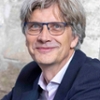 Raymond Fagel
Faculty of Humanities
r.p.fagel@hum.leidenuniv.nl | 071 5272730
-
Enlightened Fish Books: A New History of Eighteenth-Century Ichthyology (1686-1828)
How did learned natural historical inquiries into the underwater world develop in eighteenth-century Europe?
-
Meet the Societal Advisory Board
The Faculty of Humanities wants to take a stand in the middle of society with its research and education. That’s why last year, in the middle of a pandemic, the Societal Advisory Board was founded. What are the members’ plans?
-
Exhibition on Celebrating Curiosity: Four centuries of university history
Fascinating images, articles of clothing and other unique objects from the past four centuries of the history of Leiden University can now be seen in the ‘Celebrating Curiosity’ exhibition in the hall of Rapenburg 70.
-
Executive Board column: My concerns about the increased harassment of academics
Academics increasingly face threats, intimidation and abuse. The WetenschapVeilig platform has been launched to address this. Academics who are being threatened or intimidated can seek help from the platform 24 hours a day. It’s good that we now have this platform. But at the same time, it’s awful that…
-
Early Modern Medievalisms
Early Modern Medievalisms: The Interplay between Scholarly Reflection and Artistic Production
-
Three new Master's specialisations in History: ‘More in line with students’ wishes’
The Master's programme in History at Leiden University is set to change. From September 2026, three of the five specialisations will be replaced by new subjects that are more closely aligned with the field of research and students’ interests. One of these new specialisations will also be taught entirely…
-
The Uses of Justice in Global Perspective, 1600–1900
The Uses of Justice in Global Perspective, 1600–1900 presents a new perspective on the uses of justice between 1600 and 1900 and confronts prevailing Eurocentric historiography in its examination of how people of this period made use of the law.
-
Maxim Allaart appointed assessor of Faculty of Science Board 2016-2017
This academic year Maxim Allaart will hold the position of assessor within the Faculty Board of the Faculty of Science. The assessor is a student member who represents the students’ interests within the Faculty Board.
-
 Jeroen Oosterbaan
Faculty of Archaeology
j.oosterbaan@arch.leidenuniv.nl | 071 5272727
-
 Ying Zhang
Faculty of Humanities
y.z.zhang.2@hum.leidenuniv.nl | 071 5276006
-
Board the Blockchain Train!
When talking about innovative technologies, Blockchain should certainly be mentioned. In the Honours Class ‘Board the Blockchain Train!’, students learn about the influence of technology on, for example, banking transactions or real estate appraisal.
-
Civitates Hispaniae: urbanization on the Iberian Peninsula during the Roman Empire
How do we explain the fact that certain areas had many large cities, while other areas were studded with large numbers of small towns and yet other areas had very few urban agglomerations of any kind?
-
 Soledad Valdivia Rivera
Faculty of Humanities
s.valdivia.rivera@hum.leidenuniv.nl | 071 5272947
-
Hunting for women in Leiden’s history
They existed and were important, but for too long they have remained invisible in historiography: women. Ariadne Schmidt, the Magdalena Moons endowed professor, researches the history of urban culture in Leiden. Women take pride of place in her research. Inaugural lecture on 28 February.
-
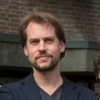 Diederik Smit
Faculty of Humanities
d.e.j.smit@hum.leidenuniv.nl | 071 5272705
-
Thunderstorm: A small cultural history (1752-1830) (in Dutch)
More on the Dutch webpage.
-
Ebifananyi. On photographs and telling histories from and about Uganda
In Luganda, the widest spoken minority language in East African country Uganda, the word for photographs is Ebifananyi. However, ebifananyi does not, contrary to the etymology of the word photographs, relate to light writings. Ebifananyi instead means things that look like something else. Ebifananyi…