1,692 search results for “arabic language” in the Public website
-
The unstoppable advance of Berber
Berber languages have long been banned from public life in North Africa, but the situation has changed drastically. Linguistic research is generating new insights on the distant past and on present-day Dutch Moroccans. This is the finding of Maarten Kossmann, the only professor of Berber Studies in…
-
 Tian Yang
Faculty of Humanities
t.yang@hum.leidenuniv.nl | 071 5275497
-
 I-Fan Lin
Faculty of Science
i.lin@liacs.leidenuniv.nl | 071 5272727
-
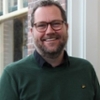 Alwin Kloekhorst
Faculty of Humanities
a.kloekhorst@hum.leidenuniv.nl | 071 5277977
-
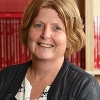 Marian Klamer
Faculty of Humanities
m.a.f.klamer@hum.leidenuniv.nl | 071 5272783
-
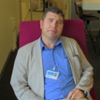 Mahmood Yenkimaleki
Faculty of Humanities
m.y.yenkimaleki@hum.leidenuniv.nl | 071 5272727
-
How do our language rules come about?
Many of the language rules we use today were formulated in the 17th and 18th centuries. In a dual track at the universities of Leiden and Brussels, PhD candidate Eline Lismont investigated why some rules became successful while other rules were quickly forgotten.
-
New round of language courses starts in September
Our courses September courses start soon, be sure to apply in time
-
Leiden was buzzing on the Evening of Languages
What does it sound like when you create your own words in Chichewa? Can you decipher hieroglyphs after just one workshop? Visitors found answers to these and many other questions during the first edition of the Evening of Languages, held in the brand-new Herta Mohr Building. With a sold-out programme,…
-
this is how you create a dictionary for an unknown Middle Eastern language
Leiden scholars succeeded in making Arabic accessible to Western academic communities as early as the sixteenth century. But how did they approach this problem?
-
Literacy development for Deaf/Hard-of-hearing children in the early years
Lecture, Sign Languages & Deaf People
-
Binge-eating disorders in the Arab world and the Netherlands
Psychologist Bernou Melisse was shocked at the long waiting lists in the Netherlands for people with binge-eating disorders. The problem was not yet on the map in Saudi Arabia. She therefore decided to study how people suffering from binge eating can be helped better in their own region of the world.…
-
 Maarten Kossmann
Faculty of Humanities
m.g.kossmann@hum.leidenuniv.nl | 071 5272649
-
Vici for Victoria Nyst: 'The history of sign language contributes to identity formation'
Victoria Nyst's love for sign language was sparked when she accidentally ended up at a deaf school while studying African linguistics. The university lecturer has since been awarded a Vici grant to research the history of these languages.
- NVIC Book Fair
-
Contact-induced change in Dolgan
This study explores the role of linguistic data in the reconstruction of Dolgan (pre)history by analyzing contact-induced changes and using them to infer information about the nature of the contact settings in which they occurred.
-
 Marijn van Putten
Faculty of Humanities
m.van.putten@hum.leidenuniv.nl | 071 5271583
-
 Ahab Bdaiwi
Faculty of Humanities
a.bdaiwi@phil.leidenuniv.nl | 071 5271639
-
Mateo Cohen
Faculty of Social and Behavioural Sciences
i.m.cohen@fsw.leidenuniv.nl | 070 8009500
-
Beatrice Gründler: ‘Literary text can help us understand Europe better’
'Consider languages in their shared context.' That is the message of Professor and Arabist Beatrice Gründler, who will receive an honorary doctorate from Leiden University on 8 February. ‘I would like people to learn that Arabic history has a close connection with Europe.’
-
 Suzan Verberne
Faculty of Science
s.verberne@liacs.leidenuniv.nl | 31 71 527 7043
- Epilogue
-
 Inge Ligtvoet
Faculty of Humanities
i.j.g.c.ligtvoet@hum.leidenuniv.nl | 071 5271956
-
Language loosens tongues
Language research generates a wealth of information about people: from our history and cultural differences to the way we learn. Leiden University shares its knowledge and passion for this topic via de MOOC on ‘Miracles of Human Languages’ and the web dossier on Language Diversity.
-
Poems in sign language
Will Leiden be the first city to have wall poems in sign language? It will, if sign language researcher Victoria Nyst has her way. She recently started a crowdfunding campaign together with the Leiden Language Museum and the TEGEN-BEELD Foundation.
-
 Jos Schaeken
Faculty of Humanities
j.schaeken@hum.leidenuniv.nl | 071 5277772
-
 Esther Op de Beek
Faculty of Humanities
e.a.op.de.beek@hum.leidenuniv.nl | 071 5274381
-
Ancient Greek spelling mistakes shed new light on language development
If you had something important to write down in ancient times, you would usually write in Greek in the eastern Mediterranean. University lecturer Joanne Stolk has been awarded an ERC grant to explore the kinds of spelling mistakes that were made in these scripts. And, more importantly, what improvements…
-
Human language inspired AI – and now we can use that AI to learn about language
Yuchen Lian defended her thesis on AI and language evolution at Leiden University.
-
The art of control without repression
How did the Arabs manage to maintain an empire based on Islamic principles for three hundred years? Arab expert Petra Sijpesteijn and her team will be examining this question over the coming five years, focusing on the correspondence of ordinary people. The research is being funded by an ERC Consolidator…
-
'Language is part of your identity’
Rik van Gijn was appointed professor of Ethnolinguistic Vitality and Diversity in the World from 1 December 2024. He is keen to use the position to set up research on language vitality. ‘People almost never give up their mother tongue entirely voluntarily.’
-
Publications
The NVIC has published a series of scholarly publications in Arabic and several European languages.
-
Self-directed learning with mobile technology in higher education
Language learners in higher education increasingly conduct out-of-class self-directed learning facilitated by mobile technology. This project aims to explore how university students use mobile technology for their self-directed language learning and investigate factors that influence their self-directed…
-
Small quantities and the mass-only puzzle
This PhD project investigates the distribution and interpretation of quantity expressions in relation to the mass/count distinction cross-linguistically.
-
 Yuchen Lian
Faculty of Science
y.lian@liacs.leidenuniv.nl | 071 5277050
-
Calendar Academic Language Centre
Important dates in the Academic Language Centre calendar
-
Understanding Questions
This project proposes an integrated and comparative study on the syntactic, semantic, prosodic and processing aspects of in-situ wh-questions, taking the Grammar-parser correspondence hypothesis (Phillips 1996, 2003) as a guiding principle.
-
 Tingting Hui
Faculty of Humanities
t.hui@hum.leidenuniv.nl | 071 5277225
-
 Joost Grootens
Faculty of Humanities
j.grootens@hum.leidenuniv.nl | 071 5272727
-
 Paul van Els
Faculty of Humanities
p.van.els@hum.leidenuniv.nl | 071 5272595
-
 Marcello Bonsangue
Faculty of Science
m.m.bonsangue@liacs.leidenuniv.nl | 071 5277095
-
Multilingualism in young children is a good thing: 'Languages support each other'
During Leiden City of Science 2022, Janet Grijzenhout and Hannah De Mulder will put multilingualism in the spotlight by organising multilingual storytelling afternoons. They hope to show parents that raising children multilingually is achievable as well as beneficial.
-
Reproducing Europe
Cities in Europe house an increasingly diverse population with roots in many different parts of the world. They have also seen the growth of anti-immigrant sentiments and new forms of nationalism. Who belongs to Europe and what such belonging entails is heavily debated. What comes out of this paradoxical…
-
New professor Alwin Kloekhorst: 'The origin of your language also says something about you'
Where does Dutch come from? Newly appointed Professor Alwin Kloekhorst looks for an answer to that question in millennia-old languages from Anatolia, the Asian part of present-day Turkey. 'A new interpretation in one of the Anatolian languages can have consequences for dozens of other languages.'
-
The Role of Law in Libya’s National Reconciliation
The Role of Law in Libya’s National Reconciliation (RoLLNaR) was a research project that ran from 2017 to 2020. It identified and assessed the role of law – both actual and potential, enabling and constraining – with regard to major challenges of reconciliation in Libya. The project was led by Dr. Suliman…
-
Detecting and comparing sign languages
For his PhD project, computer scientist Manolis Fragkiadakis is developing a tool that can compare videos of sign language corpora. This would make it possible to detect differences between sign languages and prevent translation errors. Ultimately, the tool could be used to compare sign languages from…
-
How do people best learn a language? 'It's incredible what you do when you talk'
According to Nivja de Jong, second language acquisition is 'the most fascinating subject in linguistics'. As a recently appointed professor of Second Language Acquisition and Pedagogy, she studies the question of how best to teach people a new language.
-
 Noa Schonmann
Faculty of Humanities
n.schonmann@hum.leidenuniv.nl | 071 5271432
-
Programming resembles learning a language
What languages do you speak? According to Felienne Hermans, ‘Python’ could be an answer to this question. Hermans studies how people learn to program at the Leiden Institute of Advanced Computer Science (LIACS) of Leiden University. In an article of the NewScientist she explains why programming is similar…
-
Five languages in one poem
In the Bachelor Honours Class ‘The Noble Art and Tricky Business of Translation’, Honours students learn about the tricky business of translation. To gain hands-on experience, students had to translate a poem for the seminar on poetry. For some translators-to-be, one language was simply not enough.