
581 search results for “social bacteria” in the Staff website
-
How bacteria survive with almost no oxygen
Researchers in Leiden have, for the first time, observed how a specialised enzyme helps bacteria stay alinve when oxygen levels are low, and how that process can be blocked. The discovery opens up new possibilities for targeted antibiotics.
-
On the hunt for energy: Bacteria out of breath
Inaugural lecture
-
Researchers tackle antibiotic-resistant bacteria
When a bacterium becomes more resistant to one antibiotic, it sometimes becomes more sensitive to another. To better understand this interaction, researchers from the Leiden Institute of Biology (IBL) and the Leiden Academic Center for Drug Research (LACDR) under supervision of Daniel Rozen and Coen…
-
'One in five bacteria we tested were capable of breaking down plastic'
Leiden PhD candidate Jo-Anne Verschoor discovered that nearly twenty percent of the bacterial strains she studied could degrade plastic, though they needed some encouragement to do so. ‘Bacteria are just like people,’ says Verschoor. Her research was published in the journal Communications Biology,…
-
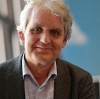 Gilles van Wezel
g.wezel@biology.leidenuniv.nl | 071 5274310
-
Caught in living cells: how bacteria regulate their genes to defend themselves
For the first time, it was shown in living cells how the bacterium E. coli regulates genes that help it survive in a new environment. Biochemist Fatema Zahra Rashid managed to do this using a technique she fine-tuned. Her research into changes in 3-dimensional chromosome structure offers clues for ways…
-
Children become bacteria to learn about antibiotics
Last Friday the global Antibiotics Awareness Week begun: an entire week dedicated to antibiotic use. Antibiotics researchers from the LACDR therefore set out to tell primary school pupils about their research. Through role-playing, pupils were drawn into the world of antibiotics: 'Can the teacher not…
-
 Pascal Nuijten
p.nuijten@biology.leidenuniv.nl | 071 5274384
-
 Jo-Anne Verschoor
j.verschoor@biology.leidenuniv.nl | 071 5272727
-
Major Leiden symposium on TB bacteria
More than 1.3 million people worldwide die of tuberculosis (TB) each year, making research on its prevention and control essential. Researchers from various disciplines in Leiden are studying TB. A symposium on 24 March will highlight different activities in the hope of boosting nationwide collabora…
-
Artificial microswimmers work together like bacteria
Microscopic swimmers such as bacteria do not always swim alone. There are advantages to exchanging information and cooperating. Stefania Ketzetzi and colleagues now show in Nature Communications that human-made microswimmers, too, can cooperate.
-
Bacteria without cell wall gobble up DNA from environment
A bacterium hiding from the immune system and picking up bits of DNA from its environment. The result: gaining new traits, such as better protection against antibiotics. Fortunately, we have not found such a damning scenario yet. However, PhD student Renée Kapteijn did find the first clues, which…
-
Bacteria stunt with established plant-soil feedback theory
‘What I find most alluring about soil life is that you can steer it,’ researcher Martijn Bezemer of the Institute Biology Leiden (IBL) reveals. ‘You can ask: What do you want? And then I can transform the soil into something you need. At least, that is what we thought.’
-
Bacteria growing on light and air: a revolution for biotechnology?
Research to experiment with bacteria that grow like plants has been granted the NWO XS grant. These bacteria use light and carbon dioxide to grow, and will be designed especially for use in the biotechnological field. Tijn Delzenne and his supervisor Dennis Claessen can spend 50.000 euros on the exp…
-
Plant stress increases: New research with bacteria offers hope
Soil that is too wet, or too dry. Or with a lot or few nutrients. Due to climate change, the differences are becoming bigger, and plants must increasingly be able to adapt to survive. How do you make plants more stress-resistant? For this purpose, researchers from Leiden, along with other universities,…
-
Not wrapping but folding: Bacteria also organise their DNA (but they do it a bit differently)
Some bacteria, it turns out, have proteins much like ours that organise the DNA in their cells. They just do it a bit differently. This is revealed by new research from biochemists at the Leiden Institute of Chemistry and the Max Planck Institute for Biology. The discovery helps us better understand…
-
A unique defence: Bacteria lose cell wall in the presence of virus
Bacteria temporarily live without their cell wall if dangerous viruses are near. A remarkable feature, as the cell wall is a sturdy barrier against threats. Still, the discovery has a logical explanation ánd might be of a consequence for fighting pathogenic bacteria, according to Véronique Ongenae,…
-
Antibiotics of the future: looking for a new way to kill bacteria
Current antibiotics only address very few target proteins in bacteria to kill them. Researchers know that there are more possible target proteins to tackle the bacteria. The question is: which ones. Thanks to the NWO Vidi Grant, Assistant Professor Molecular Physiology Stephan Hacker and his team can…
-
Status update in the evolutionary race between humans and resistant bacteria: two steps forward for us
A patent for what may be a potent, new antibiotic. And: a clear overview of promising approaches to overcome a crucial resistance tactic employed by bacteria. In the span of one week, two researchers from Leiden are receiving their PhDs, each of them on an important step in the battle against bacteria…
-
‘But how many bacteria live on my hands, then?’ Micro-day in photos
From 22 to 24 October, researchers of the MARBLES-project informed museum visitors about microbes: bacteria and fungi that live all around us. The event was organised around the Micro-day of Leiden, which is this year’s EU City of Science.
-
Social media
Making use of social media is a good way to meet others or to hear about the latest news and developments. But it also has its downsides: disinformation, trolling, disrespectful comments and even the misuse of (personal) data.
-
Leiden’s poo can help rid patients of resistant gut bacteria
Transferring poo from healthy donors to the intestines of chronically ill people has beneficial effects on these recipients’ gut bacteria, also in the longer term. This is the conclusion of research by the Leiden University Medical Center (LUMC) and the Netherlands Donor Feces Bank (NDFB).
-
Bacteria full of potential: searching for new antibiotics through genetic on–off switches
Collaborating and learning from other fields – that is what bioinformatician Hannah Augustijn enjoys most about doing research. During her PhD at Leiden University, she developed new ways to search within bacteria for the antibiotics of the future.
-
Social media
Making use of social media is a good way to meet others or to hear about the latest news and developments. But it also has its downsides: disinformation, trolling, disrespectful comments and even the misuse of (personal) data.
-
grants for research on ultrathin membranes and the biological clock in bacteria
Two research groups involving Leiden University have been awarded a major European grant, the ERC Synergy Grant. This for research on the development of membranes that can clean water and purify medical drugs and research on the biological clock in certain bacteria.
-
Social Café
Agora, Wassenaarseweg 52, 2333 AK, Leiden
-
 Lolita Dsouza
l.a.dsouza@lic.leidenuniv.nl | 071 5272727
-
Social life and settling in
When you decide to move to the Netherlands and bring along your family there is a great deal that needs to be taken care of. We will provide some information on schools, childcare and learning Dutch to help you settle in in the Netherlands.
-
Social media
Making use of social media is a good way to meet others or to hear about the latest news and developments. But it also has its downsides: disinformation, trolling, disrespectful comments and even the misuse of (personal) data.
-
Social and Behavioural Sciences
During an evacuation, all employees and students gather at the front or backside of the Pieter de la Court Building.
-
Social Sciences Connect
Each month, we publish an article showcasing how social science research and education contribute to solving societal challenges. Researchers, lecturers, students, and societal partners work together to make knowledge accessible and to make a difference. Through open science and engaged education, we…
-
Taxes and social security
When moving to the Netherlands, it is important to know whether you are considered resident tax payer or non-resident. Both residents and non-residents are taxed on their taxable income. A number of criteria help determine your status as resident or non-resident.
-
Social safety
Have you experienced or witnessed unacceptable or transgressive behaviour? This page gives information about what you can do yourself and which ‘helplines’ can assist you in this situation.
-
Social security and insurances
As an employee of Leiden University, you are eligible to take out various insurance (schemes) at an attractive discount. On this page, you will also find more information about pension, being unfit for work and unemployment.
-
never boring!’ How Guido Stam built a microscope that can measure bacteria without causing harm
A microscope with incredible sharpness that leaves samples unharmed – Guido Stam helped develop one. During his PhD research, he combined light and electrons to study biological samples. ‘We can now measure things that simply weren’t possible before.’
-
Social media
Making use of social media is a good way to meet others or to hear about the latest news and developments. But it also has its downsides: disinformation, trolling, disrespectful comments and even the misuse of (personal) data.
-
Microbiome ecology professor Ákos Kovács' new job feels like coming home
‘Working in Leiden is a dream come true.’ Ákos Kovács studied in his birth country Hungary and worked in Germany, Denmark and Groningen. As professor of Microbiome Ecology at IBL, he immediately started working together with his new colleagues to make discoveries about the versatile bacterial species…
-
Scientific Conduct for PhDs (Social and Behavioural Sciences)
Research, Transferable skills
-
A computational tool that will transform bacterial genome analysis
Whether a microbe is beneficial or harmful to a plant can now be predicted with high accuracy thanks to bacLIFE. This bioinformatic tool with an intuitive interface makes it much easier to unlock the secrets of bacterial genomes. A group of Leiden biologists presented it in Nature Communications.
-
Grant Elise Mathilde Fund & LUF: Using virus to kill bacteria: design of innovative phage-antibiotic combination treatments to combat antimicrobial
Phage therapy is a novel yet unmatured therapeutic approach in the face of the crisis of antimicrobial resistance (AMR). Dr. Tingjie Guo received a grant from the Elise Mathilde Fund and the LUF to develop innovative phage-antibiotic combination treatment strategy for combating AMR.
-
A smarter way to search for antibiotics
Bacteria carry countless hidden treasures in their DNA: fragments that could hold the key to new medicines. But how do you pick out the most promising ones from millions of options? ‘Look at the switches that turn genes on and off,’ says molecular biologist Gilles van Wezel.
-
Over a million euros for two studies on solutions to antimicrobial resistance
Two consortia led by Leiden researchers have been awarded over one million euros by the Dutch Research Council and the Ministry of Health, Welfare and Sport to find solutions to antimicrobial resistance.
-
 Frank Doolaard
Faculty of Social and Behavioural Sciences
f.t.doolaard@fsw.leidenuniv.nl | 071 5272727
-
 Erik de Kwaadsteniet
Faculty of Social and Behavioural Sciences
kwaadsteniet@fsw.leidenuniv.nl | 071 5274109
-
 Ili Ma
Faculty of Social and Behavioural Sciences
i.ma@fsw.leidenuniv.nl | 071 5272727
-
 Akrati Saxena
a.saxena@liacs.leidenuniv.nl | 071 5272727
-
Academic Outreach: an introduction to sharing your research via social and traditional media
Communication, Outreach, Transferable skills
-
 Kiki Spoelstra
Faculty of Social and Behavioural Sciences
k.e.spoelstra@fsw.leidenuniv.nl | 071 5272727
- Social Exclusion, Unmet Support Needs, and Vulnerability to Extremist Exploitation Among Some Autistic People
-
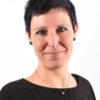 Berna Güroglu
Faculty of Social and Behavioural Sciences
bguroglu@fsw.leidenuniv.nl | 071 5272727