Who are the winners of the Psychology Prizes of 2025?
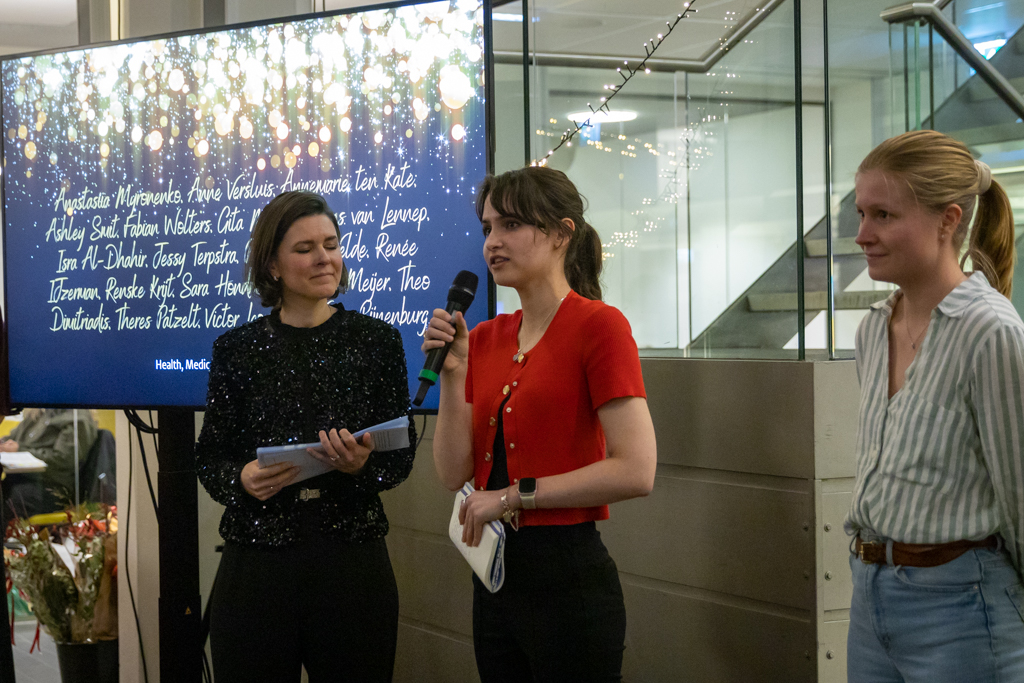
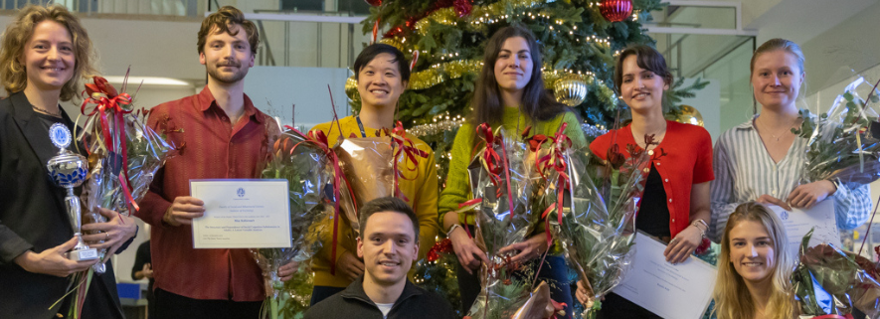
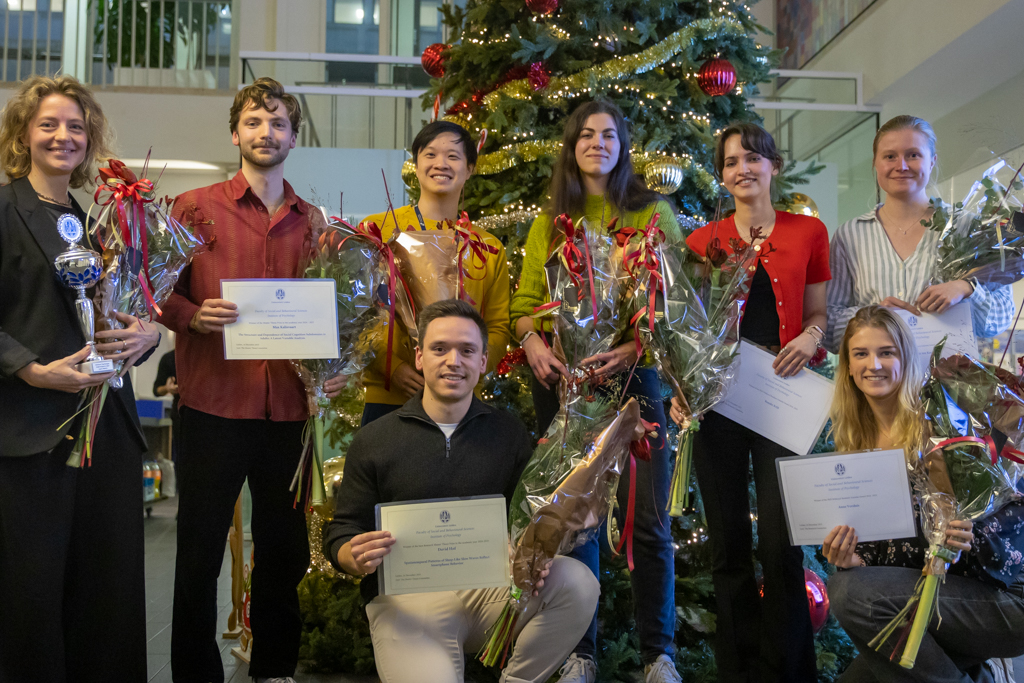
Psychology teacher of the year is Laura Nawijn. The Master Thesis Awards are for Max Kalisvaart and David Hof. Lee Aldar wins the PhD Paper Prize. The PhD Wild Card Prize 'Resilient Scientist' is won by Anastasiia Myronenko, Anne Versluis, Annemarie ten Kate, Ashley Smit, Fabian Wolters, Gita Nadinda, Hans van Lennep, Isra Al-Dhahir, Jessy Terpstra, Pien van der Velde, Renée IJzerman, Renske Krijt, Sara Hondmann, Simone Meijer, Theo Dimitriadis, Patzelt, Victor Leong, and Vivian Pijnenburg. Congratulations!
Psychology Media Presentation 2025
Also in 2025, our colleagues from the Institute of Psychology were visible in the media in various ways. Check out the overview here.
Education Prize
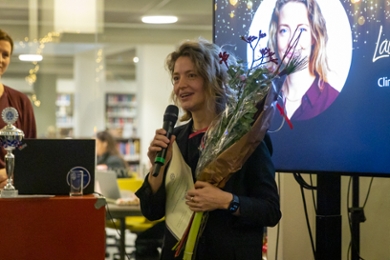
Laura Nawijn from Clinical Psychology Psychology has won the Education Prize. Arina Arakelyan, third year IBP student and member of the BOC: 'Laura is known for her warm, approachable teaching style, and her ability to inspire students. She creates a safe learning environment with genuine space for questions. This is because Laura values the reciprocal nature of teaching. In her own words: "Interactions with students are an inspiration for research, as they spark new questions and insights." Speaking of research, Laura effectively connects her clinical research expertise with education and society. Her projects include collaborations with the municipality of Leiden, where her students investigate mental health among war refugees and science valorization projects at events such as De Nacht van Ontdekkingen and Lowlands.'
Research MSc Thesis Prize
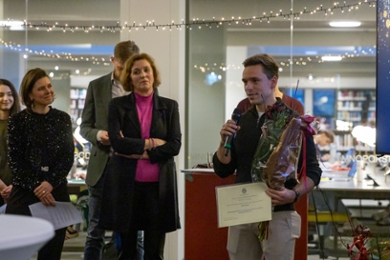
David Hof from the Cognitive Neuroscience research master won the Research MSc Thesis Prize.
David's thesis contributes to the emergence of a new research domain focused on brief periods of neural silencing during ongoing behaviour. He discovered how silence periods punctuate smartphone interactions and raised compelling questions about the common processes typically associated with neural silencing, such as sleep pressure. This exciting piece of work was made possible through his skill, creativity, and persistence, and it demonstrates his remarkable ability to open up a new area of research. A truly exceptional MSc thesis — and an outstanding student.
MSc Thesis Prize
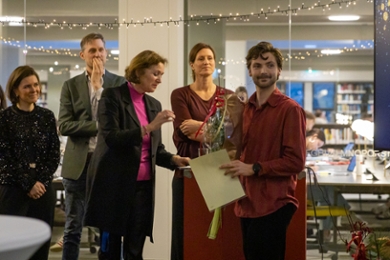
Max Kalisvaart from Clinical Neuropsychology won with the thesis “The Structure and Dependence of Social Cognition Subdomains in Adults: A Latent Variable Analysis”. Max independently delivered a high-quality thesis that contributes
to fundamental insights into the neuropsychological construct of social cognition and offers an application for measuring it in clinical practice, making his work of high scientific and societal value. He made significant contributions to all phases of the research, from drafting the ethics application and providing input on the development of the neuropsychological test battery.
Paper Prize
Lee Aldar from Social Economic and Organisational Psychology won the PhD Paper prize for her paper titled 'Intergroup psychological interventions highlighting commonalities can increase the perceived legitimacy of critical voices'. This interesting paper reported on a large, pre-registered experimental study with more than 1,600 participants, using real-world stimuli. The authors designed an intervention tournament to increase public support for critical voices in Israeli society. We appreciated the close collaboration with a societal partner working hard to improve human rights and social relations in a very difficult context. This makes the work relevant far beyond Israel, as critical voices are being challenged in so many places around the globe.
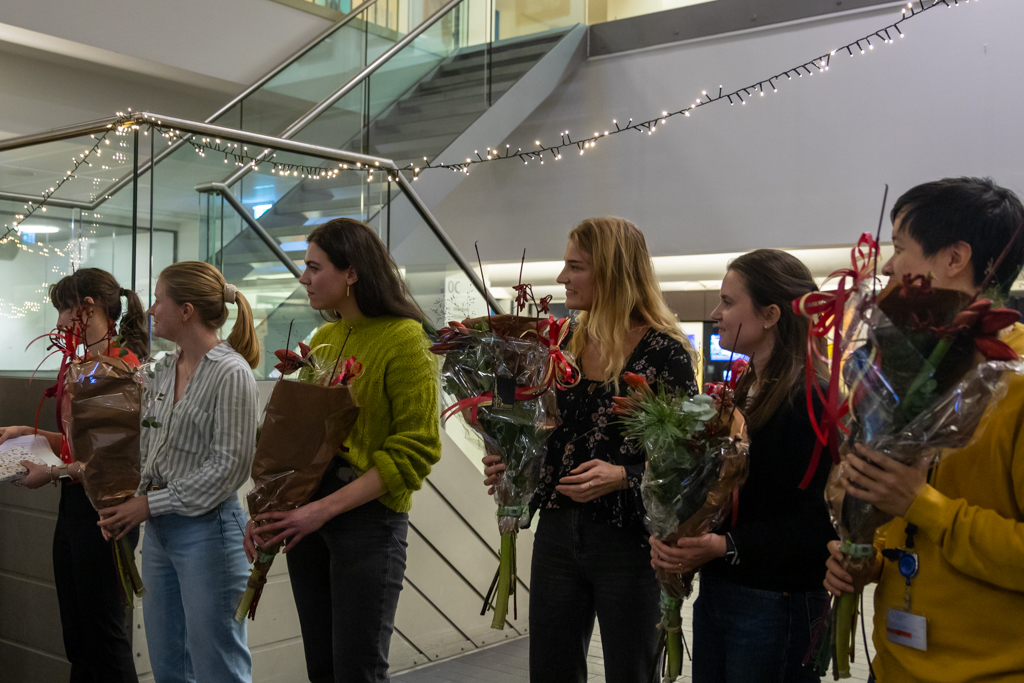
Wild card: Resilient Scientist
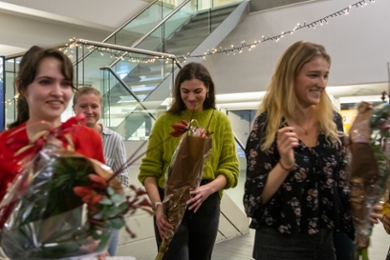
Anastasiia Myronenko, Anne Versluis, Annemarie ten Kate, Ashley Smit, Fabian Wolters, Gita Nadinda, Hans van Lennep, Isra Al-Dhahir, Jessy Terpstra, Pien van der Velde, Renée IJzerman, Renske Krijt, Sara Hondmann, Simone Meijer, Theo Dimitriadis, Patzelt, Victor Leong, and Vivian Pijnenburg have won the Resilient Scientist Wildcard for the flexibility and resilience they've shown after losing Andrea Evers as their PhD supervisor.
Leonie Vreeke: 'Losing a supervisor is incredibly difficult, both personally and academically. Yet this group showed remarkable strength, teamwork, and resilience in navigating a situation no one could have prepared for. They supported each other, kept their projects moving forward, and continued their work with care and dedication. We celebrate how they faced this challenge, their persistence; their flexibility in adjusting their supervising teams, and their ability to keep their motivation high. And continuing their excellent research. Andrea would be so proud of all of you.'
-
-
-
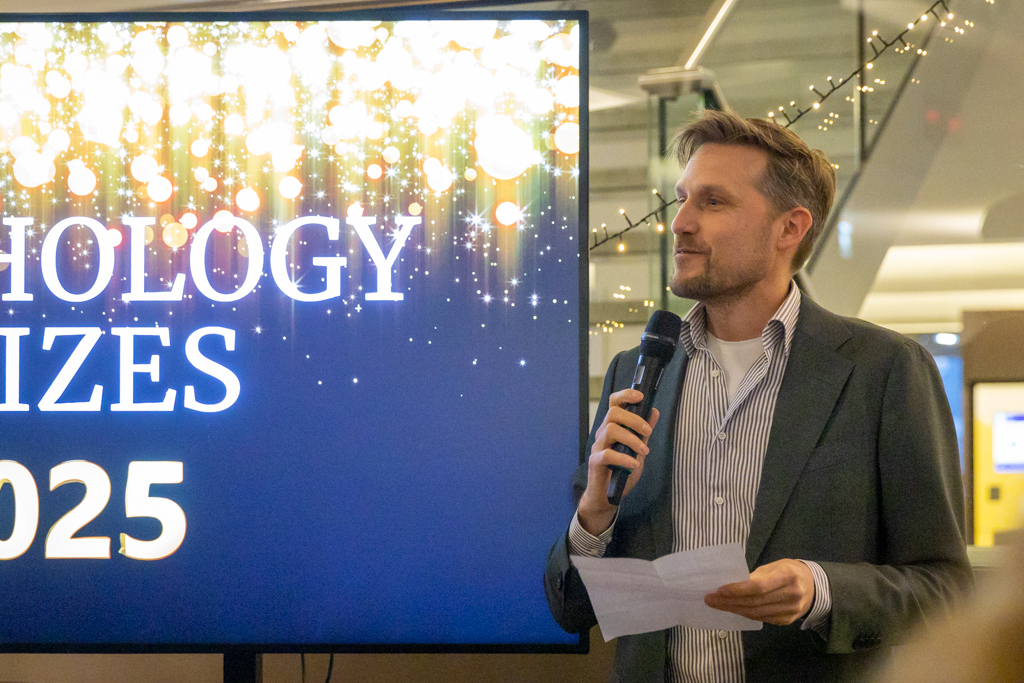
New scientific director Wouter Weeda holds an opening speech. -
-