Students of the Special Chair visit the Anne Frank House in Amsterdam for a unique visit with a Leiden History MA Alum
On Tuesday November 25, 2025, Prof. dr. Sarah Cramsey travelled with students from her masters seminar on “New Approached to the Holocaust in Central and Eastern Europe” taught at the History Institute to Amsterdam for a unique opportunity. There, Ms. Lotte Sophie Groenendijk, an alum of the History Research Masters and Cramsey’s seminar, led the group around on a private tour through the Anne Frank Museum and the Secret Annex or 'Achterhuis'.
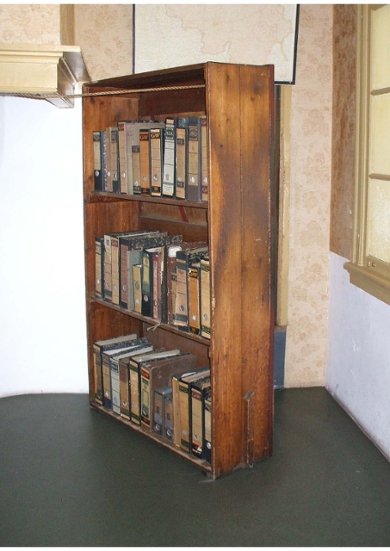
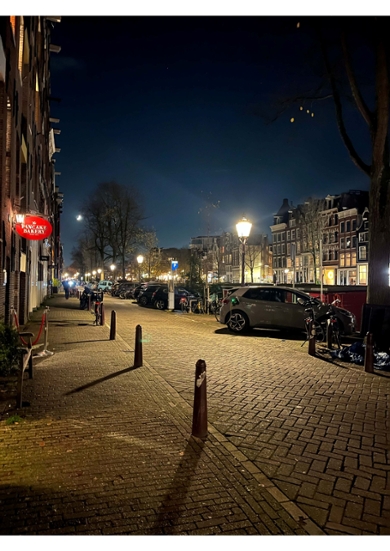
Drawing on her skills honed during her degree at Leiden and showcased at the Annual Meeting of Austria Centres in Budapest in 2024, Ms. Groenendijk explained how a German Jewish family, the Franks, came to hide for two years in the middle of Amsterdam with the help of Otto Frank’s professional colleagues and employees. It was a unique experience, to walk through the museum which such an educated guide, to pass through the famous bookcase built by a Dutch helper and father to one of the secretaries in Otto Frank's office and visit the house at night. Over a three hour tour, Ms. Groenendijk linked the visit to readings done in the MA History Seminar and the process by which historians "make" history, which made the experience all the more meaningful.
According to Jeroen van Hout, MA Student in History, “the very clear message for society to actively stand against discrimination, prejudice, inequality and oppression, which is expressed by the Anne Frank Foundation. The museum (it's modest yet speaking interior and the depicted stories), and Lotte-Sophie her talk before the tour (ending with a quote from Anne Frank: 'How wonderful it is that no one has to wait, but can start right now to gradually change the world!'), and also Lotte-Sophie mentioning that she feels honoured in educating people on Anne Franks story, really did great in expressing the positive message against hatefulness. Otto Franks/The Foundations message and Anne Franks quote are touching, especially in uncertain times like these (referring to the increasing violence and extreme political situations in the world). Strangely, but with compliments to the Anne Frank Foundation, this house that must have felt like an unsecure place for the hiding families, for me felt like place of hope.”
MA student Van Hout continued, “second, what truly impacted me was the last section of the museum, which showed Otto Franks journey back home. I am currently reading 'The Truce' by Primo Levi and since I am fascinated by the stories of Holocaust survivors returning 'home'. Otto Franks story kept me thinking about how strong one must be to return 'home' after losing so much, and to then have the strength to spread such an encouraging message.”
According to Ries t’ Sas, another MA Student in History, “our visit to the Anne Frank House had a greater impact on me than I had anticipated. Walking around the building the implications and horror of the Holocaust came into clearer focus for me than ever before. The organization of the museum was masterfully done and our tour guide Lotte Sophie’s extensive knowledge and obvious dedication to the spirit of the museum was deeply felt. I was particularly struck by the images of Anne and her family and accompanying documentation that brought their story to life as you walked through their hideout. The unsaid thread I returned to again and again was how their story was unique in so many respects and unfortunately common as Jewish families tried to escape Nazi persecution. Ultimately, the fact that Otto made such an effort to save his family for him to be the only survivor was heartbreaking in its irony. My final takeaway was the importance of experiences like the Anne Frank House in its ability to make history personal and connect with modern audiences. Those who do not learn history are doomed to repeat it and we only learn our history by being open to its ugliness and its lessons. The work that goes into an exhibition like this is extensive and thoroughly impressive.”