
Wil Roebroeks looks back on a life in archaeology: ‘I’ve always enjoyed my work’
After nearly two years of retirement, Wil Roebroeks looks back on a career that began in a time of freedom and ended in a field that has undergone profound academic and social change. ‘I have been fortunate to always enjoy my work,’ he says. ‘That is also my advice to younger generations: above all, do something you are passionate about.’
From 'Narrenvrijheid' to interdisciplinary research
Roebroeks studied in the 1970s, a period he describes as “Narrenvrijheid”: 'You could attend lectures anywhere, often without earning credits. You just sat in. As a history student from Nijmegen, I attended lectures on earth sciences in Utrecht. That freedom is gone now, but as far as I'm concerned, it was a crucial part of university life.' He started with social and economic history, but found his passion in prehistory.
It was not an easy time: he went to live in Maastricht for fieldwork with the Geological Survey and the Belvedère research project that was initiated as a result, taking the earliest train to Leiden twice a week for lectures and working at a petrol station to earn a living. 'Busy, short nights, but great fun.'

The evolution of archaeology
The field underwent radical change. ‘Palaeolithic archaeology has always been interdisciplinary: geology, anthropology, archaeology: that’s what made it so appealing. Now we also have a huge spectrum of methods at our disposal, such as isotope studies and ancient DNA, which enable us to prove hypotheses that could not be tested in the past.’ Yet he also sees risks: 'Fast science, with quick publications and flashy titles, gets a lot of attention, while slow science is disappearing. Soil science labs, pollen analyses, that kind of knowledge is crucial for understanding our data, but it gets buried under all that news... unfortunately.'
Family spirit and cooperation
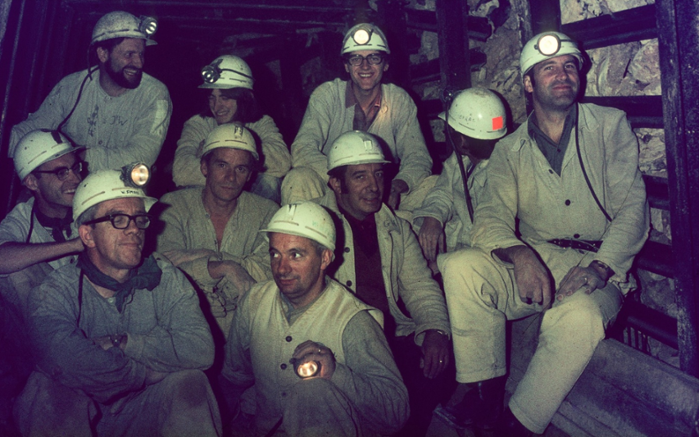
Roebroeks compares Leiden archaeology at that time to a family business: ‘With all the advantages and disadvantages that entails. Leendert Louwe Kooijmans [the dean at the time, ed.] was the strict father. That family feeling has gradually disappeared for the most part, due to the increase in scale and certainly also because it is often “every man for himself” in the subsidy circuit. On the other hand, fortunately, you do see that interdisciplinarity also stimulates teamwork. And in recent years, the atmosphere within the faculty has improved considerably in that respect.’

Advice to the new generation
His message to young researchers is clear: ‘Follow your passion. And be aware of the broader context of your field. Don't just specialise in isotopes or DNA, for example, but also try to understand what happens to archaeological material once it is buried. To do this, you need a basic knowledge of geology and chemistry, among other things.’
Wil Roebroeks remains active in research, including through the Leibniz Institute in Germany, where he collaborates with international teams. 'There, we are spending a long time and considerable resources delving into research on 125,000-year-old finds that we excavated in eastern Germany, among other places, from Leiden. Publications are now rolling out, with all kinds of specialists involved. And it's very relaxed, no one is looking over your shoulder, they are even proud of their “antizyklische Forschung” (research that goes against the prevailing trend). After all, “Narrenfreiheit” is originally a German word...,' he says with a smile.
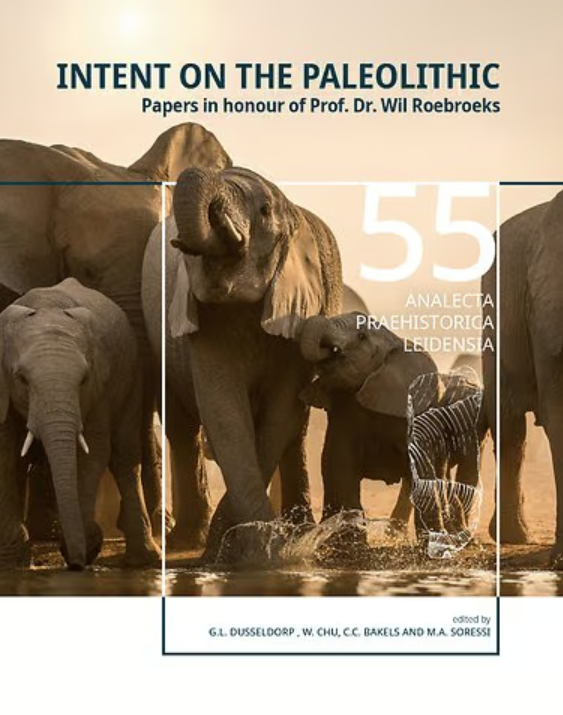
Intent on the Paleolithic: Papers in honour of Prof.dr. Wil Roebroeks
In honour of Wil Roebroeks' remarkable career, his colleagues in Leiden have compiled a collection of articles on the Palaeolithic. 'Wil's career has been focused on the Palaeolithic in every respect: a continuous search for humanity's distant past,' says co-editor Wei Chu. 'At the same time, he has constantly encouraged us to take a closer look at the intentions, structures and processes behind archaeological finds. This book is a small tribute from many wonderful colleagues to that unrelenting curiosity.'