‘The Knowledge Security Committee neither intends nor is permitted to exclude certain groups or countries’
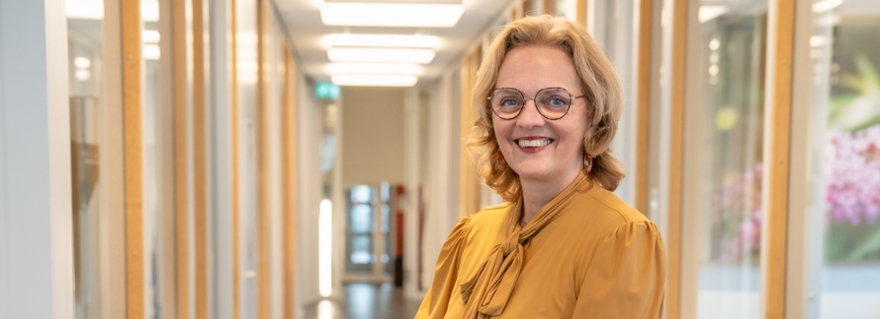
International collaboration brings opportunities, but it also carries risks. The Knowledge Security Committee plays a crucial role in assessing such partnerships. Due diligence is essential, says Chair Joanne van der Leun. ‘If this were easy, you wouldn’t need our committee.’
Hi Joanne, why has our university established a Knowledge Security Committee?
‘Researchers entering into international collaboration are committed to open science and cooperation. But they also recognise that this isn’t always possible, as some partnerships may involve risks. When staff are unsure about a potential collaboration, the Knowledge Security Committee assesses whether it can proceed. We carefully weigh the opportunities and the interests at stake for the university, as well as any potential risks.’
What makes a partnership sensitive?
‘When knowledge or technology could be misused – whether to repress or exploit ethnic groups, for example, or to develop capabilities that we as a university do not want to be associated with. This means looking beyond the research itself and at the partner and their affiliations. Are they based in a country designated as high-risk by our government, or could they be linked to that country’s government or defence sector?
‘Foreign governments seeking access to specific knowledge may also pressure researchers or students. You have to take a broad view. Our increased attention to knowledge security is a response both to current global developments and to rapid technological change.’
‘When staff are unsure about a potential collaboration, the Knowledge Security Committee assesses whether it can proceed.’
When does the committee become involved?
‘When staff are considering a new collaboration, they begin with the knowledge security flowchart, weighing up potential opportunities and risks. It’s important that they discuss this with their Scientific Director, and understand what to look out for. If doubts remain in the faculty about the collaboration, they can consult the Knowledge Security Advice Desk. The Desk can answer their questions and, where necessary, prepare the cases for the Committee.
‘The Committee only becomes involved once the initiator and their scientific director have gone through the flowchart and are still unsure whether the collaboration can be undertaken responsibly.’
How does the Committee assess cases?
‘Committee members and any external experts review each case individually, supported by Knowledge Security Advice Desk’s analysis and preparation. On that basis, they reach a provisional conclusion. The case is then discussed during a Committee meeting. We consider questions such as: Is the research still fundamental, or does it verge on applied? What conditions apply? What agreements have already been made, or could be made?
‘We also consider ethical aspects, funding and relevant legislation such as European sanctions and the EU Dual-Use Regulation, as well as the potential impact of the collaboration. Once all perspectives are brought together, this often sparks discussion on how to balance certain factors. There may be differences of opinion, but we work towards consensus: the members should stand behind the final judgement that we issue to the Executive Board.’
You mention European sanctions and the Dual-Use Regulation. What other rules are relevant?
‘There are national guidelines as well, the National Knowledge Security Guidelines. A Knowledge Security Screening Act is also being developed, which will have major consequences for universities and research organisations. Universities have also issued joint guidelines to prevent significant differences across universities.
‘Even so, interests have to be balanced, and there’s room for interpretation – something the university acknowledges. We work with the best information available at the time and aim for a fair and transparent process. But full transparency isn’t always possible, as some information is sensitive. We’re a learning organisation, and this is an evolving process. Our approach may shift over time, and faculties and institutes should have this conversation as well.’
Why does the Committee include such varied expertise?
‘If this were easy, we could just apply the law and wouldn’t need a committee. But because we have to weigh opportunities, risks and threats, we need to view cases from multiple angles. In a process like this, there’s a risk of automatically discriminating against or excluding certain groups or countries, so we need to stay alert. We must avoid drifting too far towards a “better safe than sorry” approach that could stifle academic collaboration.
‘Some countries, such as China, Russia and Iran, are designated as high risk by the Dutch government. In cases involving European sanctions, bans or permits, the boundaries are clear. But it’s often about assessing the risks. We really do assess each case individually to determine whether safeguards could make a collaboration viable.’
‘We really do assess each case individually to determine whether safeguards could make a collaboration viable.’
Can you give an example of a recent case?
‘Suppose a commercial business from a high-risk country wishes to fund PhD research, raising concerns. Then the committee asks: Why does the company want to fund this research? How can we ensure that the research remains independent? What might the company do with the results?
‘Sometimes several elements coincide: for example, when a partnership with a high-risk country involves developing sensitive technologies. That calls for careful consideration. Another example involved a PhD candidate from one of China’s “Seven Sons of National Defence” – universities so closely tied to the Chinese defence establishment that Dutch institutions don’t wish to collaborate with them.’
How do you see the future?
‘I also chair the Committee on Human Rights and Conflict Zones and the Committee on Fossil Fuel Collaboration. I think it would be good if these committees worked closely enough to merge, though we’re not at that stage yet. That’s a decision for the Executive Board.
‘The common thread is that each involves ethical considerations on different fronts. As chair of these committees, I can help ensure these issues aren’t viewed too narrowly, as only knowledge-security or ethical issues. What I like about my role is that while we often discuss academic freedom, we speak far less about academic responsibility. We haven’t fully defined what academic responsibility entails and what it should look like. Exploring and shaping that will be interesting. Some researchers feel that anything should be allowed, while others are perhaps too cautious. I’m sure we can find a better balance together.’
Any final thoughts for our staff?
‘If you have questions or doubts, speak with your faculty’s knowledge security contact or the Knowledge Security Advice Desk. And even if the topic feels remote from your work, it can be helpful to look at the flowchart and discuss it with your colleagues.’
Joanne van der Leun is Professor of Criminology, Academic Lead for International Affairs and the former Dean of Leiden Law School. Alongside chairing the Knowledge Security Committee, she chairs the Committee on Human Rights and Conflict Zones, the Committee on Fossil Fuel Collaboration and the Committee on LUF donations.