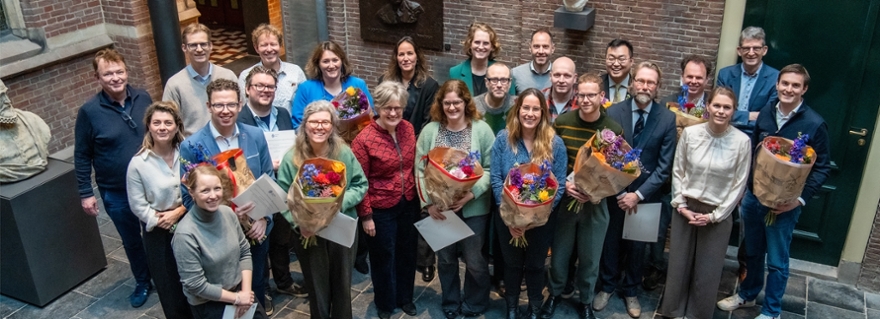
Twenty-five lecturers gain Senior Teaching Qualification
Twenty-five passionate lecturers earned their Senior Teaching Qualification (SKO) on Monday 12 January. Five of these lecturers talk about how the SKO has benefitted them and what they think ‘good teaching’ is.
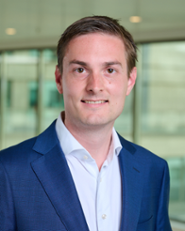
Bernard Bernards, assistant professor at the Institute of Public Administration
‘If I count all my teaching roles, I’ve been teaching for around nine years now. The SKO felt like a good way to deepen my expertise, especially because you meet and share experiences with other motivated, ambitious lecturers. It also gives you space to zoom out and reflect on all that you do as a lecturer, and why. I’m now more conscious of the structure of courses and how everything fits together. For example, courses don’t always need a presentation, a paper and an exam. And you can teach students without constantly having to assess what they have learned.
'We need to make sure we don’t lose that human contact in education.'
‘I think it’s a privilege that, as a lecturer, you get to teach something you consider important to a new group of students each year. For me, good teaching means being able to enthuse and inspire, drawing students into your story and ensuring they feel seen as individuals. Now more than ever, with developments in AI and online learning, we need to make sure we don’t lose that human contact in education.’
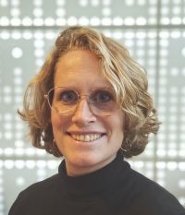
Anne Land-Zandstra, associate professor in Science Communication & Society (SCS)
‘I’ve been interested in education throughout my university career. Within and beyond my own courses, I often provide input on how to improve education – it’s one of the best aspects of my job. I liked the idea of deepening my knowledge with the SKO, and the certificate felt like real appreciation for teaching – work that’s really important but often less celebrated at the university than publications and grants. It was inspiring to work with other lecturers on the SKO and put down on paper what I’d achieved in the past years – although I’d also have enjoyed working actively on educational innovation. The process also got me thinking about what it means to have the SKO and the potential for leadership roles in the university’s teaching.
‘Providing input on how to improve education – it’s one of the best aspects of my job.’
‘In my vision of teaching and learning, I want to help students become skilled, critical, independent and happy professionals. They should feel heard, not just like one of the crowds. I try to learn everyone’s names and to create space for everyone to contribute. That may seem small, but for me good education depends on human contact and interaction.’
Karin Nijenhuis, senior lecturer, coach and chair of the African Studies Master’s
‘Educational innovation has always been important to me. My 2023 Comenius Senior Fellowship was for a project on integrating dialogue as a teaching method to improve student well-being. That made the Senior Teaching Qualification (SKO) feel like recognition for something I was already doing. But the process has helped me identify a common thread in my work over recent years. I thought I knew my vision of teaching and learning, but once I started writing, it took some time to articulate it. Alongside my goals for dialogue and student well-being, I ended up developing a second learning pathway on involving the profession and teaching communication skills.
‘The process has helped me identify a common thread in my work over recent yearst.’
‘The process hasn’t really changed how I teach, but it’s given me more confidence: now I know for sure I have something to contribute to the university’s teaching. There’s a growing call for less polarisation and more connection and dialogue. If you can teach students that, you’ve achieved far more than just knowledge transfer. That’s where my passion lies.’
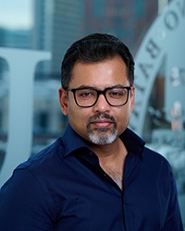
Ritanjan Das, university lecturer at the Leiden Institute of Area Studies
‘When you teach year after year, eventually you kind of fall into a set routine. This SKO programme was a nice break from that, allowing me to rethink and refresh some things. Writing my vision on teaching and learning wasn’t something radically new, as I was preparing something similar back in the United Kingdom in preparation for my senior fellowship at the UK Higher Education Academy. But it did allow me to reflect on why I teach, and what is it that I'm actually trying to give students, beyond certain specific theories and ideas. In doing so, I was also reminded of how crucial enabling a diverse classroom is, where all sorts of voices are heard within a safe environment. And of how learning is a collaborative process, where I'm not simply here to tell my students how things are, but rather how we are here to explore something together.
‘I was reminded of how learning is a collaborative process.’
'I think that students should always leave a lecture, class or course with more curiosity than they came in with. If I can motivate them to ask more relevant questions, to think deep and try and explore the fundamental reasons behind whatever is going on in the world, to me that's what good teaching is all about.’
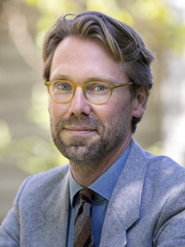
Pieter Barnhoorn, GP/sexologist, LUMC
‘My vision of education is closely linked to my vision of healthcare. I see it as my goal, my mission, perhaps even my calling, to train more humane doctors. And good teaching can help – it’s about much more than knowledge and skills, like how to give injections, fit coils or examining knees.
‘Good teaching is about much more than knowledge and skills.’
‘At first, I thought I’d just have to describe my teaching for the SKO, but my amazing supervisor, Liesbeth Adelmeijer, encouraged me to make my ideas about professionalism and developing a professional identity, about helping make doctors more human, the theme of my portfolio. Once I started writing about that, it became fun, much more than I’d expected. So, to colleagues considering the SKO, I would say: go for it! It’s a fantastic qualification that will enrich your teaching.’
The following lecturers received their Senior Teaching Qualification on 12 January:
Faculty of Law
- Michael Klos
- Laurens van Apeldoorn
- Marije Schneider
Faculty of Governance and Global Affairs
- Caroline Archambault
- Kai Hebel
- Bernard Bernards
Faculty of Humanities
- Evert Jan van Leeuwen
- Zhaole Yang
- Maarten van Leeuwen
- Ritanjan Das
- Alistair Kefford
- Jacqueline Hylkema
- Arnout van Ree
- Karin Nijenhuis
- Looi van Kessel
Faculty of Science
- Anne Land-Zandstra
- Dennis Hetterscheid
Faculty of Social and Behavioural Sciences
- Joanne Mouthaan
Leiden University Medical Center
- Vanessa van Harmelen
- Nienke Boogaard
- Pieter Barnhoorn
- Esther Hamoen
- Raymond Noordam
- Jos Rohling
- Merel van Diepen
Senior Teaching Qualification
The SKO is a qualification for lecturers who play a leading role in the development and innovation of education at the curriculum level (i.e. beyond their own discipline). To achieve this qualification, lecturers must put together a portfolio that shows that they meet four final learning objectives:
- Conduct within the academic teaching environment;
- Creating and elaborating a didactic programme with a view to the context of a curriculum;
- Preparing and providing teaching;
- Impact on education within one or more degree programmes that extends beyond one’s own teaching programme.
In addition, an SKO candidate must be a lecturer who already has a Basic Teaching Qualification (BKO), has taught at the university level for at least five years in various subjects and years, and has applied a variety of educational methods in doing so. In addition, the lecturer must show that they have developed initiatives and made contributions that have an educational impact within one or more degree programmes transcending their own course or discipline. You can read more about obtaining an SKO here.
Interviews: Evelien Flink
Banner: Danique ter Horst