
Crimmigration conference uses art to foster dialogue
The debate on migration and criminalisation concerns everyone from citizens and policymakers to academics. The Crimmigration in an Age of Authoritarian Drift conference in Leiden in July aims to offer new insights and encourage collaboration. Artists are playing a key role.
Crimmigration, the convergence of criminal law and immigration enforcement, provokes public and political debate. Whether around the kitchen or the negotiating table, the same questions recur: Who is migrating and why? To what extent do immigration and criminalisation go hand in hand? And what interventions could policymakers use to foster social acceptance of migrants or promote public debate?
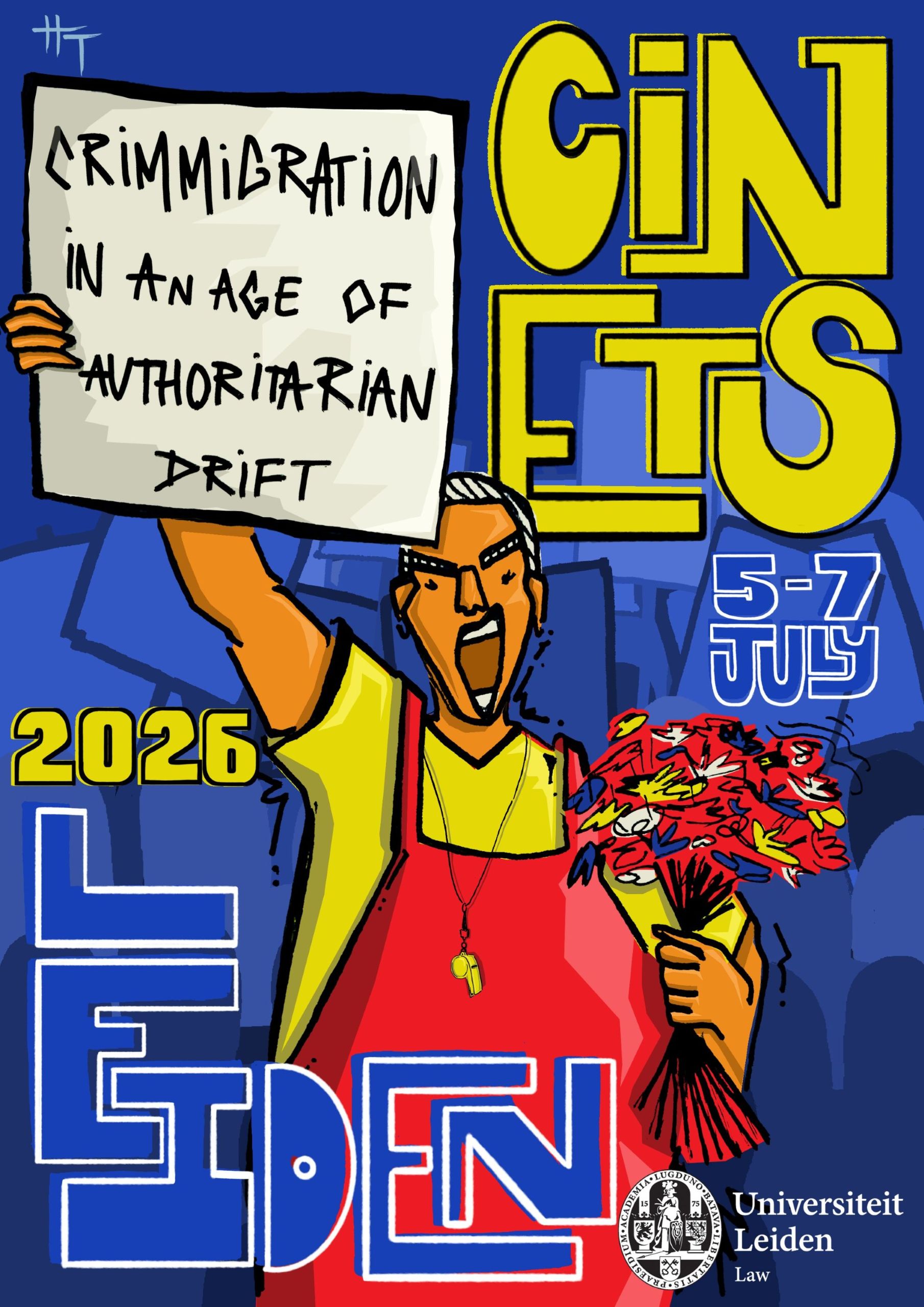
Crimmigration in an Age of Authoritarian Drift seeks to help researchers, policymakers, NGOs and the wider public find answers by sharing new insights and encouraging collaboration. Organised every two years by the Crimmigration Control International Network of Studies (CINETS), this is the seventh edition of the conference – and the third to be hosted in Leiden – since the network was founded in 2012.
‘Democratic backsliding can already be happening unnoticed’
Democratic erosion
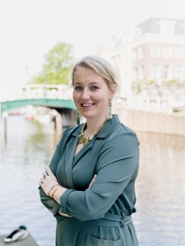
A central theme of the conference is the legitimacy of government measures to curb migration. ‘In this edition, we are looking at migration policy worldwide and indicators of democratic backsliding, or the erosion of democratic institutions, which can ultimately lead to authoritarian regimes’, explains Maartje van der Woude, Professor of Law and Society and co-organiser of the conference.
‘Obviously, we’ll be looking at the United States and the role of ICE, but we’re also focusing on policy in Asian or African countries, which receive far less media attention. We want to learn from different contexts and offer policymakers ways to intervene when necessary.’
This democratic backsliding, Van der Woude adds, may already be happening unnoticed. ‘In administrative processes, for instance. If you don’t keep your finger on the pulse, serious problems can arise.’
Due to the selected cookie settings, we cannot show this video here.
Watch the video on the original website orClay figures
The conference will also offer a completely different perspective on immigration: that of artists. Both academics who are also artists and independent artists will take part in artistic discussion panels. Tendai John Mutambu, for example, a curator and filmmaker from New Zealand.
There will also be an exhibition on migrations brought to Leiden by Leiden researcher Amalia Campos Delgado. And animator Édgar Álvarez has made a short film (see YouTube clip above) with clay figures about the Darién Gap, the region in South America that many migrants have to cross on their journey to Mexico, and where many lose their lives.
‘It’s a unique lens that makes it possible to engage with human suffering and helps you watch rather than switch off’, says Van der Woude. ‘By having artists on the panels, we want to spark a different kind of conversation that helps us view migration from different angles. This can help us seek innovative, creative solutions that are relevant for policymakers, for example, or open up new questions or methods for academic research.’
More information about the conference
The conference will take place in Leiden from Sunday 5 to Tuesday 7 July, with a special opening event in the World Museum on Sunday evening. Over the following two days, participants will be able to choose from more than 40 panels. The programme also includes an exhibition, as well as a series of documentaries and film essays.
For the full details of the conference, please visit the event page. Members of the public and journalists are welcome to attend. Registration is required via Leiden Law Academy.