How can we properly measure the impact of disasters, attacks, and wars?
In Chasing Events, researcher Thijs van Dooremalen explores how we can truly understand the impact of major events. He shows that traditional comparisons fall short and argues for a new way to analyse the long-term effects of events.
The impact of disaster and war
Researchers who study the impact of events (terrorist attacks, disasters, wars) often compare the situation before and after the event. The idea is that everything that changes can be seen as an event effect.
In the book Chasing Events, researcher Thijs van Dooremalen argues that with such an approach, it is difficult to say that a change is truly related to the event. A few days after the event, this comparison might still make sense, but what about a few weeks or months later? By then, so many other things have happened that linking changes to the event becomes almost impossible.
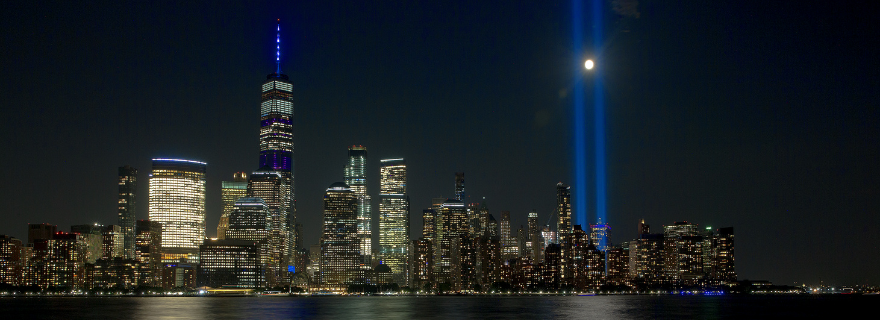
Still, the comparison is indeed interesting. Six months after 9/11, right-wing populists (Jean-Marie Le Pen and Pim Fortuyn) were successful in national elections in both France and the Netherlands. To what extent were the Twin Towers attacks related to this?
As an alternative, Van Dooremalen proposes examining what actors such as politicians and journalists themselves do with the event. Do they use it as an example in debates, and in what way? What policy implications do they draw from it? By 'chasing' events in this way (hence the title of the book), you can analyse their impact over longer periods.
This method makes it possible, for example, to map precisely whether Donald Trump needed 9/11 to achieve political success. The answer is: no. He hardly refers to it when stigmatizing Muslims or migrants; instead, he uses more recent attacks, such as the 2016 Orlando shooting. In the United States, 9/11 seems too 'sacred' to be politically exploited, even for Trump.
‘Everything will change’
When a major event takes place, the media often presents it as though everything will change afterwards. Journalists constantly talk about ‘turning points’, claim that ‘the world will never be the same again’, or that ‘from now on there is a before and an after’. We have repeatedly seen this pattern in response to acts of terrorism committed by Muslim fundamentalists over recent decades (9/11, the attacks in Madrid and London, the murder of Van Gogh, Charlie Hebdo, the Bataclan). Based on the analyses in my book, I conclude that such radical change is rare.
For radical change to occur, an event must constitute a ‘shock event’. This means it completely contradicts the dominant ideas of the time. 9/11 in the United States was such an event: it fundamentally shattered the belief that the country was invulnerable on its own soil. As a result, national thinking shifted dramatically. Domestic security policy was overhauled and Afghanistan was invaded.
More often than not, however, events are ‘focus events’: an additional confirmation of ideas that were already dominant. This was the case in the Netherlands in the way we experienced all the aforementioned examples of Islamist terrorism. Each time, these events primarily reinforced the negative image of Muslims that had already begun to emerge in public and political debate during the 1990s.
Book launch 'Chasing Events'
On 25 June, researcher Thijs van Dooremalen will launch his book Chasing Events. The program consists of a short presentation by Thijs, followed by a panel discussion with Professor Sarah de Lange (Institute of Political Science, Leiden University) and journalist of the newspaper De Volkskrant Peter Giesen. Interested? Make sure to register.
Within the confines of prevailing ideas
Events appear to offer politicians and policymakers an ideal opportunity to genuinely do things differently. There is public outcry, societies are stunned, and this creates space for out-of-the-box responses.
In his book, Van Dooremalen shows that this room for manoeuvre is in fact limited. Responses to events tend to cluster around particular issues or frames. In the Netherlands, Islamic terrorism is generally seen as a reason to problematise Islam. In France, foreign events, whether terrorism, war, or disasters, are used as opportunities to assert the country’s presence on the global stage. In such cases, it is difficult to move beyond these dominant ways of thinking; doing so quickly places a politician or policymaker outside the mainstream of the debate.
This has to do with the mechanism through which events emerge: occurrences become significant because they confirm or challenge deep-seated collective fears and ambitions. Returning to the example of France and foreign events, a widely shared sentiment across the political spectrum is the ambition to be dominant in international politics, the notion of French grandeur. Transforming such events into domestic issues is therefore often perceived as narrow-minded.