1,180 search results for “chemical world” in the Staff website
-
 Djibrila Tetereou
Faculty of Humanities
d.tetereou@hum.leidenuniv.nl | 071 5274132
-
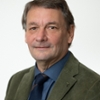 Hans-Martien ten Napel
Faculty of Law
h.m.t.d.tennapel@law.leidenuniv.nl | +31 71 527 7710
-
Three Leiden papers in top 10 most cited of Journal of Archaeological Science: Reports
At the start of the year a lot of journals publish lists of their most cited papers of the previous year. Three papers published by Leiden archaeologists were ranked in the top 10 of the Journal of Archaeological Science: reports.
-
World Peace: visions from Tolstoy
Debate, Seminar
-
Japan and the World
Lecture, COGLOSS
-
This is the library you did not know you had been looking for
2,240 plant extracts from 1,299 different plant species of Dutch origin. That’s the collection of the Dutch Extract Library, which has recently been transferred to the Institute of Biology Leiden. To plant biologist and contact person for this library Pingtao Ding this is a true treasury. ‘To bring…
-
One step closer to understanding planet-formation: Julia Santos refutes a 20 year standing paradigm
How do atoms and molecules end up forming planets? That's what astrochemist Julia Santos studied during her PhD. She discovered the dominant process behind the formation of methanol in space – a finding that surprised the entire field.
-
Performative Transactions: Worlding Compositional Ecosystems
PhD defence
-
Digital Humanities Winter School 2026
Workshops
-
The Values of Language(s) in the Ancient World
Conference, Penn-Leiden Colloquium on Ancient Values XIII
-
Gaia sees strange stars in most detailed Milky Way survey to date
Today, ESA’s Gaia mission releases its new treasure trove of data about our home galaxy. Astronomers, led by the Leiden astronomer Anthony Brown, describe strange ‘starquakes’, stellar DNA, asymmetric motions and other fascinating insights in this most detailed Milky Way survey to date.
-
Tracking the origin and evolution of molecules in space
How do molecules originate and evolve in space? And how does that ultimately determine the chemical composition of planets and their atmospheres? The Dutch Astrochemistry Network (DANIII) receives 1.6 million euros from NWO to find out. A large group of Leiden astronomers and chemists is contributing:…
-
A safe workplace
Regardless of whether you work at a desk or in a lab, all workplaces have their risks. As your employer, the University aims to create a healthy workplace and to limit possible health risks. Here you will find the main risks and measures that we take to reduce them.
-
Summer School 'The European Union, the United Nations and Global Governance'
Course, Summer School
-
Scientists discover building blocks of life in ice around a forming star in neighboring galaxy
Astronomers have found complex organic ice outside the Milky Way for the first time. The discovery shows that the building blocks of life could arise early in the universe - and under a variety of conditions, said Leiden astronomer Will Rocha.
-
Countering nerve pain caused by chemotherapy with new drug
Nerve pain is one of the most common side effects of chemotherapy. It is therefore one of the biggest reasons for cancer patients to stop treatment early. Darcy Reynolds worked on new drug candidates against this pain during her bachelor's thesis. She developed a new series of molecules that increase…
-
Special nanoparticles for cancer therapy! Will you help?
Developing a better treatment for patients with head and neck cancer, that is what Binanox, The 2022 iGEM Leiden team, want to achieve. They hope to raise at least 10,000 euros for this cause. Support their crowdfunding campaign today.
-
What makes us ill?
Genes predict whether you have a propensity for an illness but environmental factors often have the last word: nutrition, air pollution, lifestyle, stress. The exposome as both culprit and chance. Large-scale research is being carried out into this at Leiden. Thomas Hankemeier, Professor of Analytical…
-
Palliative Care Around the World
Conference, Seminar
-
Leiden University during the Second World War
Event
-
Memorial to professor and resistance hero Ben Telders unveiled at Bergen-Belsen
A memorial stone honouring professor and resistance hero Ben Telders was unveiled on 12 September at the site of the former concentration camp Bergen-Belsen.
-
Motherhood and Unfreedom in the Islamicate World
Conference, workshop
-
Water Legacy: Mayan world meets the Netherlands
Lecture, Faculty Lecture and Photo Exposition
-
Polish Holocaust researchers accused of defamation will give Cleveringa Lecture
On 26 November historian Jan Grabowski and sociologist Barbara Engelking will both give the Cleveringa Lecture. They wrote a book about the Holocaust in Poland and were taken to court for defamation.
-
Maneuvering through a World of Stressors
PhD defence
-
Documentary From Aksum to India premiered during Week of Classics
For the annual Week of Classics, Dr Marike van Aerde and her team made a documentary about their research project Routes of Exchange, Roots of Connectivity. In the film the team touches upon the interactions of Greeks and Romans with the wider ancient world, ranging from the African kingdom of Aksum…
-
Historian Gert Oostindie the new Cleveringa Professor
Gert Oostindie, Emeritus Professor of Colonial and Postcolonial History, is this year’s Cleveringa Professor at Leiden University. He was appointed by the University on 4 October. In his inaugural lecture on 24 November, entitled Courage and Disregard, he will talk about (academic) freedom in relation…
-
Historian Frank van Vree is the new Cleveringa Professor
Frank van Vree, Emeritus Professor of War, Conflict and Memory Studies at the University of Amsterdam (UVA), is the new Cleveringa Professor at Leiden University this year.
-
Hoard of Roman coins turns out to be offering for safe crossing
Several years ago, two amateur archaeologists from Brabant discovered over a hundred Roman coins near to Berlicum in the north of the province. After years of research, it now appears that the location, close to a ford in the river, was a site for offerings. Another interesting fact is that the coins…
-
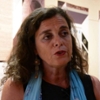 Corinne Hofman
Faculty of Archaeology
c.l.hofman@arch.leidenuniv.nl | +31 71 527 2449
-
From Roman coin to physics experiments in a theme park: the varied world of head of the education office Marije Boonstra
‘No two days are ever the same – and that’s what makes it fun.’ But what does a head of the education office actually do? Marije Boonstra shares the many sides of her role: from drawing up timetables to launching innovative education projects, from tailoring programmes to students’ needs to international…
-
Chemistry as the key to medical innovation
Is it a coincidence that three chemists from the same department have each independently received a ZonMw grant? 'No,' the researchers agree in unison. 'The role of chemistry in medical biology is becoming increasingly important, and we’ve worked hard to make this happen.'
-
Nanoparticles: shapeshifters that pass along the food chain and end up in the brain
Nanomaterials can pass much further along the food chain than was previously thought. The particles can change shape and size in each organism, enabling them to pass on to the next one in the chain. Researchers from the Institute of Environmental Sciences discovered this accidentally when using a novel…
-
The World Bank’s Role in Supporting and Rebuilding Ukraine
Guest lecture
- Unification of the Mediterranean World Research Seminars 2023-2024
-
Imagistic Care: Growing Old in a Precarious World
Lecture, Unfolding Finitudes
- In Praise of Solidarity - World Refugee Day 2024
- In Praise of Community Building - World Refugee Day 2025
-
Is our water older than the sun? Astronomers find clue in ice around young star
A team led by Leiden University in the Netherlands and the National Radio Astronomy Observatory have, for the first time, robustly detected semi-heavy water ice around a young sunlike star. In this ice, some of the ordinary hydrogen atoms have been replaced by deuterium, a heavier variant of hydroge…
-
Plastic in cigarette filters: why smoking is bad for the environment too
We all know smoking is bad for our health. But we might not have known that the cigarette filters that litter our streets also impact the environment. Esther Kentin is a lecturer at Leiden Law School. She is raising awareness of the University’s cigarette butt problem.
-
Astronomers spot benzene in planet-forming disk around star for first time
An international team of astronomers including Leiden professor Ewine van Dishoeck has observed the benzene molecule (C6H6) in a planet-forming disk around a young star for the first time. The observations tell us more about the forming of planets in this disc, like our own Earth. The scientists publish…
-
 Frans Theuws
Faculty of Archaeology
f.c.w.j.theuws@arch.leidenuniv.nl | +31 71 527 2727
-
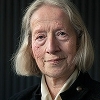 Corrie Bakels
Faculty of Archaeology
c.c.bakels@arch.leidenuniv.nl | 071 5272393
-
Lecture: International Cooperation Against All Odds: The Ultrasocial World
Lecture
-
Gerard van Westen wins KNCV Gold Medal
Gerard van Westen has received the KNCV Gold Medal, the most important Dutch award for chemists under 40. 'It's a huge honour,' says the professor of AI and medicinal chemistry. 'I am now part of the group of people I was always impressed by.'
-
European grants for research on ultrathin membranes and the biological clock in bacteria
Two research groups involving Leiden University have been awarded a major European grant, the ERC Synergy Grant. This for research on the development of membranes that can clean water and purify medical drugs and research on the biological clock in certain bacteria.
-
Huge boost for electron microscopy thanks to NWO grant
Leiden University, together with Utrecht University, the LUMC and 10 other Dutch universities and institutes, has been awarded a grant of more than €30 million in the NWO call Roadmap Large-scale Scientific Infrastructure (GWI).
-
Three NWO Open Competition grants for Leiden scientists
Smart drug carriers, uneven cosmic expansion, and solar energy storage in molecules. These are the topics of three newly awarded NWO-XS grants to researchers at the Faculty of Science.
-
Designing the quantum future on a regular computer
Computer scientist Tim Coopmans uses pen, paper and regular computers to simulate the best possible quantum computer. He tells about his research and how this helps make a useful quantum computer a reality a little bit sooner. ‘I hope I will get to see quantum computers contributing something really…
-
Building the best possible mini-liver (without making it too complex)
How do organs work in the body, and how can we create mini-organs to study diseases and test new medicines? That’s the idea behind organ-on-a-chip technology. During his PhD, Flavio Bonanini worked on developing the best possible mini-livers. ‘Make them as simple as possible, and as complex as neede…