4,063 search results for “humans” in the Staff website
-
 Reinier Baarsen
Faculty of Humanities
r.j.baarsen@hum.leidenuniv.nl | 071 5272727
-
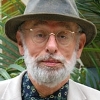 Jan Just Witkam
Faculty of Humanities
j.j.witkam@hum.leidenuniv.nl | 071 5272727
-
 Richard Griffiths
Faculty of Humanities
r.t.griffiths@hum.leidenuniv.nl | 070 8009938
-
 Ingrid Tieken-Boon van Ostade
Faculty of Humanities
i.m.tieken@hum.leidenuniv.nl | 071 5272727
-
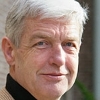 Harry Stroomer
Faculty of Humanities
h.j.stroomer@hum.leidenuniv.nl | 071 5272727
-
 Janneke Wesseling
Faculty of Humanities
j.c.wesseling@hum.leidenuniv.nl |
-
 Thomas Wells
Faculty of Humanities
t.r.wells@phil.leidenuniv.nl | 071 5274174
-
 Ibrahim Harun Demirel
Faculty of Humanities
i.h.demirel@phil.leidenuniv.nl |
-
Mariska Kret: ‘The arrogance of thinking we’re better than animals is downright stupid’
Professor of Cognitive Psychology Mariska Kret studies how humans and animals express emotions. Comparisons between humans and great apes offer important evolutionary insights, Kret will say in her inaugural lecture on Friday 9 September.
-
Teams formed to lead university themes
The teams that will lead the themes guiding Leiden University’s strategic positioning in the coming years have been formed.
-
Podcast: Animals have emotions
In this episode, we talk with Mariska Kret about the expressions of emotions in humans and animals. Mariska explores the similarities and differences in emotion expression in humans and primates. Want to learn more about Mariska's research and discover why it's important that we learn more about animal…
-
Mariska Kret in the New York Post on the influence of subtle changes in eye appearance
Subtle changes in eye appearance can influence how people perceive others and affect their generosity. Articles from PsyPost and The Washington Post highlighted two experimental studies in which psychology researchers from Leiden University, including Mariska Kret, explored this phenomenon.
-
‘Homo sapiens is too arrogant: call us Homo faber, the toolmaker’
We need to dispel the arrogant and misguided idea that modern humans are superior to earlier human species. It is thanks in part to all our predecessors such as Neanderthals that we are who we are today. This is what Marie Soressi, Professor of Hominin Diversity Archaeology, will argue in her inaugural…
-
Leiden - ACPF AMR Workshop
Leiden University and African Child Policy Forum hold ‘ground-breaking’ workshop on antimicrobial resistance (AMR) and human rights in Africa
-
Byvanck Professor Caroline Vout wins London Hellenic Prize for 2022 book
This year's London Hellenic Prize is awarded to Caroline Vout for her excellent study of representations of the human body in sculpture, Exposed: The Greek and Roman Body.
-
Creating space for dignity and empathy: examining algorithms in government decisions
Automated government decisions can be cost-effective. But using algorithms also makes understanding the reasons behind decisions particularly complicated. Dr Melanie Fink, Assistant Professor at Leiden Law School, has received a Veni grant to fund her research into this.
-
Smiling, yawning and gesturing: why we unconsciously imitate one another
By copying each other’s non-verbal behaviour, we gain access to what others think and feel. In psychology, this is known as mimicry. As part of her PhD research, cognitive psychologist Fabiola Diana investigated this phenomenon in social interactions between humans and robots.
-
Hard chews: why mastication played a crucial role in evolution
We do it every day but barely give it a thought: chewing our food. But the ‘simple’ process of masticating food may have played a crucial role in the evolution of our jaws, facial muscles and teeth.
-
Six Leiden researchers receive ERC Starting Grant
Six researchers from Leiden University have received an ERC starting grant. This grant of on average 1.5m euros will enable the researchers to launch their own project, form their own research team and develop their best ideas.
-
Leiden University joins the Just Transitions for AMR Working Group
Leiden University joins the Just Transitions for AMR Working Group, an interdisciplinary team of social science and humanities researchers who are exploring ways to mitigate the growing threat of antimicrobial resistance in a just and equitable manner, with due consideration to the human rights of present…
-
NIAS fellowship for Mike Schmidli
Mike Schmidli has been awarded a fellowship at the Netherlands Institute for Advanced Study (NIAS). From September 2021, he will spend 5 months at NIAS working on his research project titled 'Human Rights, Democracy Promotion, and U.S. Interventionism in the late Cold War'. Read the abstract of his…
-
Valentina Carraro offers recommendations on strengthening the UN system
At an international high-level conference, Valentina Carraro, Deputy Coordinator of the interdisciplinary programme Global Transformations and Governance Challenges (GTGC) presented her research on human rights in the UN Human Rights Council and Treaty body systems. One of the most practical recommendations…
-
Towards translation of CNS pharmacokinetics from mice to men
PhD candidates Mohammed Saleh and Berfin Gülave (Division of Systems Pharmacology and Pharmacy) published their research paper on “Using the LeiCNS-PK3.0 Physiologically-Based Pharmacokinetic Model to Predict Brain Extracellular Fluid Pharmacokinetics in Mice”.
-
‘Climate models focus on economic growth instead of wellbeing’
Why do climate models still prioritise economic indicators over human impact? In a podcast of Land & Climate, environmental scientist Inge Schrijver highlights a critical blind spot in how climate change is assessed.
-
Active Learning Classrooms
If you want your students to be actively involved in your lecture or tutorial, book an Active Learning Classroom!
-
Innovation and grants
If you’re inspired to introduce innovations or have plans to update a course or learning pathway, the tips and starting points given here may be helpful.
-
Academic Calendar
The academic year officially commences on 1 September and ends on 31 August. On collective closing days the university is closed and no lectures take place. The academic calendar applies to the whole university and to all study programmes with the exception of medicine.
-
funding-career
Your funding needs might change as you advance through your career. Below we detail the opportunities available for every career stage.
-
Work Balance in Action
Many people at the Faculty of Humanities engage in their work with great passion and enthusiasm. It is important that employees enjoy their work and create a healthy work balance. Work Balance in Action is intended to keep the theme of ‘work balance’ on the agenda. By engaging in dialogue around this…
-
Teaching academic integrity
Within all bachelor’s and master’s programmes, depending on the type of programme, attention is paid to ensuring that academic research is carried out scrupulously. For each programme, this is done in a way that is appropriate for the discipline in question.
-
Laboratories
The SSH labs accommodate many types of research. The different types of labs were created after close consultation with researchers and offer a wealth of possibilities.
-
MyTimetable
MyTimetable is Leiden University’s timetabling publication tool.
-
Research from home
On this page you will find a list of all research and teaching applications that are available for use outside the University network. The list will be updated regularly.
-
Courses and training programmes
As a PhD candidate, you are expected to follow certain courses and training programmes in the context of your training as researcher.
-
Web lectures
A web lecture is a lecture that’s recorded on campus and available online. You can decide for yourself whether to offer the lecture via a livestream and/or make it available for later viewing.
-
FSW Grassroots & Grass shoots grants
Are you an FSW lecturer with a great idea to innovate your teaching? Put your idea into practice with a Grassroots or Grass Shoots grant!
-
Research funding
Leiden University offers a broad range of support for finding, writing, and applying for research funding. The first point of contact is your local grant adviser at your faculty/institute, who can guide you through the application process and answer any questions you may have. If your faculty/institute…
-
Social media
Making use of social media is a good way to meet others or to hear about the latest news and developments. But it also has its downsides: disinformation, trolling, disrespectful comments and even the misuse of (personal) data.
-
CINETS 2026: Crimmigration in an Age of Authoritarian Drift
Conference
-
The Hortus as a living lab: new technology reveals hidden relationships between species
Hortus botanicus Leiden is a treasure trove for research into interactions between species. Surprising discoveries are being made with new techniques such as DNA analysis, machine learning, and audio and video monitoring. Hortus prefect Barbara Gravendeel will explain more in her inaugural lecture on…
- Panel Discussion: Ensuring accountability for the Crime of Aggression against Ukraine
-
Six months to go until Leiden City of Science 2022: how are things?
In six months' time, Leiden City of Science 2022 will begin. Rob Zwijnenberg, chairman of the Faculty Steering Committee, talks about the plans.
-
Grants to build large-scale research facilities
Five projects with researchers from Leiden University have received a grant from the Dutch Research Council (NWO) to build or upgrade existing research facilities.
-
Trying to fight global warming with philosophy
In her inaugural lecture Susanna Linberg will ask how philosophy should respond to global warming.
-
Artificial intelligence as the co-pilot for drug discovery
There are more molecules that could conceivably be candidate drugs than there are stars in the universe. How can we ever efficiently identify those molecules? Professor of AI and Medicinal Chemistry, Gerard van Westen: ‘I’m going to use artificial intelligence as the co-pilot to make an automated search.’…
-
These lunch seminars prepare you for upcoming world events
Climate and human rights will again become major issues on the world stage by the end of 2023. The new series of lunch seminars by the interdisciplinary research programme Global Transformations and Governance Challenges (GTGC) seamlessly tie into these events. All Leiden researchers and students are…
-
Students remain ‘very satisfied’ with their degree programme in 2022
Almost 3,000 students from the Faculty of Humanities completed the National Student Survey (NSE) in the spring of 2022. With a response rate of 38%, the Faculty scored slightly above the national average.
-
Introducing: Salvador Regilme
Salvador Regilme recently joined the Institute for History as a lecturer in International Relations.
-
A tail with a twist: how the tokay gecko grows a completely new body part
When the tokay gecko loses its tail, a new one grows from resident stem cells at the stump. Each tissue type - muscle, bone, blood vessels and skin - develops from specific stem cells. This discovery by Luthfi Nurhidayat holds potential implications for advancing regenerative medicine in humans. Nurhidayat…
-
Never home alone: which species share your house (unwanted or not)?
From spiders in the bathroom to mice in the kitchen, we share our homes with far more species than we realise (whether we like it or not). Researchers at Leiden University and the University of Helsinki are collecting stories about how people live alongside these non-human housemates.