1,433 search results for “learn of european research universiteit lisa” in the Student website
-
Dive into the origins of the International Labour Organisation and the League of Nations
The Leiden interdisciplinary research programme Global Transformations and Governance Challenges (GTGC) and the Embassy of Ireland are jointly organising a special book launch in The Hague. On 13 November, Gerry Finnegan, author and a former director of the International Labour Organisation (ILO), will…
-
Six questions about the new minor ‘The (un)just society’
The new minor ‘The (un)just society’ will start in September 2024. We asked Judi Mesman some questions about this new minor.
-
Collaboration with Leiden University: Rector of College of Europe visits
Frederica Mogherini, Rector of the College of Europe, visited Campus The Hague on 23 November for the official launch of the Europe Hub. This new interdisciplinary platform for research and teaching at Leiden University focuses on the social and governance challenges facing Europe.
-
 Sophie van Rijn
Social & Behavioural Sciences
srijn@fsw.leidenuniv.nl | +31 71 527 2727
-
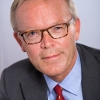 Willem van der Does
Social & Behavioural Sciences
vanderdoes@fsw.leidenuniv.nl | 071 5272727
-
Improving nature’s antibiotic
'What nature made isn’t necessarily an optimized medicine to use in the human body,’ says Professor of Biological Chemistry Nathaniel Martin. That’s why a group of Leiden researchers is making a chemistry-based improved version of the frequently used antibiotic vancomycin. They received an NWO NACTAR…
-
The person behind the murderer
Are all murderers calculating psychopaths with an obscene predilection for bloody chainsaws? Yes, if Hollywood is to be believed, but in the real world they are generally everyday people with problematic backgrounds. Professor of Violence and Interventions Marieke Liem therefore calls for the demythologisation…
-
Science for Sustainable Societies: a new bachelor’s programme
The new interdisciplinary bachelor's program in Science for Sustainable Societies starts in the 2025-2026 academic year.
-
Ammodo Science Award to bring cultural heritage to life through play
A team of Leiden researchers has won the Ammodo Science Award for innovative humanities research on perceptions of cultural heritage.
-
Hard chews: why mastication played a crucial role in evolution
We do it every day but barely give it a thought: chewing our food. But the ‘simple’ process of masticating food may have played a crucial role in the evolution of our jaws, facial muscles and teeth.
-
 Jeffrey Fynn-Paul
Faculty of Humanities
j.fynn-paul@hum.leidenuniv.nl | +31 70 800 9191
-
 Marcel Schaaf
Faculty of Science
m.j.m.schaaf@umail.leidenuniv.nl | 071 5272727
-
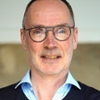 Jeroen Guinee
Faculty of Science
guinee@cml.leidenuniv.nl | +31 71 527 7432
-
 Stephen Harris
Faculty of Humanities
s.e.harris@hum.leidenuniv.nl | +31 71 527 8983
-
 Salvador Santino Regilme
Faculty of Humanities
s.s.regilme@hum.leidenuniv.nl | +31 71 527 1742
-
 Marco Cinelli
Faculty of Governance and Global Affairs
m.cinelli@luc.leidenuniv.nl |
-
conferentie gtgc 2023
Geopolitiek, klimaat, pandemieën, migratie, AI, genderpolitiek: de wereld van vandaag verandert in in meerdere opzichten. Hoe ga je als bestuursorganisatie om met deze veranderingen? Dat was het thema van de tweede internationale conferentie van het Leiden University's Global Transformations and Governance…
-
Van de Waallezing 2023: Maarten van Heemskerck, Rome and classical mythology
Alumni event, Lezing
-
Forum Antiquum Lecture: Plato’s winged chariot in Coetzee’s Jesus Trilogy: Literature’s journey toward transcendence
Lecture
- Orange the World 2025
-
10 years of OPIC - Pathways of Access to Justice for Children
Conference
-
Film Screening: Foragers
Lecture, Teach-In Series on Palestine and Israel
-
War in Europe
Conference
-
Book Launch: Lifting the Fog: The Secret History of the Dutch Defense Intelligence and Security Service (1912-2022)
Book launch
-
What does ‘human’ really mean? When Philosophy and archaeology join forces
Archaeology is the only science that allows us to study the material traces left by most of human evolution. But what happens when we bring philosophy into the picture? A new series of papers demonstrates how philosophical reflection can enrich archaeological research - especially when grappling with…
-
Anne-Laura van Harmelen talks about resilience and public engagement on Dutch radio
In a one-hour interview on Dutch radio programme Sleutelstad, Anne-Laura van Harmelen talks about her research into the role friendships in adolescents' well-being, the resilience paradox and the role of social, hormonal and genetic factors in stress-levels and resilience.
-
Professor Pieter ter Keurs: 'People collect to function'
Professor Pieter ter Keurs has spent his entire career studying collecting. Now, he is retiring. ‘I hope the focus on collections will carry on.’
-
New professor Suzan Verberne aims to bring large language models and search engines closer together
Suzan Verberne has been appointed professor of Natural Language Processing at the Leiden Institute of Advanced Computer Science (LIACS) from 1 October. Verberne has been at LIACS since 2017 as group leader of the Text Mining and Retrieval group.
-
The whole world knows the way to the Leiden institute in Morocco
A delegation from Leiden University visited the Netherlands Institute Morocco (NIMAR) in Rabat at the end of February.
-
Illusions as the key: how spatial technology can help patients
Spatial technology such as virtual reality can help patients who have difficulty with spatial cognition, for instance if they keep on losing their way. In her inaugural lecture, neuropsychologist Ineke van der Ham will talk about the importance of avatars, the patient experience and room for innovat…
-
Katharina Natter receives IMR Book Review Award
Katharina Natter of the Institute of Political Science has been awarded the 2025 IMR Book Review Award for her book on migration politics in Morocco and Tunisia.
-
Peak movement in afternoon and evening linked to lower risk of diabetes
People who move most in the afternoon and evening are less insulin resistant than people who move mainly in the morning or spread throughout the day. This makes them at lower risk of type 2 diabetes. These are the results that researchers from the Leiden University Medical Center (LUMC) have published…
-
18 billion animals a year: they die, but never end up on our plate
Each year a staggering 18 billion chickens, turkeys, pigs, sheep, goats, and cows either die or are killed without making it onto someone's plate. Environmental scientists Juliane Klaura, Laura Scherer, and Gerard Breeman were the first to calculate this number on a global scale. 'Reducing these numbers…
-
These lunch seminars prepare you for upcoming world events
Climate and human rights will again become major issues on the world stage by the end of 2023. The new series of lunch seminars by the interdisciplinary research programme Global Transformations and Governance Challenges (GTGC) seamlessly tie into these events. All Leiden researchers and students are…
-
Five Leiden professors installed as Medical Delta professors
On 2 November, nine professors were simultaneously inaugurated as ‘Medical Delta Professor’ at Leiden University, LUMC, Delft University of Technology, Erasmus University and Erasmus MC. With an appointment at a minimum of two of these five academic institutions, they combine technology and healthcare…
-
Conference on the gap between government and citizens
It’s often said that citizens have lost trust in their governments. But who exactly are these ‘citizens’? And which aspects of people’s contact with government agencies work better than others? These questions will be discussed at the Crafting Resilience conference (working language is English) on…
-
How Cicero’s ruined reputation can be a lesson for politicians today
Roman philosopher and orator Marcus Tullius Cicero is still used as an intellectual example by politicians and speech writers today. But, he did not go unchallenged in his own day, as a statesman in particular. Classicist Leanne Jansen conducted research into how classical historians judged Cicero’s…
-
Onderzoek naar de toekomst van de arbeidsmarkt ontvangt 3,4 miljoen euro
Een internationaal consortium onder leiding van Olaf van Vliet heeft een Horizon Europe subsidie van 3,4 miljoen euro gewonnen. In het onderzoek staat centraal hoe wereldwijde sociale veranderingen zoals migratie, digitalisering en de klimaattransitie de arbeidsmarkt beïnvloeden en wat daar de gevolgen…
-
Procederende belangenorganisaties: ‘Zo worden ook de meest kwetsbaren gehoord’
Interest organisations are increasingly taking legal action and that’s a good thing for democracy, says PhD candidate Rowie Stolk. ‘It means that the most vulnerable social groups – including children and refugees, who tend to have a weaker political position – are protected.’
-
Campus the Hague 'Meet the Employer'
Course
-
Kind, clever and hardworking: school reports are not without bias
White girls receive significantly more positive comments from their teachers in their primary school reports than white boys and children from migrant backgrounds. PhD candidate Antoinette Kroes researched subtle biases in different contexts and saw how harmful these can be.
-
‘Literature explores all sorts of things that the law is not yet ready for’
As Professor of Literature, Culture and Law, Frans Willem Korsten explores the interplay between literature and law. These are two disciplines that most people wouldn’t immediately connect, but Korsten can see a lot of common ground between them. ‘A fictional story can have a huge impact on law.’
-
Wolves in the Netherlands feed mainly on wild animals – but also target grazing cattle in areas with less prey
Wolves in the Netherlands mainly feed on wild animals such as wild boar and red and roe deer. But in areas such as Drenthe where these are scarce they also prey on free-roaming cattle used for nature conservation
-
Onze aarde wordt onleefbaar. Kunnen we het tij nog keren?
We hebben 6 van de 9 grenzen overschreden die bepalen of menselijk leven in de komende generaties nog mogelijk is op aarde. Kunnen we het tij nog keren?
-
Neanderthals changed ecosystems 125,000 years ago
Hunter-gatherers caused ecosystems to change 125,000 years ago. These are the findings of an interdisciplinary study by archaeologists from Leiden University in collaboration with other researchers. Neanderthals used fire to keep the landscape open and thus had a big impact on their local environment.…
-
Rethinking Responsible Scholarship: ‘It is in so many day-to-day decisions, we forget to pause and reflect sometimes’
Psychologists Anna van ‘t Veer and Eiko Fried will start a scientific integrity workshop tour after the summer, called Responsible Scholarship: Psychology. Their aim: giving the subject a more prominent position in the academic’s mind.
-
EUniWell 2021: The year in review
The year 2021 is coming to an end, and with it the first official year of EUniWell. We want to reflect on our highlights of the year with you, celebrate what we have achieved within EUniWell so far and look to the future, to all that is yet to come!
-
Florence Nightingale Colloquium
Lecture, colloquium
-
Opening of the Academic Year: ‘Our university world knows no borders’
The theme of the opening of this year’s academic year was peace and justice. With the climate crisis and the war in Ukraine, these are turbulent times. During the ceremony those present reflected on what the academic community and universities can mean in times of crisis and conflict.
-
‘American’ Black Power movement was also active in the Kingdom of the Netherlands
In the 60s and 70s, Black Power groups were also active in the Kingdom of the Netherlands. This is what PhD candidate Debby Esmeé de Vlugt has discovered.