279 search results for “more gezondheid” in the Public website
-
‘I can do more with questions than exclamation marks'
The life and career of art historian and Leiden alumna Gerdien Verschoor (1963) followed quite a remarkable path before she was appointed director of Camp Westerbork Memorial Centre in 2019. A woman with a deep awareness of historical places, she sees it as more of a series of coincidences, but the…
-
How can we become a more inclusive university?
Inspiration from outside and best practices from inside the University. These were the most important ingredients of the symposium on inclusivity organised by the Diversity Office at Leiden University on 22 November.
-
‘Make science communication more work and less hobby’
Young researchers met this month for the fifth Science Communication Summer School. ‘This is the first time some participants get to meet other researchers who also enjoy science communication. It’s great to see’, says Julia Cramer, one of the coordinators.
-
Drug discovery 3.0: more effective and humane
Discovering effective new drugs is a long, expensive and uncertain process. Laura Heitman wants to improve this by finding out more about how drugs bind to proteins that play a role in disease. She calls it ‘drug discovery 3.0’. Inaugural lecture on 9 December.
-
Disrupted movement makes macrophages more lethal to tuberculosis bacteria
Macrophages – the front line of our immune system – protect us from infections. But in the case of the tuberculosis bacteria, this often goes wrong. The group of Annemarie Meijer from the Leiden Institute of Biology has now discovered that macrophages in zebrafish are better able to eliminate tuberculosis…
-
Nature provides more to people than material benefits
The role of culture and diverse knowledge systems needs to be recognized when assessing nature’s contributions to people, a new policy forum paper in Science states. Alexander van Oudenhoven and thirty global experts present a new approach that will increase the effectiveness and legitimacy of policies…
-
Minute molecular movements might lead to more efficient biofuel cells
Leiden researchers have found minute movements in the laccase enzyme. This discovery could lead to the development of much more efficient biofuel cells. Publication in Biophysical Journal.
-
‘Cleveringa was more than a one-day hero’
In his biography about Professor Rudolph Cleveringa, Kees Schuyt adds to the image we already have of this famous Leiden professor. The overriding focus is generally on Cleveringa’s protest speech against the Nazis, while his later Resistance work carried much greater risks. And we also shouldn't forget…
-
Two more alumni with their sights on the European Parliament
It's a no-brainer: of the candidates that you can vote for on 23 May, 14 studied at Leiden University. We asked four of them about their motivation and ambitions. In this article we interview Samira Rafaela, alumna of Public Administration, and Caspar Rutten, who is studying Law.
-
Urban green infrastructure: making future cities more sustainable
Urban green infrastructure has the ability to make make cities more sustainable. However, the exact implementation of green infrastructure and the choices that must be made during implementation, are still topic for discussion. In the Future Cities podcast, environmental scientist Joeri Morpurgo chats…
-
Leiden University will recognize and reward open science more
Leiden University has received a €50,000 grant from Open Science NL to develop a roadmap for integrating open science into the strategic priorities of various institutes and translating this into human resource (HR) policies.
-
Leiden students want to learn more about sustainability in their studies
Students at Leiden University believe that their study programmes should pay more attention to sustainability. This is evident from a representative survey of more than 550 students, conducted by Leiden University Green Office .
-
Free course on AI and Ethics: ‘Every citizen should know more about this’
The free AI and Ethics course (in Dutch) is available online to anyone who wants to find out more about the ethical implications of artificial intelligence. One of the eight experts featured in the course is Professor Reijer Passchier. ‘Artificial Intelligence is spreading so fast and has such an impact…
-
Survey: Leiden students want to learn more about sustainability in their studies
Students at Leiden University believe that their degree programmes should focus more on sustainability. These are the findings of a survey of more than 550 students by Leiden University Green Office.
-
Teach children who are deaf or hard of hearing more about emotions and social conventions
Children with hearing loss often fail to pick up on nuances in other people’s emotional responses. As a result, they do not always understand what is going on. Yung-Ting Tsou, a PhD student at Leiden University, found that having more knowledge of emotions and social conventions can help them in their…
-
Headache e-diary aimed at more personalised help for patients and physicians
Funded by a ZonMw grant, the LUMC and the Health Campus The Hague will be working with headache patients on research into the use of an electronic headache diary. This resource can help patients gain a better understanding of their migraine attacks and, together with the physician, produce the best…
-
Young children associate Black Pete more with clowns than with black people
Older children more frequently link Black Pete with a black person. Both younger and older children think positively about him. This is the conclusion of a study conducted by Judi Mesman, Professor of Diversity in Parenting and Development.
-
‘More microplastics in the environment than stars in the Milky Way'
Microplastics are everywhere: in the ocean, in cooking salt and even in animals. Should that worry us? 'Yes,' said environmental scientist Thijs Bosker during a pop-up lecture in The Hague on 8 September. ‘We really need to do something now, not wait until it becomes an even bigger problem.’
-
Another global environmental conference is far more successful than the UN Climate Conference
In Montreal, the 34th Meeting of Parties on the Montreal Protocol (MOP), dealing with ozone layer damage, just ended. This protocol is ratified by all countries in the world and is very successful. Shiming Yang, a university lecturer and member of the Leiden University Global Transformations and Government…
-
Two more upcoming events from PhDArts
Activities of Thalia Hoffman and Basma Hamdy
-
Flexible employment benefits offered more often
In an attempt to retain employees and tackle shortages in the labour market, some employers are now prepared to go further in offering attractive employment benefits. Dutch news programme 'Nieuwsuur' has discovered that large international companies, like Uber, McKinsey, and Salesforce, are prepared…
-
More Dutch at the university? ‘We desperately need internationals’
He did an English-taught degree, completed a master’s abroad and now teaches on an English-taught programme at Leiden University College The Hague. Jan Meijer is the definition of an international researcher and he’s proud of it.
-
Martijn van den Brink organises conference for more than 800 European lawyers
Scholars interested in European law attended a conference in Praag to present their research, exchange ideas and reconnect with colleagues and friends. As Vice-Secretary General of the ELU-S, Martijn van den Brink played a crucial role in organising the conference.
-
How to make society more resilient? Anne-Laura van Harmelen explains the importance of friendships
Societal challenges call for a resilient society. In taking steps towards a more resilient society, friendships play a major role. But how exactly do friendships relate to resilient behavior? In Dutch opinion magazine Vrij Nederland, Anne-Laura van Harmelen (professor Brain, Safety and Resilience at…
-
Magnificus Sarah de Rijcke on Radio Sleutelstad: ‘Education should be taken more seriously’
What’s it like to be Rector Magnificus in the current climate? Sarah de Rijcke spoke about this on the radio. She has been at the helm of Leiden University since the start of this year, at a time when academic freedom is under increased pressure.
-
 Lara Wierenga
Faculty of Social and Behavioural Sciences
l.m.wierenga@fsw.leidenuniv.nl | 071 5273787
-
 Jasmijn Rana
Faculty of Social and Behavioural Sciences
j.rana@fsw.leidenuniv.nl | 071 5273732
-
 Ineke van der Ham
Faculty of Social and Behavioural Sciences
c.j.m.van.der.ham@fsw.leidenuniv.nl | 071 5276746
-
 Jojanneke van der Toorn
Faculty of Social and Behavioural Sciences
j.m.van.der.toorn@fsw.leidenuniv.nl | 071 5272727
-
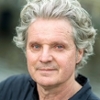 Maurits Berger
Faculty of Humanities
m.s.berger@hum.leidenuniv.nl | 071 5271684
-
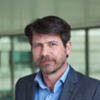 Edwin Bakker
Faculteit Governance and Global Affairs
e.bakker@fgga.leidenuniv.nl | 070 8009506
-
Esther van den Bos
Faculty of Social and Behavioural Sciences
bosejvanden@fsw.leidenuniv.nl | 071 5276868
-
 Marlou Schrover
Faculty of Humanities
m.l.j.c.schrover@hum.leidenuniv.nl | 071 5272786
-
 Jaap van den Herik
Faculteit der Rechtsgeleerdheid
-
Sex and gender analysis needs a more prominent role in research
Researchers, policymakers and funders have to take more account of the effect of sex and gender in scientific research. This is the view presented in an advice paper published by LERU, the League of European Research Universities. The lead author is Vice-Rector Simone Buitendijk.
-
‘Indonesians want more focus on fine details in research on war of decolonisation’
After a lobby lasting many years, the Dutch government has decided to finance an independent study of the war of decolonisation (1945-1950) in the former Dutch East Indies. This is partly due to the work of Professor of Colonial and Post-Colonial History, Gert Oostindie, Director of the KITLV. ‘The…
-
‘The passion that people feel for their work makes my job more enjoyable’
Strong on substance, a good sense of humour and also a bit chaotic. This is how colleagues describe Suzanne van der Pluijm. She started as the new Executive Director at the Faculty of Science on 1 June. Who is Suzanne and what does she stand for? Get to know her in seven questions.
-
Find out more about effective governance for global problems at this conference
The annual conference of the Global Transformations and Governance Challenges (GTGC) interdisciplinary research programme will take place in The Hague on 7-9 June. Why should you be there? ‘The problems in the world affect us all. This conference will be looking at planetary governance’, says programme…
-
Archaeology should have local use and lead to more sustainability
Leiden heritage expert Sjoerd van der Linde is carrying out research on the heritage of the Caribbean region. This research forms part of the international Nexus 1492 project on the consequences of colonisation for the Americas. ‘We first have to find out what the local population wants.'
-
A country of immigrants no more? The securitization of immigration in the National Security Strategies of the United States of America
This article studies the securitization of immigration in the United States of America (U.S.), through the analysis of the National Security Strategies (NSS) published between 2002 and 2017, using a two-layered analytical framework that combines securitization theory and agenda setting theory.
-
More than people and pots: identity and regionalization in Ancient Egypt during the second intermediate period, ca. 1775-1550 BC
On the 23rd of June Arianna Sacco successfully defended a doctoral thesis and graduated.
-
New e-value even more flexible: significance level adjustable at a later stage
Recently, a paper by Peter Grünwald was published in the prestigious scientific journal Proceedings of the National Academy of Sciences. Grünwald is full professor of Statistical Learning at the Mathematical Institute and senior researcher at Centrum Wiskunde & Informatica.
-
Researchers learn to make their work more reproducible at COS workshop
How can we increase the openness and reproducibility of quantitative research? This was the central theme of a workshop on openness and reproducibility, organised by the Center for Open Science (COS) on 2 November 2016.
-
Unequal academic freedom: women’s expertise more likely to be questioned
Nadia Bouras will give the Annie Romein-Verschoor Lecture on 6 March. She will call for academic freedom for everyone.
-
CEO Andrew de la Haije: ‘Optimally serving our clients is more important than growth or profit’
Andrew de la Haije is Director of the Dutch branch of Xebia Consultancy Services, an internationally operating consultancy agency that coaches companies through digital transformation. He followed the executive master’s programme in Cyber Security and graduated with distinction.
-
Researcher teaching in the classroom: ‘We need to imitate nature more closely’
How can we supply the growing world population with sustainable energy? At Laurens College in Rotterdam, Prof. Marc Koper speaks with the students about the crucial role of chemistry in the energy transition. Guest classes like this are a good way for school students to learn about the academic world,…
-
Van Engelshoven’s Letter to Parliament calls for more funding for science
‘Academics have descended from their ivory tower, but there’s still too little action or financing.’ Leiden professor of Science Communication Ionica Smeets saw all her wishes come true on 28 January, with the presentation of the Letter to Parliament sent by Minister Van Engelshoven of the Ministry…
-
Medical Delta professor Andrew Webb: ‘In The Netherlands, people are much more open to cooperation’
Commercial MRI systems cost millions of euros to purchase and require highly trained technicians to operate. Prof. Andrew Webb works on accessible MRI techniques that offer new opportunities in both developed and developing countries. Webb is a professor at the Radiology Department of the LUMC and,…
-
Tools for public authorities to be more transparent about algorithmic profiling
Public authorities fail to inform citizens, or inform them too little or too late, about the use of algorithmic profiling in administrative decisions. This is clear from research conducted by Anne Meuwese and Fatma Çapkurt on the legally and practically responsible use of profiling algorithms.
-
Pilgrim conference: high time for an indigenous and more diverse perspective
Historians and experts in American studies from Leiden University are holding an online international conference about the arrival of the Pilgrims in America and the consequences for the indigenous societies. We asked four questions to two of its organisers, American Studies expert Joke Kardux and historian…