404 search results for “chemical waren” in the Student website
-
FGGA researchers spotlighted in The Conversation
Global affairs, governance, security, sustainability, public administration, and urban development are topics broadly covered in FGGA's research activities. Regularly, FGGA researchers contribute to The Conversation, an independent platform for academic insights and analysis on current affairs. This…
-
Four Leiden Scientists: 'Environmental risks of new pesticides with nanoparticles insufficiently examined'
The environmental risks of new pesticides containing nanoparticles are inadequately researched, according to four Leiden scientists in the scientific journal Environmental Science & Technology. They call for an examination of the long-term and environmental effects of pesticides containing nanoparti…
-
Students work on bacterium that makes sustainable plastic
A group of biology students are working on a solution to the world’s plastics problem by getting bacteria to make biodegradable plastic.
-
Vici grants for seven researchers from Leiden University
From research on stellar winds to sign language: an impressive seven researchers from Leiden University will receive a prestigious Vici grant from the Dutch Research Council (NWO).
-
Young Star Renske Donkers: how is she doing now?
How is Young Star Renske Donkers doing now? Early this year she was the second person ever to win the Young Star Award for the best bachelor student. After her bachelor Molecular Science & Technology, Renske is now busy with her master Chemical Process Engineering in Delft. ‘This award was a great boost…
-
‘We are destroying our own planet' (and Latin America pays the price)
The whole world gets raw materials from Latin America, but at the expense of nature. Håvar Solheim researches the role of organised crime in this environmental crime and Soledad Valdivia researches sustainable urban initiatives in Latin America. What do these university lecturers think the future of…
-
‘I work with go-getters who know what needs to be done’
Her office is a bit tucked away in a corner of the building, but her department is always buzzing with activity. Since May 2024, Renate Rijbroek has been our new Head of Facility Management. There was no slow start: ‘We are working hard towards the official opening in September.’
-
'This is the very best course there is'
Martina Vijver has been nominated as Teacher of the Year of the Faculty of Science. She gets this nomination for the course Ecotoxicology she taught in 2022. The 52 students who took the course were hugely enthusiastic, as can be read in their positive reviews. What is so great about this course then?…
-
Summer School 'The European Union, the United Nations and Global Governance'
Applications are now open for the Summer School ‘The European Union, the United Nations and Global Governance’ (12 - 23 June 2023) for Master-level and PhD students. The activity is supported by the European Union’s Jean Monnet programme (Erasmus+).
-
Recap: Summer School ‘The European Union, the United Nations and Global Governance’
From 13 to 24 June 2022, the Summer School on the European Union, the United Nations and Global Governance, supported by the Erasmus+ (Jean Monnet) Programme was held for the second time.
-
Leiden researchers discover oxygen in the most distant known galaxy
Two teams of astronomers, including one from Leiden University, have discovered oxygen in the most distant known galaxy, JADES-GS-z14-0. This groundbreaking discovery shows that galaxies could form much faster in the early universe than was previously thought.
-
Opinion: Global Safety Summit on AI avoids real issue
The first global safety summit on Artificial Intelligence is a fact. Prime Minister Sunak organised the conference because he believes that the issues related to AI can only be dealt with by governments. But the real issue with AI remained undiscussed at the summit, Reijer Passchier claims in Dutch…
-
Three Leiden PhD candidates awarded Mosaic 2.0 scholarships
Three PhD candidates from Leiden University have been awarded a Mosaic 2.0 scholarship for their PhD research. The Dutch Research Council (NWO) Mosaic 2.0 programme is aimed at an underrepresented group of graduates with a migrant background.
-
How engaged documentary filmmakers use new technologies in their work
CADS lecturer Sander Hölsgens is one of the initiators of the NWO Smart Culture Project Documenting Complexity (project number CISC.KC.212). This project investigates how and why engaged documentary filmmakers use new technologies in their work. One of the outputs of this project is the series ‘In Whose…
-
Open-air cinema, exhibitions, and more: Arts Committee of Leiden Law School
The KOG has more to offer than just the transfer of knowledge. The Arts Committee of Leiden Law School organises activities in and around the faculty to stimulate our senses in other ways. They kicked off the new academic year with an open-air cinema evening and an exhibition of photos and haikus.
-
Tracing mobility and connection to place in the world’s first farming villages
How did people move and form communities when human societies first shifted from hunting and gathering to farming? A new study of the Neolithic period in southwest Asia, the birthplace of agriculture, offers fresh insights.
-
Ten Leiden students receive prize for outstanding achievement
Ten Leiden students have received a prize from the Royal Holland Society of Sciences and Humanities (KHMW). They were nominated by their degree programme. Who are these students?
-
 Nils Thonemann
Faculty of Science
n.thonemann@cml.leidenuniv.nl | +31 71 527 2727
-
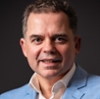 Mario van der Stelt
Faculty of Science
m.van.der.stelt@chem.leidenuniv.nl | +31 71 527 4768
-
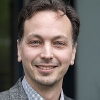 Remus Dame
Faculty of Science
rtdame@chem.leidenuniv.nl | +31 71 527 5605
-
Leiden Science rings in 2025 with inspiring speeches and happy winners
An impressive speech by Dean Jasper Knoester, a lecture by top researcher Mario van der Stelt about brain messengers, and the presentation of the faculty awards. 2025 begins on a hopeful and festive note, with a toast to a year of fruitful collaboration within and beyond the faculty.
-
New Year's Reception
Conference
-
Living Lab moves: first new ditches dug
Leiden University’s Living Lab is moving to the middle of the Leiden Bio Science Park. In the lab’s new home between the University of Applied Sciences, Mentor and Naturalis Biodiversity Center, the first ditches have now been dug. This new location is more accessible to both researchers and the public.…
-
Planet-forming discs around young low-mass star differs fundamentally from one around sun-like star
Using the James Webb Space Telescope, an international team of researchers, including Leiden Professor of Molecular Astrophysics Ewine van Dishoeck, has discovered a palette of hydrocarbons in a planet-forming disc around a young, low-mass star. The results confirm that discs around very lightweight…
-
Nienke van der Marel receives New Horizons Prize
Nienke van der Marel has been awarded the New Horizons Prize in physics for her pioneering research on planet formation. This prize is given to young, promising researchers in physics or mathematics. The astronomer and her colleagues found the first observational evidence for 'dust traps' in disks around…
-
How drugs work better when encapsulated in nanoparticles
Chemist Tobias Bauer discovered ways to improve drugs by encapsulating them. Packages with iron nanoparticles, for example, can stimulate immune cells. Bauer will receive his PhD on 9 June.
-
Three awarded research projects in NWO-XS call
Cryogenic memories, antibiotic treatment for urinary tract infections and recycling plastic sustainably. These are the subjects of the three NWO-XS grants awarded to Leiden Science researchers.
-
Apply now for the Una Europa Summer School on Future Materials
Education, Research
-
Leiden scientists create first-ever dengue-on-a-chip to study this deadly virus
Researchers at Leiden University have created a unique model that mimics how disease develops after a dengue infection. This 'dengue-on-a-chip' model helps them study the virus more effectively. The timing is crucial, as climate change is causing dengue to spread worldwide.
-
Archaeological laboratories visit Faculty of Science for sustainable ideas
In 2018 the Laboratory Efficiency Assessment Framework (LEAF) was launched in the UK. The aim of this programme was to help laboratories work more sustainably and efficiently. The initiative got a Dutch spin-off in 2021. Since then, a couple of the laboratories at the Leiden Faculty of Science have…
-
From liquid to solid: revolutionary technique uncovers disease-related changes in tiny droplets within our cells
Understanding the behaviour of tiny droplets in our cells could aid the search for new treatments. A team of Leiden researchers has developed a groundbreaking method to study how these droplets transition from liquid to solid. This change plays a role in various diseases, including neurodegenerative…
-
Research into grave goods sheds new light on traditional roles
New archaeological research into grave goods and skeletal material from the oldest grave field in the Netherlands shows that male-female roles 7,000 words ago were less traditional than was thought. The research was conducted by a multidisciplinary team of researchers led by Archol, the National Museum…
-
How ‘sleeping’ microorganisms can determine the fate of a population
Microorganisms that temporarily ‘go to sleep’ play an important role in the evolution and survival of a population. Mathematician Shubhamoy Nandan conducted research on the effect of this characteristic called ‘dormancy’ in a novel mathematical model.
-
Article from 1984 remains a hit: citation count passes 10,000
It was already the most cited publication ever written at our faculty, but now a new milestone has been reached. Last month, a paper by emeritus professor Jan Reedijk and his co-authors surpassed 10,000 citations — and the count keeps rising.
-
Natural brain opioids help us “see the bigger picture” after rewards
Feeling good doesn’t just lift our mood—it also helps us stay flexible and resilient. A new study by an international team of neuroscientists shows that natural brain opioids released after rewards play a key role in broadening attention, offering fresh insights into stress, cognition, and well-bein…
-
Lecture by Eliot Higgins: from conspiracy theories to profiting from misinformation
'The way we consume information has changed dramatically over the past fifteen years. You're no longer just a receiver; you participate, create, and spread information. So why not use that to improve society?'
-
Artificial intelligence as the co-pilot for drug discovery
There are more molecules that could conceivably be candidate drugs than there are stars in the universe. How can we ever efficiently identify those molecules? Professor of AI and Medicinal Chemistry, Gerard van Westen: ‘I’m going to use artificial intelligence as the co-pilot to make an automated search.’…
-
The solution to antibiotic resistance might be under our feet
Biologist Nataliia Machushynets felt like she was ‘looking for a needle in a haystack’, trying to find new antibiotics to help solve the problem of resistance. During her PhD research, she did find what she was looking for, in the soil beneath our feet.
-
Seeking new concepts to treat diseases
Scientific Director of the Leiden Academic Centre for Drug Research (LACDR) Hubertus Irth: ‘We test substances and look for new concepts for treating disease.’
-
Curious, not guided by role models: Kim Bonger appointed professor
As of this month, Kim Bonger has been appointed Professor of Chemical Biology. As a first-generation academic, she’s especially grateful. ‘I wasn’t exactly a top student at school. I never could’ve imagined this.’
-
A foldable smartphone? STIBNITE searched for the perfect semiconductor
Roll-up solar panels, bendable phone displays, or better computer chips… The EU project STIBNITE investigated the next generation of semiconductors, made from organic materials based on carbon, nitrogen, and boron. The project has now concluded. During the Open Science Debate on 1 July, the group will…
-
Cheaper, more accurate DNA sequencing
A new graphene-based method could make for faster, cheaper and more accurate DNA sequencing, say a group of Leiden physicists and chemists.
-
Vici grant for research on the formation of galaxies
How do galaxies form? That is what astronomer Mariska Kriek will be researching in the coming years. She received an NWO Vici grant of 1.5 million euros to study galaxies in the early universe. ‘This research uses new and unprecedented observations from the James Webb Space Telescope (JWST). These allow…
-
Designing the next generation of precision medicine
Lecture, Tuesday Talks: Science Insights
-
AI in Chemistry: minisymposium
Conference
-
 Nathaniel Martin
Faculty of Science
n.i.martin@biology.leidenuniv.nl | +31 71 527 2954
-
 Sylvestre Bonnet
Faculty of Science
bonnet@chem.leidenuniv.nl | +31 71 527 4260
-
How to develop cancer drugs with less side effects
Lecture, Tuesday Talks: Science Insights
-
App helps students study better
Cramming from a book, making notes or learning summaries. In the past these were about the only ways to memorise your course material. But that has long since changed. Multimedia is the code word. But is it effective?
-
Surprise: No methane on the night side of exoplanet WASP-43b
The night side of exoplanet WASP-43b, to the surprise of astronomers, does not appear to contain methane. It is likely that extreme winds do not allow enough time for methane to form in detectable amounts. This is the conclusion of an international team of scientists, with Leiden and Amsterdam contributions,…