
‘Extremely valuable’: Una Europa helps PhDs and supervisors to do interdisciplinary research
Interdisciplinarity is more than a buzzword in academia. It’s essential for tackling today’s biggest challenges. But what does it look like in practice? How can PhDs learn the skills needed to work across disciplines, and how can supervisors master the art of guiding them?

These questions brought together over 50 PhD candidates, supervisors, senior academics, policymakers and publishers from 11 European countries for a week of lectures, debates and discussion at the Faculty of Governance and Global Affairs (FGGA) in The Hague. The doctoral training programme from 17 to 21 November was an Una Europa initiative to enhance interdisciplinary collaboration across Europe. Leiden University is a partner in the Una Europa alliance, and our Institute of Security and Global Affairs (ISGA) took the lead in organising the training, together with our local Una Europa team.
Professor Sanneke Kuipers welcomed participants and stressed the importance of an interdisciplinary approach. ‘Issues like EU policy, global security, sustainability, governance and social justice rarely fit neatly into one discipline,’ she said. ‘They require us to cross boundaries, combine methods and learn from one another.’
Kuipers also highlighted the value of cooperation through Una Europa. ‘By pooling our strengths and resources across universities, we’re achieving more than any single institution could do alone, especially when it comes to interdisciplinary research and doctoral training.’
Learning from one another
Kinga Gajda, a professor and doctoral supervisor who attended from Poland’s Jagiellonian University, echoed the value in coming together. ‘Opportunities to meet scholars from across Europe are extremely valuable. They allow us to understand how academic systems differ from one country to another, and they help us understand the doctoral candidates who come to our institution – particularly in the context of exchange programmes and double-degree initiatives.’
‘Such international discussions highlight the challenges we share and the solutions we can learn from one another. Bringing together diverse experiences is not only enriching but essential for improving the quality of doctoral education.’
Are you a PhD candidate or supervisor, and would you also like to attend an interdisciplinary training programme? The Una Europa team at Leiden University hopes to offer this programme again to our community. Please join our mailing list to get updates on this and other Una Europa opportunities.
What did participants take away from the workshop?

Augustin Mari, PhD candidate, University of Edinburgh
‘This programme was a real blessing. It was concrete, simple and focused on professionalising PhD candidates. I learned, for example, how my research can be relevant to policymakers. Bridging academia with the real world was fantastic. We also tackled publishing. I had no idea how to start, but we had a brilliant session on all the steps in this process. I’m going back home with an urge to be more conscious of the impact that my PhD can have and how useful I want it to be. A PhD is not only for publishing. It’s also there to shape ideas on the ground.’

Unaesah Rahmah, PhD candidate, Leiden University
‘I really wanted to join this programme because it’s interdisciplinary, and my PhD topic – terrorism – is interdisciplinary in nature. I never met anyone from the law faculty before, or someone studying health, but this week I did. It gave me a lot of insights. The methodology session was also very helpful. Before, I didn’t know if I was on the right track. Now I have a checklist and principles to follow. That makes me feel more confident about my research. Finally, I loved the chance to discuss my work with other doctoral researchers. I presented an article that I plan to write, got feedback and learned from their presentations.’
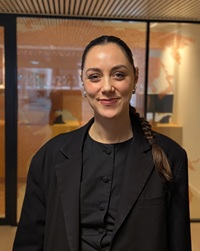
Léa Chloé Glasmeyer, PhD fellow, Leiden University
‘The publishing session was a highlight for me. It gave a clear overview of everything we need to consider. We often forget that we’ll have to publish once we’re finished, so this was a good reminder. On a personal level, talking to other PhD candidates showed me we share similar struggles. That’s reassuring. I’ve also really benefited from the discussions on how best to get organised or what literature from other disciplines could be helpful. I’d definitely recommend this programme. No matter which phase you are in, the sessions were well organised, interactive, and great for networking.’
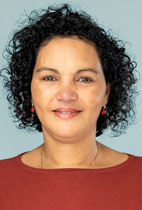
Azeb Amha, Senior Researcher, Leiden University
‘I’ve worked across disciplines at various times but there’s rarely an open discussion or sharing of experiences among supervisors from different fields. Most of us just learn by doing. What attracted me was the chance to exchange experiences with colleagues. There is always something you can learn when you meet people doing similar things, like different ways of working with students and practical aspects of supervision. There were also lectures and presentations on topics like methodology, methods and project design. These themes are relevant for both PhD candidates and supervisors, so this was very interesting for me.’