
411 search results for “bescherming plant” in the Staff website
-
 Ozlem Erol
Faculty of Science
o.erol@biology.leidenuniv.nl | 071 5275185
-
 Suzanne Lommen
Faculty of Science
s.t.e.lommen@biology.leidenuniv.nl | 071 5272727
-
 Sander Hille
Faculty of Science
shille@math.leidenuniv.nl | 071 5277109
-
 Himanshu Chhillar
Faculty of Science
h.chhillar@biology.leidenuniv.nl | 071 5274947
-
How AHL15 delays developmental phase transitions to prevent ageing in plants
PhD defence
-
alarms: volatile-mediated recruitment of beneficial soil bacteria by plants under biotic stress
PhD defence
-
 Eelco Hoogwout
Faculty of Science
e.f.hoogwout@biology.leidenuniv.nl | 071 5275136
-
 Jos Raaijmakers
Faculty of Science
j.raaijmakers@nioo.knaw.nl | 071 5272727
-
Botanical drawing
Arts and leisure, Arts and leisure
-
 Mireadili Kuerban
Faculty of Science
m.kuerban@biology.leidenuniv.nl | 071 5272727
-
 Eva Putri
Faculty of Science
e.k.putri@biology.leidenuniv.nl | 071 5272727
-
 Golsa Nayeb Ghanbar Hosseini
Faculty of Science
g.nayeb.ghanbar.hosseini@biology.leidenuniv.nl | 071 5272727
-
 Annemiek van Dijke
Faculty of Science
a.c.p.van.dijke@biology.leidenuniv.nl | 071 5275114
-
 Emma Devereux
Faculty of Archaeology
e.j.devereux@arch.leidenuniv.nl | 071 5272727
-
Fantastic: Nano- and microplastics and their impact on terrestrial plants and the food chain
PhD defence
-
Wet felting workshop: design your own case or bag
Arts and leisure, Arts and leisure
-
Grants for new antibiotics, urban resilience and the health impact of nanoplastics
Researchers at the Faculty of Science work every day at the frontiers of knowledge, tackling today’s major societal challenges. Their work is recognised through grants, prizes and other awards. We highlight some of these achievements.
-
Working in a living museum
Roderick Bouman is collection manager of the Leiden Hortus botanicus. He keeps track of which plants there are in the garden, where they come from and makes sure visitors can find the right information about them. ‘We are like a regular museum,’ says Bouman. ‘Except that our objects are alive. That…
-
Oat milk from the vending machine: a pilot on six locations
Facility
-
Botanie: een liefde die je niet kunt dwingen
Botanisch filosoof Norbert Peeters vertelt over hoe mensen omgaan met planten in het algemeen, en met onkruid in het bijzonder.
-
Wood formation further explored by NWO-XL grant
Leiden researchers, Professor Remko Offringa and co-applicants Salma Balazadeh and Frederic Lens received an NWO-XL grant (2.5 million euros). Together with researchers in Wageningen and Groningen, they will study the genetic and environmental drivers of woodiness. From plant to molecule, the groups…
-
What Darwin couldn’t see: Expedition to uncover invisible life in Galápagos
An international research team is to search for invisible life in the Galápagos Islands. The diversity of bacteria and other microscopic organisms may not be evident to the naked eye, but it is essential to nature. To the islands' giant daisies, for instance: unique endemic plants that are currently…
-
 Sandrine Gallois
Faculty of Archaeology
s.l.gallois@arch.leidenuniv.nl | +31 71 527 6086
-
 Konstantinos Georgopoulos
Faculty of Science
k.georgopoulos@biology.leidenuniv.nl | 071 5272727
-
 Jordy van der Beek
Faculty of Science
j.g.van.der.beek@cml.leidenuniv.nl | 071 5272727
-
 Priyanka Chopra
Faculty of Science
p.chopra@biology.leidenuniv.nl | 071 5271886
-
 Bjørn Peare Bartholdy
Faculty of Archaeology
b.p.bartholdy@arch.leidenuniv.nl | 071 5277843
-
 Paul Hooykaas
Faculty of Science
p.j.j.hooykaas@biology.leidenuniv.nl | 071 5274933
-
 Robert Verpoorte
Faculty of Science
verpoort@chem.leidenuniv.nl | 071 5274528
-
 Joes ten Thij
 -
Four hundred and fifty trees for Leiden University’s 450th anniversary
Leiden and The Hague have an extra 450 trees thanks to a special campaign to mark the 450th anniversary of the Relief of Leiden and Leiden University’s foundation. Over the past few months, Stadslab Leiden has worked on an initiative to plant young trees with the residents of the two cities.
-
Green islands around the University buildings to entice threatened insects
The number of insect species is plummeting, which is why the University is creating a more biodiverse environment around its buildings. Annetje Ottow, President of the Executive Board, planted the first bee-friendly plants in the front garden of Oude UB on 20 September.
-
Leiden biologists get awarded 730k NWO grant
Salma Balazadeh, Víctor Carrión, and Jos Raaijmakers, biologists at the Institute of Biology Leiden (IBL), have successfully applied for an NWO grant and got awarded 730.000 euros. The board of NWO Domain Applied and Engineering Sciences awarded funding for their project within the Open Technology Programme…
-
How oak seedlings teach us more on dune restoration
What is the best way to restore dune ecosystems? The project TERRA-Dunes researches the role of soil microbes in the development of natural dune areas. Recently, the project went into a new phase: planting 412 oak seedlings grown in different type of soils.
-
A computational tool that will transform bacterial genome analysis
Whether a microbe is beneficial or harmful to a plant can now be predicted with high accuracy thanks to bacLIFE. This bioinformatic tool with an intuitive interface makes it much easier to unlock the secrets of bacterial genomes. A group of Leiden biologists presented it in Nature Communications.
-
450 trees for Leiden: join us
Leiden University and Stadslab Leiden invite you to improve the Leiden and The Hague environment with 450 extra trees – a living reminder of 450 years since the Relief of Leiden and the foundation of Leiden University.
-
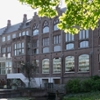 P.J. Veth
Nonnensteeg 1-3, Leiden
-
Archaeologist Amanda Henry traces ancient diets and human adaptability with a Vici grant
Dr Amanda Henry has secured a prestigious Vici grant for her groundbreaking research project, Hominin FoodWays: Changing Diet and Food Processing Across Climate Frontiers. This five-year study, set to begin in September, aims to unravel the dietary adaptations of Eurasian hominins between 1.8 and 0.9…
-
From the griffon vulture to Physcia biziana: record number of rare species in campus BioBlitz
What a result! The Higher Education BioBlitz recorded 3,155 species, smashing our target of 2,500. Thanks to your efforts, Leiden University made an impressive eight ‘very rare’ finds. A result that gives hope for our biodiversity.
-
Solar panels and sedum on the roof of Snellius: A first for Leiden University
One of the largest roofs at Leiden University, that of the Snellius building, has recently been equipped with 590 solar panels and 57,000 sedum plants, making it the largest combined roof in the Benelux. The roof was officially opened on Monday 10 October by Annetje Ottow and Martijn Ridderbos, President…
-
Barbara Gravendeel appointed new scientific director of Hortus Botanicus Leiden
Barbara Gravendeel has been appointed as the new scientific director of Hortus botanicus Leiden. Additionally, she has been named Professor of Plants and Society. Gravendeel succeeds Paul Keßler, who held the position for nineteen years. Currently, she works as a group leader at Naturalis Biodiversity…
-
From a child in the orchard to director of the botanical garden
At the age of six, Barbara Gravendeel already knew what she wanted to be: a biologist. The seed was planted in the garden of her childhood home: an old orchard surrounded by a large hedge. Since 1 May, she has been the scientific director (prefect) of the Hortus botanicus in Leiden, and all the pieces…
-
Changing our diet would help absorb global food shocks, such as during the Russia-Ukraine conflict
A plant-based diet could improve the resilience of our food system. Moving to such a diet in the European Union (EU) and United Kingdom (UK) alone could replace almost all the production losses from Russia and Ukraine. That’s what an international team of researchers conclude in Nature Food. Leiden…
-
Educational experiment with polder rice
Is polder rice a feasible circular alternative to cows on peat soil? In May, an experimental trial began, with researchers from Leiden University and Wageningen University & Research (WUR) planting around 3,000 rice plants at the Polderlab near Leiden. The researchers aimed to test rice as a middle…
-
Biology student Martijn Verkuilen wins Unilever Research Prize
Martijn Verkuilen is the winner of the Unilever Research Prize 2022. By transferring DNA from a plant into yeast, he made the first move to produce a new drug for type 2 diabetes. He collected his prize in Wageningen on 24 November.
-
New research at the Hortus: the delimitation of the genus Uvaria L.
In the tropical rainforests of Southeast Asia the soursop family (Annonaceae) can be found. The genus Uvaria is a part of this family, but it has not yet been described entirely correctly. That is what Annas Rabbani will be studying during the next four years as a PhD student at the Hortus botanicus…
-
Plastics are causing stress to crops (and biodegradable alternatives do too)
Micro- and nanoplastics cause stress to crops such as lettuce and carrots, PhD candidate Laura Julia Zantis found. This can lead to reduced growth and a lower nutritional value. Biodegradable plastics have this effect too, likely because of chemicals they release during degradation.
-
A new look for the Huizinga garden
A lot of green, corners to sit in and paths to stroll along. These were the wishes for the restyling of the garden of the Huizinga building. After some forty years, it was time to give the garden a facelift. The result is a welcoming, green garden with sunny spots and shaded nooks.
-
Plane trees moved to Herta Mohr building
The plane trees from the forecourt of Cluster North have been moved to the Herta Mohr building (Cluster South). The trees could not remain in their original location because of the forthcoming renovation of Cluster North. They have been moved already in advance of the flowering season. In June, the…
-
Dr. Henry in Nature: How Ancient People Fell in Love with Carbs
In 2011, Dr. Amanda Henry published her findings from dental plaque picked from the teeth of Neanderthals who were buried in Iran and Belgium between 46,000 and 40,000 years ago. Plant microfossils trapped and preserved in the hardened plaque showed that they were cooking and eating starchy foods including…