962 search results for “asean and east mediterranean archaeology” in the Staff website
-
 Bjørn Peare Bartholdy
b.p.bartholdy@arch.leidenuniv.nl | 071 5277843
-
 Lucas da Costa Maciel
l.da.costa.maciel@arch.leidenuniv.nl | 071 5272727
-
 Irini Sifogeorgakis
e.sifogeorgakis@arch.leidenuniv.nl | 071 5272727
-
 Ilse Kamerling
i.m.kamerling@arch.leidenuniv.nl | 071 5272394
-
Archaeologist at Binnenhof: ‘Even the staff ate heron’
An Iron Age skull, a unicorn for cleaning your ear and thousands of beer jugs. Alumnus and archaeologist Chris Muysson has made remarkable discoveries at the Binnenhof government complex in The Hague. ‘Each puzzle piece tells us more about its history.’
-
 Marie Soressi
m.a.soressi@arch.leidenuniv.nl | 071 5275355
-
Vici for Petra Sijpesteijn: 'Islamic Empire rapidly became unified'
After the death of the Prophet Muhammad, the Islamic Empire expanded at a tremendous pace. Within a hundred years, it stretched from the Atlantic Ocean to the Indian subcontinent. How did such a rapidly conquered territory become one empire? Professor Petra Sijpesteijn has been awarded a Vici grant…
-
A semester in Morocco: ‘You see the history that you’re learning about’
The Netherlands Institute in Morocco is open to students from all Dutch universities. Two students explain why they are spending a semester studying in Rabat.
-
Investigating Caribbean migrations with a Vidi grant: ‘With isotope analysis we can look at individual behaviors and long term patterns’
Archaeologist Jason Laffoon was awarded an NWO Vidi grant for an innovative investigation into ancient migrations in the western Caribbean. The innovative character of this research project lies in the wide-scale application of isotope analysis and isotope mapping. ‘We aim at further developing methods…
-
Verticality, Agronomic Turn, and the Making of Colonial Botany in the Dutch East Indies
Lecture, Global Histories of Knowledge Seminar
-
Annachiara Raia receives NWO Impact Explorer grant: ‘We want to ensure that literature is once again voiced by its own society and resonates
For decades, the trade in pocketbooks prescribing how to be a good Muslim flourished in East Africa, but in recent years the number of books in circulation has been declining. University lecturer Annachiara Raia is the recipient of an Impact Explorer grant to revive this tradition, in cooperation with…
-
Dimiter Toshkov and Honorata Mazepus in The Economist about the 'winner-loser gap'
The Economist published an article about a working paper about the effects of democratic elections on satisfaction with democracy. The paper was written by Dimiter Koshkov, Associate Professor at the Institute of Public Administration and Honorata Mazepus, Assistant Professor at the Institute of Security…
-
Introducing: Shiru Lim
Shiru Lim has been working at the Institute of History as an assistant professor since August 1, 2023. Below she introduces herself.
-
Lecture: How Social Ties are Critical during Crises
Join this lecture from professor Daniel Aldrich at the Spanish Steps in Wijnhaven on Wednesday 3 November. Dr. Sanneke Kuipers, associate professor in Crisis Governance, will be the moderator of the lecture and she and professor Aldrich give us a preview of the event.
-
Media spotlight on neutrino detection by underwater telescope
Scientists have detected a neutrino with the highest energy ever measured. Leiden physicists Maarten de Jong and Dorothea Samtleben were involved in this project, which was widely covered in newspapers and online media last week.
-
Amanda Henry appointed Full Professor in Evolution of Hominin Diets
As of 1 September, archaeologist Amanda Henry has been appointed Full Professor at the Faculty of Archaeology, where she will hold the chair in Evolution in Hominin Diets. The appointment marks a new chapter in her academic journey, building on her longstanding research into ancient human diets and…
-
'Rome after Rome': a unique student-scholar exploration of early medieval Rome
Debates about the ‘end’ of the Roman era, how, when, and even if it ended, are still very much alive and raging. However, what happened after the (long) late antique period is a lesser-known and lesser-studied subject. The post-Roman past needs, however, as much energetic investigation and discussion.…
-
PhD candidate Marie Kolbenstetter helps repatriate Honduran heritage
In a significant step toward restoring cultural heritage, PhD candidate Marie Kolbenstetter has played a pivotal role in repatriating a collection of 133 archaeological artefacts from the prestigious Musée du quai Branly in Paris back to their place of origin in southern Honduras. Her efforts underscore…
-
Leiden archaeologists play a role in repatriating Central and South American heritage
On 3 September 2025, more than 30 archaeological objects were returned to Peru, Panama and Costa Rica. The objects come from a private collection belonging to the descendants of physician and amateur archaeologist Dr Hans Feriz. In her will, his daughter stipulated that the objects collected by her…
-
Millions in grant funding for research on traumascapes: sites of pain and loss
A consortium led by Leiden University has been awarded 6.75 million euros to research traumascapes: physical places associated with collective trauma and loss. The research team aims to make these places more visible, accessible and inclusive.
-
Maarten Jansen compares ancient Mexican writing systems as Distinguished Emeritus Professor in Bonn
Maarten Jansen, professor emeritus at the Faculty of Archaeology, was appointed as Distinguished Emeritus Professor for two years at the University of Bonn. In this position, Jansen, a world-renowned specialist on ancient Mexican pictorial manuscripts, will further expand upon the long-standing collaboration…
-
 Yunnan Ye
Faculty of Humanities
y.ye@hum.leidenuniv.nl | 071 5272727
-
Widespread cultural diffusion of knowledge started 400,000 years ago
Different groups of hominins probably learned from one another much earlier than was previously thought, and that knowledge was also distributed much further. A study by archaeologists at Leiden University on the use of fire shows that 400,000 years ago knowledge and skills must already have been exchanged…
-
The Western Part of the East Indies: Colonial Worldmaking and Global Knowledges at the Early Modern Cape Colony
Lecture, Global Histories of Knowledge Seminar
-
Import in the Stone Age? How object biographies shed new light on the Neolithic
On April 22, Lasse van den Dikkenberg defended his dissertation: Living with Flint. For this, he examined flint finds from the Rhine-Meuse Delta. These finds belong to the Vlaardingen culture, which existed here from 3400-2500 BC. His research revealed that import played a larger role in the Neolithic…
-
Local Panama communities work with archaeologists on historic land rights
The question of land property titles is a common source of conflict between indigenous communities and federal authorities all over the Americas. A new Panamanian law have led indigenous communities to reach out to archaeologist Dr Natalia Donner. A grant from the Centre for Indigenous American Studies…
-
Researcher develops Google for archaeologists
An incredible quantity of archaeological reports are stored in digital archives. If you want to search for information in them, you have to do this manually. And that is a real chore. Archaeologist Alex Brandsen has now used deep learning, a form of artificial intelligence, to develop a search engine…
-
Alex Geurds receives NWO Vici grant for investigating human-environmental engagement across Central America & Colombia
During pre-Columbian times, the Central American isthmus was marked by dynamic exchange and human mobility. Despite this, indigenous communities were archaeologically stable between AD 300 and the 16th-century Spanish colonisation, contrasting with the cycles of florescence and decline of neighbouring…
-
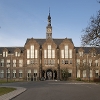 Poortgebouw
Rijnsburgerweg 10, Leiden
-
Fifty years of teaching and research in Egypt: ‘Visit to Cairo a highlight for students’
The Netherlands-Flemish Institute in Cairo (NVIC) is celebrating its 50th anniversary this year. Thousands of students and researchers from eight partner universities in the Netherlands and Flanders have been able to gain valuable experience in Egypt through the institute. Good reason for a celebrat…
-
Slice of 'Zeeuws' life: the complex stories behind human burials in Koudekerke
A team of three students affiliated with Leiden University is shedding new light on the lives, diets, health, and mobility of individuals buried at the historic church site in Koudekerke, Zeeland. The project, a collaboration with the Walcherse Archeologische Dienst and funded by the Municipality of…
-
Marian Klamer on Science: 'Language is regularly used to legitimize a shared cultural history'
A newly opened museum in China appears to be devoted to the origins of the Austronesian-speaking peoples, who some 5000 years ago spread from East Asia across the Pacific, seeding it with a distinctive culture and some 1200 languages. But those displays are also a statement in the long-running dispute…
-
Course design
Whether you’re giving a course for the first time or aiming to update your learning objectives or teaching formats, effective education starts with good course design. This step-by-step plan will help you create or innovate your course: from learning objectives to teaching formats.
-
New research indicates Hunter-Gatherer impact on prehistoric European landscapes
The starting point of human-induced landscape changes has been under permanent debate. It is widely accepted that the emergence of agriculture strongly increased human impact on their environments. However, foragers can and do actively transform land cover and ecosystems. Ethnographic observations,…
-
What is there to do at Leiden University in 2023? Six events to look forward to
From sponsored runs to festivals and from open days to concerts: Leiden University hosts lots of events each year. We are highlighting six of them for 2023.
-
Archaeologist Valerio Gentile investigates Bronze Age spear combat
How can we tell whether and how a prehistoric weapon was used? How can we better understand the dexterity and combat skills involved in Bronze Age spear fighting? A research team from Leiden and Göttingen University present a new approach to answering these questions: they simulated the actual fight…
-
What did resistance look like in Indonesia during the Second World War?
Stories of resistance in the Second World War are widely covered in Dutch historiography: Hannie Schaft, Erik Hazelhoff Roelfzema, and Professor Cleveringa are some of the best known. But these accounts largely focus on the Dutch domestic perspective. On the other side of the world, a complex colonial…
-
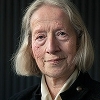 Corrie Bakels
c.c.bakels@arch.leidenuniv.nl | 071 5272393
-
Obstinate Graves in East Java: Traditionalist and Modernist Ethics, Excess, and Sufi Perspectives | Research Seminar
Lecture, Research Seminar
-
Asia Academy #17: South Korea's Political Rollercoaster
Lecture, LAC Asia Academy
-
‘Eldest sons held the power in ancient Egypt’
For decades it was thought that the family system of the ancient Egyptians was very similar to our own. However, PhD candidate Steffie van Gompel explains that the reality is somewhat different. ‘In Egyptian families, it was often the eldest son versus the rest of the children.’
-
Neanderthals changed ecosystems 125,000 years ago
Hunter-gatherers caused ecosystems to change 125,000 years ago. These are the findings of an interdisciplinary study by archaeologists from Leiden University in collaboration with other researchers. Neanderthals used fire to keep the landscape open and thus had a big impact on their local environment.…
-
The impact of climate change on groups of people
The socio-economic effects of climate change often do not receive enough attention. At the EuroScience Open Forum (ESOF) a group of researchers will provide more insight. How does climate change affect whether people work together or conversely end up as opponents? And what can we learn from societies…
-
Armin Cuyvers appointed full professor of EU law at Leiden Law School
The Board of Leiden University has appointed Armin Cuyvers as a full professor of European Law, specifically EU Constitutional Law and Comparative Regional Integration, effective per 1 September 2021.
-
Ice age architecture: how mammoth bones reveal human ingenuity
What do you build with when trees are scarce and winters are brutal? For hunter-gatherers living in current-day Ukraine some 18,000 years ago, the answer was simple: mammoth bones.
- Research Seminar Medieval and Early Modern History
- Histories Connected
-
Investigating obsidian sources in Honduras with a Corrie Bakels Grant
Obsidian, a volcanic glass-like material, is often used for making tools by Mesoamerican societies. In Honduras, certain obsidian artefacts do not yet have a known provenance. PhD candidate Marie Kolbenstetter and Assistant Professor Dennis Braekmans were awarded a Corrie Bakels Grant to explore thus…
-
Citizen scientists discover more than 1,000 new burial mounds
Over the past few years, citizen scientists from the Heritage Quest project have scoured the entire Veluwe and Utrechtse Heuvelrug areas for unknown archaeological heritage. One of the results of this research is that the number of known burial mounds in this area has doubled.
-
Archaeologist Nathalie Brusgaard investigates human-animal relations as Assistant Professor
Dr Nathalie Brusgaard both studied and finished her PhD at the Faculty of Archaeology in Leiden. After a few years spreading her wings, she is now back. As the new Assistant Professor in the World Archaeology department, she will continue her research on the relationship between prehistoric humans and…