
66 search results for “cognitieve impairment” in the Staff website
-
 David Bezpalec
Faculty of Social and Behavioural Sciences
d.b.bezpalec@fsw.leidenuniv.nl | 071 5272727
-
 Jennifer Becker
Faculty of Social and Behavioural Sciences
j.m.becker@fsw.leidenuniv.nl | 071 5272727
-
Professor calls for more focus on brain impairment in offenders
Maaike Kempes believes more attention should be paid to non-congenital brain injuries in suspects. This may partly explain their criminal behaviour.
-
 Zijian Li
Social & Behavioural Sciences
z.li.20@fsw.leidenuniv.nl | 071 5272727
-
 Shannon Yuen
Faculty of Social and Behavioural Sciences
s.yuen@fsw.leidenuniv.nl | 071 5272727
-
 Hanneke Hulst
Faculty of Social and Behavioural Sciences
h.e.hulst@fsw.leidenuniv.nl | 071 5272727
-
How research sheds light on the invisible symptoms of MS
What are the often invisible cognitive consequences of multiple sclerosis? Maureen van Dam mapped these out during her doctoral research. 'People usually notice the physical symptoms, but the cognitive symptoms deserve at least as much attention.'
-
Affective Computing and the interaction between humans and socially interactive agents.
Alumni event
-
 Oort
OortNiels Bohrweg 2, Leiden
-
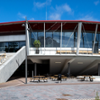 Lecture Hall
Einsteinweg 57, Leiden
-
A multifaceted approach to understand cognitive impairment in MS: Exploring the nonlinearity of cognition
PhD defence
-
 Huygens
Niels Bohrweg 2, Leiden
-
 Poortgebouw
Rijnsburgerweg 10, Leiden
-
Help and support
Leiden University supports lecturers in organizing and conducting their teaching. Here you will find more information on practical facilities, technical tools, and didactic advice, as well as answers to questions such as: How do I make literature available? Who can I turn to for ICT support? And how…
-
Reporting sick and guidance during sick leave
If you are unable to come to work due to sickness, find out below how to report sick and how the University guides its employees on sick leave.
-
 Van Steenis
Einsteinweg 2, Leiden
-
 Jolanda den Heijer
Faculty of Social and Behavioural Sciences
j.a.d.den.heijer@fsw.leidenuniv.nl | 071 5274046
-
Search engine optimisation
Search engine optimisation (SEO) is the optimisation of website content and other technical aspects to ensure that a site ranks higher in the results of search engines such as Google. As a web editor, you do not have much influence on the technology, but there are points that you can consider when writing…
-
Astronomers and surgeons join forces in the operating theatre
Astronomers and surgeons from Leiden are collaborating with industry to develop an optical instrument that delivers faster, more accurate imaging of tumour tissue and abnormal blood flow during surgery.
-
New research reveals link between finger tapping and Alzheimer's
Suddenly getting lost, failing to recognise family members, or forgetting words and names are well-known symptoms of Alzheimer's disease. Psychologists have now discovered that the disease also manifests in more subtle ways: through the rhythm of finger tapping.
-
Creating a mailing or newsletter
Follow these steps to start a new mailing or newsletter.
-
Fusing electrical stimulation, wearable robots & humans to restore and enhance mobility
Eduard Fosch-Villaronga, Associate Professor at eLaw, contributed to 'Cyber–Physical–Human Systems', a book exploring the latest developments in interactions between cyber–physical systems and humans.
-
What happens on the schoolyard? Sensors on clothing reveal painful patterns
Wat gebeurt er op het schoolplein? Sensoren op kleding openbaren pijnlijke patronen
-
Serious game helpt mensen met Niet Aangeboren Hersenletsel (NAH) opnieuw te navigeren
Om de weg te vinden letten sommige mensen op de omgeving, anderen onthouden waar ze links of rechts af moeten slaan. Mensen met Niet Aangeboren Hersenletsel (NAH) rapporteren navigatieproblemen. Om opnieuw te leren navigeren heeft neurowetenschapper Milan van der Kuil als revalidatietherapie een serious…
-
 Jochanan Veerbeek
Faculty of Social and Behavioural Sciences
j.veerbeek@fsw.leidenuniv.nl | 071 5273399
-
Combining high-level sports and work: ‘It makes me better at both’
She works four days a week as a project manager at LIACS and trains six days a week with the Dutch Para Climbing team. Christiane Luttikhuizen balances her role at the Faculty of Science with competing at a high level in climbing.
-
‘12-year-olds capable of deciding about vaccination with assistance’
Children aged between 12 and 17 years can decide themselves whether they want to be vaccinated or not. Experts say that children are capable of taking a well-considered decision.
-
Faculty of Humanities joins 'Hidden Disabilities Sunflower'
A hidden disability can make studying a considerable challenge, partly because of the disability itself, but also because others may not realise that extra support is justified. To overcome this problem, the Faculty of Humanities is introducing the Hidden Disabilities Sunflower.
-
How accessible are our buildings?
Towards the end of February, three Leiden University buildings will be assessed for their accessibility to people with a disability. The assessment will be carried out by Ongehinderd, a social enterprise committed to making the Netherlands more accessible. Its founder and director, Gerard de Nooij,…
-
From innovative idea to start-up: during new workshops psychology students learn about doing business
In the ‘Educatips’ column, psychology lecturers share their valuable insights about lecturing. This month: Franz Wurm is developing entrepreneurship workshops together with PLNT for master’s students of Clinical Psychology. ‘We want to teach students to develop from passive consumers to become active…
-
On the same wavelength: Deaf and hard-of-hearing children keep pace with hearing peers in emotional development
Deaf and hard-of-hearing children can find it challenging to blend in during recess on the playground. Yet, in recent studies, two PhD researchers studying children in China and Portugal showed that the emotional development of these children is largely on par with their hearing classmates.
-
Psychology-colleagues are raising money for MS-research: ‘Most of us take their cognitive skills for granted.’
Running, walking or horseback riding: colleagues from the Health, Medical and Neuropsychology unit are each working up a sweat this month to raise money for research on Multiple Sclerosis. How much have they collected so far?
-
Fact or fiction: people with autism are not social
Half the world's population is introverted and comes home drained after an evening of drinks. Their social battery is empty. 'People with autism have a similar experience, but much more intense,' says Boya Li, who researches emotional regulation in children with autism and hearing impairment. Does this…
-
TEMPORAL project helps improving hearing of the deaf
Electrical inner ear prostheses like Cochlear Implants (CIs) help deaf and severely hearing-impaired persons to regain many of their communication abilities. The performance of CI in social environments is, however, not optimal. The new "Machine learning To Enhance teMPoral cOding foR cochleAr impLants“…
-
Research projects launched into biodiversity in food and horticulture production
Two Leiden research projects that focus on increasing the biodiversity of Dutch production systems for food and ornamental horticulture have started thanks to funding from the Dutch Research Council's KIC research programme.
-
Hanneke Hulst new Scientific Director Institute of Psychology
Prof. Hanneke Hulst has been appointed Scientific Director of the Institute of Psychology by the Board of the Faculty of Social and Behavioural Sciences. She will start on 1 February 2024 for a period of 3 years, succeeding Andrea Evers and interim director Serge Rombouts.
-
'When a deaf child suddenly hears and learns to talk, this also has a huge impact.'
Professor Johan Frijns treats people with hearing loss, conducts research on hearing implants, and gladly shares his knowledge about electrical stimulation of the nervous system.
-
 Carolien Rieffe
Faculty of Social and Behavioural Sciences
crieffe@fsw.leidenuniv.nl | 071 5273674
-
Can extreme antisocial behaviour be traced back to the brain?
The brain structure of young people with conduct disorder differs significantly from that of their typically developing peers. This is the conclusion of an international study that analysed more than two thousand MRI scans, recently published in The Lancet Psychiatry. Dr Moji Aghajani, one of the principal…
-
How these young researchers are preparing for their first scientific conference
Three Psychology students will present a poster of their thesis research on Alzheimer’s and dementia at the international conference AAIC Neuroscience Next. ‘I remind myself to recognise - without fear or shame - when I don't know something.’
-
European Grant for Mariska Kret's Virtual Reality emotion training tool
Teaching people to recognize subtle, real-world expressions will help them understand and trust others better. The aim of Mariska Kret is to develop an interactive virtual-reality training tool (E-VIRT) for a broad group of users, including patients. Kret provides a brief description of her idea for…
-
Can humans observe a single particle of light? (And what does that say about our brain?)
Hoping to learn something about the human brain, Leiden researchers are creating a setup to shoot single photons, particles of light, into someone’s eye. ‘The eye is a passageway to the brain.’
-
Combatting violence against children: what are the lessons learnt?
In the context of the 2021 Day of General Discussion of the UN Committee on Rights of the Child, this time dedicated to alternative care, Defence for Children in collaboration with Leiden University has contributed with a paper on the 2019 Dutch Inquiry Committee on Historical Child Abuse in Alternative…
-
Why avoid my gaze?
Individuals suffering from social anxiety disorder (SAD) consistently avoid eye contact. However, in a non-clinical population, gaze avoidance in socially anxious individuals depends on social situations, Jiemiao Chen saw in a series of experiments, for which she used wearable eye-trackers. On 25 April…
-
Higher CO2 levels are making our food more calorific and less nutritious Food crops
More CO2 in the atmosphere is making food crops more calorific, less nutritious and potentially more toxic.
-
‘My internship has taught me to look around me a bit more sometimes’
Public Administration student Iris did an internship at the Ministry of the Interior and Kingdom Relations. During her internship, she dealt with election accessibility.
-
Dag van de BHV’er: vier collega’s aan het woord
On the Day of the Emergency Response Officer, we shine a light on the colleagues who contribute to safety across the university. Their dedication and experiences highlight the value and versatility of being a company emergency response officer – not only in the workplace, but beyond. We spoke with four…
-
Nutrition and fasting for the brain: why the Keto diet shows promise
Autism, Alzheimer’s, and bipolar disorder: can the development of these mental health conditions be influenced by the ketogenic diet? Increasingly, research suggests it might. 'For those it helps, it can be life-changing,' says neuroscientist Eline Dekeyster.
-
Farewell to a Bridge-Builder
Over the past two years, the institute has undergone important developments under the leadership of Scientific Director, Professor Hanneke Hulst. She also steered the Institute with passion and determination through this tumultuous period. She leaves behind a strong, resilient and forward-looking organisation.…
-
How does the ethics committee work? Suzan Verberne gives an insight
How ethical is research involving humans and robots? And can research on artificial intelligence cause problems when it ends up in the wrong hands? In any research involving humans or their data, the ethics committee assesses where the issues are. Associate professor at LIACS Suzan Verberne chairs the…