789 search results for “field from co2” in the Staff website
-
Joëlle Koning is Head of Student Affairs, Faculty of Humanities from 1 July
Joëlle Koning has been appointed as Head of Student Affairs (OSZ) in the Faculty of Humanities from 1 July.
-
A message from the Executive Board following the occupation of the Academy Building
Organisation
-
From a rapper to an elegy: students of Italian make videos for a wide audience
A course that concludes with a video pitch, instead of a paper or examination: Italian Language and Culture students each recorded their own knowledge clip, speaking to a wide audience about Italian cultural expressions. We asked Goran Bouaziz, Cameron-May Bosch and Katja Timmer what they thought of…
-
Five years ago, Recep fled from Turkey; he is now a university teacher
For fifteen years, Recep Uysal carried out research on positive psychology in Turkey; it is even the subject of his PhD. That was until he had to flee Turkey and start again from scratch in the Netherlands. Re-entering the academic world was a challenge, but he rediscovered his love for the field in…
-
Working outside opening hours? Here's what changes from 1 April
Organisation, Security
-
Please note: No network in the PdlC building from Friday 28 November 6 pm until Monday 1 December 5 am
Education, Facility, ICT, Research
-
The annual interview is changing: from scores and numbers to more human dimensions
Speaking with your manager more often, focusing explicitly on well-being and giving more recognition and rewards for teamwork and team performance: the annual Performance & Development (P&D) interview will have a new format and also a new name. With the acronym GROW (Gesprekken over Resultaat, Ontwikkeling…
-
From Excel to PLAN: instant insight into teaching tasks at the click of a button
With the introduction of PLAN in education, the Institute of Psychology is taking an important step forward. The complex project has been carefully executed and the system fully set up. It offers teachers advantages such as ease of use and transparency. Zsuzsika Sjoerds did a pilot and tested it.
-
Podcasts as assessment method? 5 tips from the educational testing ground
How to innovate education? In this series, the Honours Academy highlights examples from their educational testing ground that aim to inspire. Today: pioneering with podcasts. What are the do's and don'ts? Two teachers and a student share their thoughts.
-
Why International Women’s Day still matters: insights from three experts
The Netherlands is known globally for being a champion of equality. But is it really? On 8 March, International Women's Day, three Leiden experts reflect on this year's national theme: #NietMijnRecht (#NotMyRight)
-
From growth to well-being: EU should look beyond the economy
In a paper, researchers suggest how the next European Commission can develop an alternative policy model that centres people’s well-being.
-
Executive Board column: From the outside looking in (and vice versa)
We know more together than alone. To increase our university’s impact on the region, we have to be open to the world outside. This is how we strengthen our ties and create new opportunities for teaching and research.
-
From forming embryo to cancer metastasis: the significance of collective cell movement
Luca Giomi has the first results of his ERC consolidator grant. He discovered that epithelial cells move collectively but in different ways, depending on the scale you look at. It is hexatic at small scales, and becomes nematic at larger scales: it is a multiscale order. This collective movement of…
-
From droplets in the freezer to the inception of a potent new antibiotic
What started as an idea during a social gathering led to an unexpected breakthrough in research on resistant bacteria. Biologists and chemists from Leiden developed a new substance that proves to be effective against bacteria resistant to antibiotics. They published their discovery in Nature Chemist…
-
New social media pilot at Archaeology: from Wes Anderson to community archaeology
Anyone who follows the Faculty of Archaeology on social media must have noticed that something changed in September. Videos on research projects, interviews with staff and students, and embracing memes: the content has become more varied and engaging. We speak with students Grace Alonzo and Thomas Prins,…
-
Children from multi-parent families do not have legal protection
In families where more than two people assume the role of parent, not all of these parents have legal status. This causes problems, particularly with inheritance law, says PhD candidate Michelle Michels.
-
‘The questions and ideas from students also make me a better researcher’
‘Yamila Miguel brings along immense enthusiasm that sparks over to the students in the lectures,’ her students say about her. ‘She inspires us as scientists-to-be.’ The astronomer teaches master’s students with great passion and interactivity about exoplanets. She has been nominated for the faculty…
-
From a technical bachelor in Delft to a master's in Philosophy: ‘We need each other’
For three years, Wouter Schuit enjoyed studying Technology, Policy and Management at Delft University of Technology - only to switch to a master's in Philosophy in Leiden after his bachelor's. 'In both, you learn to tackle a problem in a structured way.'
-
Researchers from Leiden make Ted Ed videos: ‘We want to integrate Islamic history into world history’
What are the origins of the Islamic Empire? And what was daily life like there? Two new Ted Ed animations answer these questions in simple language. Arabists Petra Sijpesteijn and Birte Kristiansen explain what the process of developing the videos was like.
-
From singer to French teacher: ‘I kept wondering what a university study would be like’
After a successful career as a singer, Esmee Schoones started studying French a few years ago. It resulted in a national award for her thesis on musical arrangements of Verlaine's poems and a job teaching French.
-
From lone genius to cocreator: how AI is changing the role of composers
Who is the real creator when a musician uses AI? This was the burning question for Adam Lukawski, himself a composer. During a fascinating premiere at Amare, The Hague’s cultural hub, he demonstrated what cocreation sounds like.
-
‘Leiden and the university can learn a lot from each other’
We always need to find a new way to tell the story of 3 October, believes Ariadne Schmidt. The professor by special appointment of History of Urban Culture will be working with students to involve more people in the history of that day. ‘I’m too much of a historian to say: we can just let it be a “fun…
-
Leiden Law School Professor Ann Skelton Awarded Honorary Doctorate from the University of Strathclyde
Leiden Law School takes great pride in announcing that the University of Strathclyde has bestowed an honorary doctorate on Professor Ann Skelton, Professor of Children's Rights in a Sustainable World at Leiden Law School and Chair of the United Nations Committee on the Rights of the Child. This prestigious…
-
From September, your own laptop will be the standard for lectures
Using all the software you need for lectures on your own laptop. From the new academic year, that will be the standard at our faculty. That is when the Bring Your Own Device pilot will start. The arrival of the software distribution platform brings many benefits. ‘Teaching will become more flexible…
-
From bachelor student to entrepreneur: card game about elementary particles an unexpected hit
bachelorstudent Serafine Beugelink ontwikkelt kaartspel over elementaire deeltjes en deeltjesfysica. Ze zet succescol haar eigen bedrijf op.
-
Talk and debate: how do we prevent science from harming the environment?
Sustainability researchers can play an important role in the energy transition. But what if their partners are not (yet) sustainable and science itself has adverse effects? This is the subject of an online talk by researcher Thomas Franssen on 16 December with a discussion afterwards. ‘Clean energy…
-
From child to artist: something for everyone during Days of Arts and Science
From 11 to 17 September, Leiden will be all about art and science. What can the combination of these two domains do for us? And how can cooperation between them be strengthened? Several public events and a brand new symposium for specialists should answer these questions.
-
How migration policy in autocracies and democracies differs from what we expect
What is the effect of a certain regime on a country’s migration policy? Political scientist Katharina Natter compared the migration policy of autocratic Morocco with that of democratising Tunisia. Her findings challenge some of the core assumptions.
-
From walking sticks to guide dogs: Krista Milne charts the lives of medieval people with disabilities
What was life like for people with disabilities in the Middle Ages? University lecturer Krista Milne delved into medieval manuscripts and found more than thirty images of assistance dogs of all shapes and sizes. Now, a Vidi grant is enabling her to expand her research to include the question of what…
-
'Reception of refugees in the region only possible with support from Europe'
The objective of many European countries is to provide reception facilities for refugees in their own region. Here in the Netherlands a new coalition agreement is in the making and Professor Jorrit Rijpma reflects on his own research to give advice and tips.
-
What Schools Can Learn from Skate Culture - Anthropologist Sander Hölsgens on The Conversation
Anthropologist Sander Hölsgens explores how skateboarding philosophy can revolutionise education by embracing failure, fostering creativity, and building supportive learning communities. Read his research on The Conversation.
-
Microsoft sensitivity labels no longer displayed in footers from 25 February
ICT
-
Andrew Gawthorpe on BBC about Donald Trump’s plan to exclude South Africa from the G20: ‘Unlikely’
University Lecturer Andrew Gawthorpe commented on the BBC regarding Donald Trump’s plans to exclude South Africa from the G20.
-
LACDR members Anne-Grete Märtson and Willem Jespers received Veni grant from Dutch Research Council (NWO)
LACDR members Anne-Grete Märtson and Willem Jespers have each received a Veni grant from the Dutch Research Council (NWO).
-
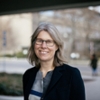 Petra Sijpesteijn
Faculty of Humanities
p.m.sijpesteijn@hum.leidenuniv.nl | 071 5272027
-
 Sophie van Rijn
Faculty of Social and Behavioural Sciences
srijn@fsw.leidenuniv.nl | 071 5272727
-
Maria Boletsi
Maria Boletsi is Associate Professor in Film and Literary Studies of Leiden University.
-
Alisa van de Haar
Alisa van de Haar is Assistant Professor in historical French Literature. Her research focuses on historical multilingualism, the history of the language sector, and the intersection between language and migration. From 2022 to 2026, she conducted a Dutch Research Council Veni project titled ‘Languages…
-
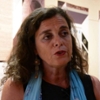 Corinne Hofman
c.l.hofman@arch.leidenuniv.nl | 071 5272449
-
Gilles van Wezel
Gilles van Wezel is a molecular biologist by training, with strong affinity for global regulatory processes that control the major processes in the bacterial cell. This led him via the control of protein synthesis (PhD thesis), via carbon catabolite repression (postdoc), to the two current main subjects:…
-
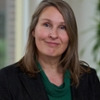 Maartje Janse
Faculty of Humanities
m.j.janse@hum.leidenuniv.nl | 071 5274167
-
Miguel John Versluys
Miguel John Versluys is Professor of Classical & Mediterranean Archaeology at the Faculty of Archaeology.
-
Herman Spaink
My research interest is focused on understanding how biological signal transduction functions at a molecular level. A central theme is the investigation of intercellular communication, particularly the communication of cells of one organism with another. For this a highly multidisciplinary approach…
-
 Victoria Nyst
Afrika-Studiecentrum
v.a.s.nyst@hum.leidenuniv.nl | 071 5272208
-
Alicia Schrikker
Alicia Schrikker is Professor of the History of the Netherlands in the World and Director of Research at the Leiden University Institute for History. She is an expert in the history and legacy of Dutch colonialism. She supervises BA, MA and PhD research in the fields of socio legal history, colonial…
-
Problems arise when citizens request documents from public authorities with information on third parties
When Dutch citizens request information under the Open Government Act (Woo), third parties can ask the public authority to withhold certain information. Leiden research reveals that the position of these third parties is unclear and accessing information is a difficult process.
-
Alumna Nadia Kadhim: From children’s rights to Forbes 30 under 30
Alumna Nadia Kadhim started in 2017 as a corporate lawyer implementing the General Data Protection Regulation (GDPR) at one of the companies where she volunteered. By late 2022 she had received both a Most Inspiring Women in Cyber Award and was on the Forbes 30 under 30 list with her legal start-up…
-
From Zuidas intern to legal-aid lawyer | Leiden Lawcast S02E03
Nicolette Heijkant is our guest on the latest episode of Leiden Lawcast. Heijkant is an experienced lawyer who won her spurs working in the legal profession in Amsterdam’s business district, the Zuidas, and is now working for a legal-aid practice in Brabant. In this episode, we speak to her about her…
-
From virtual rape to meta-rape: Sexual violence, criminal law, and the metaverse
Carlotta Rigotti, post-doc researcher at eLaw – Center for Law and Digital Technologies, and Professor Clare McGlynn , Durham University, have co-authored a new article in the Oxford Journal of Legal Studies, introducing the concept of meta-rape and exploring its potential treatment under criminal l…
-
From liquid to solid: revolutionary technique uncovers disease-related changes in tiny droplets within our cells
Understanding the behaviour of tiny droplets in our cells could aid the search for new treatments. A team of Leiden researchers has developed a groundbreaking method to study how these droplets transition from liquid to solid. This change plays a role in various diseases, including neurodegenerative…