329 search results for “gravitational water” in the Staff website
- Results
-
ESA officially adopts ARRAKIHS mission: Europe leads the exploration of the low surface brightness universe
The European Space Agency (ESA) has officially adopted ARRAKIHS as a scientific mission, confirming the target launch date of 2030. Matthieu Schaller is part of the Science Team: ‘I look forward to learning more about the dark part of our cosmos.’
-
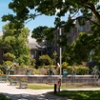 Hortus botanicus
Rapenburg 73, Leiden
-
Special telescope measures neutrino with highest energy ever
Even with state-of-the-art technology, it is almost impossible to see: a cosmic neutrino. Yet scientists have managed to image this particle with a deep-sea telescope. And that could help to better understand our universe. Leiden particle physicists collaborated on this ambitious project, published…
-
Werkplek
Leiden University ensures a pleasant and safe working environment, whether you are on campus or working from home. Here you will find practical information about accommodation and facilities, as well as answers to questions such as: How do I arrange an ergonomically responsible workplace at home? Where…
-
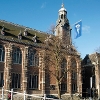 Academy Building
Rapenburg 73, Leiden
-
Private accommodation
If you are not eligible for university owned accommodation or if you prefer to buy or rent your own property there are a few things to take into consideration. The Service Centre International Staff can help you as well.
-
Elena Maria Rossi continues her search for the origins of the largest black holes, but now as a professor
Elena Maria Rossi is fascinated by black holes. Her appointment as a professor was a long-held wish, partly because there are so few female professors in her field. ‘My appointment is also a milestone for the Leiden Observatory.’
-
Euclid helps to better understand the universe – first results are exciting
For the first time, we’re seeing what Euclid sees. The telescope’s initial observations have provided a wealth of new information about our universe. But according to cosmologist Alessandra Silvestri, this is just the beginning. The research helps us gain a deeper understanding of the past, present,…
-
Henk Hoekstra to become Scientific Director of Leiden Observatory from January 2027
Henk Hoekstra will take up the role of Scientific Director of Leiden Observatory on 1 January 2027. He succeeds Ignas Snellen, who has served in the position since 16 August 2022. Hoekstra has been appointed for a four-year term.
- Daring questions in Islam
-
Grant opens door to decipher the secret sensory world of plants
Plants not only sense when they are touched, but they can also adapt to it. For example, by strengthening or defending themselves. But how do plants do this? The Green TE (Green Tissue Engineering) consortium has been granted a Gravitation grant of almost 23 million euros to investigate exactly this…
-
Flooded polder helps fight mosquito-borne diseases
One and a half hectares of polder, a large volume of water, and a group of curious researchers from various universities and scientific backgrounds led by ecologist Maarten Schrama. These are the ingredients needed to answer the question: how do water retention areas affect nature, animals, and our…
-
 Paul Hudson
Faculteit Governance and Global Affairs
p.f.hudson@luc.leidenuniv.nl | 070 8009330
-
 David Zetland
Faculteit Governance and Global Affairs
d.j.zetland@luc.leidenuniv.nl | 070 8009500
-
 Carol van Driel-Murray
c.van.driel@arch.leidenuniv.nl | 071 5272727
-
 Maarten van 't Zelfde
zelfde@cml.leidenuniv.nl | 071 5275631
-
 Didem Yerli
Faculty of Humanities
d.yerli@hum.leidenuniv.nl | 071 5272727
-
 Koen Donker Van Heel
Faculty of Humanities
k.donker.van.heel@hum.leidenuniv.nl | 071 5272727
-
 Henrik Barmentlo
s.h.barmentlo@cml.leidenuniv.nl | 071 5277479
-
Fourteen Leiden University researchers receive Vidi grant
The Dutch Research Council (NWO) has awarded Vidi grants to 14 Leiden researchers. This grant of a maximum of 850,000 euros will enable them to start a new research group and develop their own line of research over the next five years.
-
Mosquitos in town: how to prevent disease risk (and still green your city)
In cities, parks take the blame for mosquito problems. However, the real issue is usually a few streets away. Drains and standing rainwater create ideal breeding grounds for larvae. As a result, controlling adult mosquitoes in parks makes little sense, says environmental scientist Louie Krol in his…
-
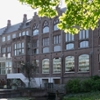 P.J. Veth
Nonnensteeg 1-3, Leiden
-
Workplace in the office
Who should you contact to set up, move or adjust your workplace?
-
SUP for Sustainability: students clean up the Leiden canals
Some thirty Leiden students balanced on SUP boards for the Supping for Sustainability Lustrum activity. Together with alumnus Merijn Tinga, better known as the Plastic Soup Surfer, they paddled their boards through the Leiden canals and waterways, fishing plastic waste out of the water.
-
Educational experiment with polder rice
Is polder rice a feasible circular alternative to cows on peat soil? In May, an experimental trial began, with researchers from Leiden University and Wageningen University & Research (WUR) planting around 3,000 rice plants at the Polderlab near Leiden. The researchers aimed to test rice as a middle…
-
James Webb Space Telescope sees sand clouds on 'cotton candy planet' WASP-107b
A team of European astronomers has found a silicate-based weather system on a cloudy gas planet around the star WASP-107. It is the first time astronomers have found silicate clouds and rain. They also conclude that temperatures deeper in the atmosphere are rising rapidly. 'The presence of clouds has…
-
Webb reveals new details in Pandora’s Cluster
Astronomers have captured a new deep field of Pandora's Cluster (Abell 2744) with the James Webb Space Telescope. The images show never-before-seen details. The results are described in four scientific papers. Leiden astronomers Marijn Franx and Mariska Kriek collaborated on the study. 'This opens a…
-
Hunt for cheap metals that help store sustainable energy
Storing energy is one of the biggest challenges in the energy transition. Hydrogen could be a solution. Chemist Daan den Boer is researching how to make the chemical reaction needed to store energy in hydrogen as cheap and efficient as possible.
-
Funding boost for the Living Lab and other outdoor laboratories
A consortium of research infrastructures focused on water quality has received €4.18 million in funding from the Dutch Research Council (NWO). This grant will support the transformation of outdoor laboratories at Leiden University, NIOO-KNAW, Radboud University, and Wageningen University & Research…
-
Start pilot cultivating rice on peatland
Is polder rice a feasible circular alternative for cows on peatland? A pilot experiment started this week. On May 22nd, researchers from Leiden University and Wageningen University & Research (WUR) planted roughly 3,000 rice plants on the Polderlab near Leiden. The researchers want to test rice as a…
-
Leiden University seventh in global sustainability ranking
Leiden University has taken seventh place in the UI Green Metric, a global sustainability ranking for universities. Almost 1,000 universities from all over the world participate in the ranking.
-
Adapting to salinity: Dutch mosquitos do take it with a grain of salt
Dutch mosquitos are more resilient to saltwater than previously thought. Environmental scientist Sam Boerlijst discovered this during his PhD research at the Hortus botanicus. This knowledge is crucial for understanding how mosquito-borne disease transmission might change in the future.
-
700,000 euros for the fight against aggressive breast cancer
To inhibit proteins that contribute to the growth of aggressive cancer cells, that’s the plan of Professor Bob van de Water and his team. They will receive over 700,000 euros from the KWF Dutch Cancer Society for their research. Researcher Maaike Vreeswijk and pathologist Danielle Cohen are affiliated…
-
No ordinary sea: who governs the Strait of Hormuz?
Which law governs the Strait of Hormuz? Under international law, both Iran and the US are expected to comply with the ‘Constitution for the Oceans’. In practice, the situation is more complicated, explains maritime law expert Hilde Woker.
-
Satellites reveal: these ecosystems are the most vulnerable to drought
More severe droughts that will also last longer: this will primarily be a problem for irrigated croplands, as discovered by environmental scientist Qi Chen. Mixed forests with a variety of plant species will be the least vulnerable. Chen compared the effects of drought on different ecosystems across…
-
Two thesis awards for research on electrochemical reactions
Understanding the proces of electrochemical reactions is essential to improve the technology for the energy transition. Fuel cell cars, for example use hydrogen produced from the electrolysis of water. Mariana Monteiro did fundamental research on the process and won two prizes with her thesis.
-
Peter van Bodegom on sustainable horticulture
Dutch greenhouse horticulture is a world leader when it comes to innovative capacity and sustainability, but ‘the challenges are great in terms of energy, water, environment and biodiversity,’ says Peter van Bodegom, coordinator of AgriFood at the Centre for Sustainability of the Leiden, Delft, Erasmus…
-
 Carlotta Rigotti
Faculteit der Rechtsgeleerdheid
c.rigotti@law.leidenuniv.nl | 071 5278838
-
 Chloe Gros
Faculteit der Rechtsgeleerdheid
c.n.gros@law.leidenuniv.nl | 071 5272727
-
 Paul Behrens
p.a.behrens@cml.leidenuniv.nl | 071 5272727
-
‘Moon landers’ measure greenhouse gases in unique agricultural living lab
A huge shiny aluminium object stands in the middle of the Polderlab in Oud Ade. Are the researchers trying to make contact with extraterrestrial life? Certainly not; they are using the ’Moon landers’ to measure whether innovative forms of agriculture reduce greenhouse gas emissions. Fleur van Duin works…
-
New eDNA method opens doors for environmental research
With a single sample of water or soil, researches can analyse the DNA of everything that is living in that environment. During her research, PhD candidate Beilun Zhao discovered a way to analyse not only the kind of species, but also the age of the species in a water sample. The method showed its first…
-
First detailed picture of ice in planet-forming disk
An international team of astronomers led by Ardjan Sturm of the Observatory has made the first two-dimensional inventory of ice in a planet-forming disk of dust and gas surrounding a young star. The researches, including Melissa McClure, used the James Webb Space Telescope and publish their findings…
-
Report: Tracking down green spaces in The Hague in places you don't always want to be
Although there is considerable evidence that nature in the city is beneficial to both people and animals, we still do not have an overall picture of those benefits. To rectify that, a Leiden PhD candidate and a student – armed with a cargo bike – are using The Hague as a life-size laboratory.
-
Leiden University 14th in global sustainability ranking
Leiden University has taken 14th place in the UI Green Metric, a global sustainability ranking for universities.
-
Oat milk from the vending machine: a pilot on six locations
Facility
-
Universiteit Leiden twaalfde in wereldwijde duurzaamheidsranking
De Universiteit Leiden staat op de twaalfde plek in de UI Green Metric, een wereldwijde duurzaamheidsranglijst voor universiteiten.
-
Whale poop reveals plastics problem: three million microplastics per day
Whales in the vicinity of the city of Auckland, New Zealand consume large amounts of microplastics every day. A team of international researchers reached this conclusion after carefully examining whale poop. The team included Thijs Bosker, Associate Professor in Environmental Sciences at Leiden University…
-
Plastics are causing stress to crops (and biodegradable alternatives do too)
Micro- and nanoplastics cause stress to crops such as lettuce and carrots, PhD candidate Laura Julia Zantis found. This can lead to reduced growth and a lower nutritional value. Biodegradable plastics have this effect too, likely because of chemicals they release during degradation.