

From sovereignty at sea to self-determination: the geopolitics of Greenland
Who holds rights to Greenland’s surrounding waters and natural resources? Which interests are at stake and for whose benefit? We put these questions to Hilde Woker, who specialises in the law of the sea in the Arctic.
While Greenland’s ice is melting, tensions over the ‘ownership’ of the island and its surrounding waters are heating up. Climate change is making shipping routes past Greenland increasingly viable: westwards via Canada and eastwards via Norway and Russia. For ships sailing from China to the Atlantic Ocean, for example, the route along Greenland’s coast would shorten journey times. These faster passages would offer economic and military advantages.
Added to this is the presence of vast reserves of oil and minerals in Greenland and on the surrounding seabed. Long concealed beneath thick layers of ice, these are gradually becoming more accessible, and many countries are keen to exploit them.
This is why President Trump wants to gain greater control over Greenland. What would annexation of Greenland mean from the perspective of the law of the sea? And what about the rights of Greenland’s inhabitants, the majority of whom are Inuit? Researcher Hilde Woker explains.

Who has rights over the sea – and seabed – around Greenland?
‘Under the United Nations Convention on the Law of the Sea, coastal states are entitled to certain maritime zones. First, there is the territorial sea, which extends up to 12 nautical miles from the coast. This sea effectively forms part of the state’s territory: other states may not carry out activities there without permission, except for the right of innocent passage. The coastal state also has a duty to protect the environment in this zone.
‘Then there’s the economic zone, extending up to 200 nautical miles from the coast. In that zone, a state has sovereign rights to exploit natural resources and undertake economic activities such as fishing. It also has the right to the continental shelf that falls within this zone. Greenland has rights to both zones, with the caveat that it conducts policy on the exclusive economic zone and continental shelf jointly with Denmark. Greenland is a part of the Kingdom of Denmark, albeit with far-reaching autonomy.
‘The Arctic seabed has a unique structure. A mountain range known as the Lomonosov Ridge runs across the ocean floor all the way to Russia’s economic zone. If a state can demonstrate that the ridge belongs to its continental shelf, that grants it the rights to a substantial area of seabed (and its resources) in the Arctic. Denmark (on behalf of Greenland), Canada and Russia have all submitted claims to the Ridge to a UN commission. But a final decision hasn’t yet been reached, and this depends on how the area is delineated between the three states.
‘Regardless of who governs Greenland, ships are permitted passage through its territorial waters. The shipping routes are of economic and strategic importance to China and Russia under any scenario. That said, the routes remain challenging: there is ice and very little infrastructure to provide supplies or emergency assistance.’
‘One apparent consequence of Trump’s policy is that it has pushed Greenlanders back into the arms of the Danes.’

Geopolitical debates often seem to overlook the perspectives of the Inuit, Greenland’s indigenous population. Would they not prefer full independence?
‘The Inuit find themselves caught between a rock and a hard place. Under a leader like Trump, they would be marginalised, yet relations between the Inuit and Denmark are strained. A few years ago, the “coil programme” came to light: the Danes had fitted Inuit women with contraceptive coils without their consent in an attempt to limit population growth.
‘Another painful Danish policy involved the forced relocation of Inuit communities. Under the banner of modernisation, people were moved from their villages to one of Greenland’s three cities, under the grounds that this would make Greenland easier to govern. During a visit to Nuuk, I saw the deserted village of Qoornoq during a boat trip. There was a church, a shop, a school… It was a place people wanted to live. People had lived there for years – but today it’s just a summer settlement.
‘Denmark has granted Greenland greater powers of self-determination since 2009. While an opinion poll a few years ago showed that many Greenlanders supported a complete break with Denmark, they nearly all chose Denmark when asked to choose between Denmark and the United States. One apparent consequence of Trump’s policy is that it has pushed Greenlanders back into the arms of the Danes.’
Photo above article: Nuuk, the capital of Greenland.
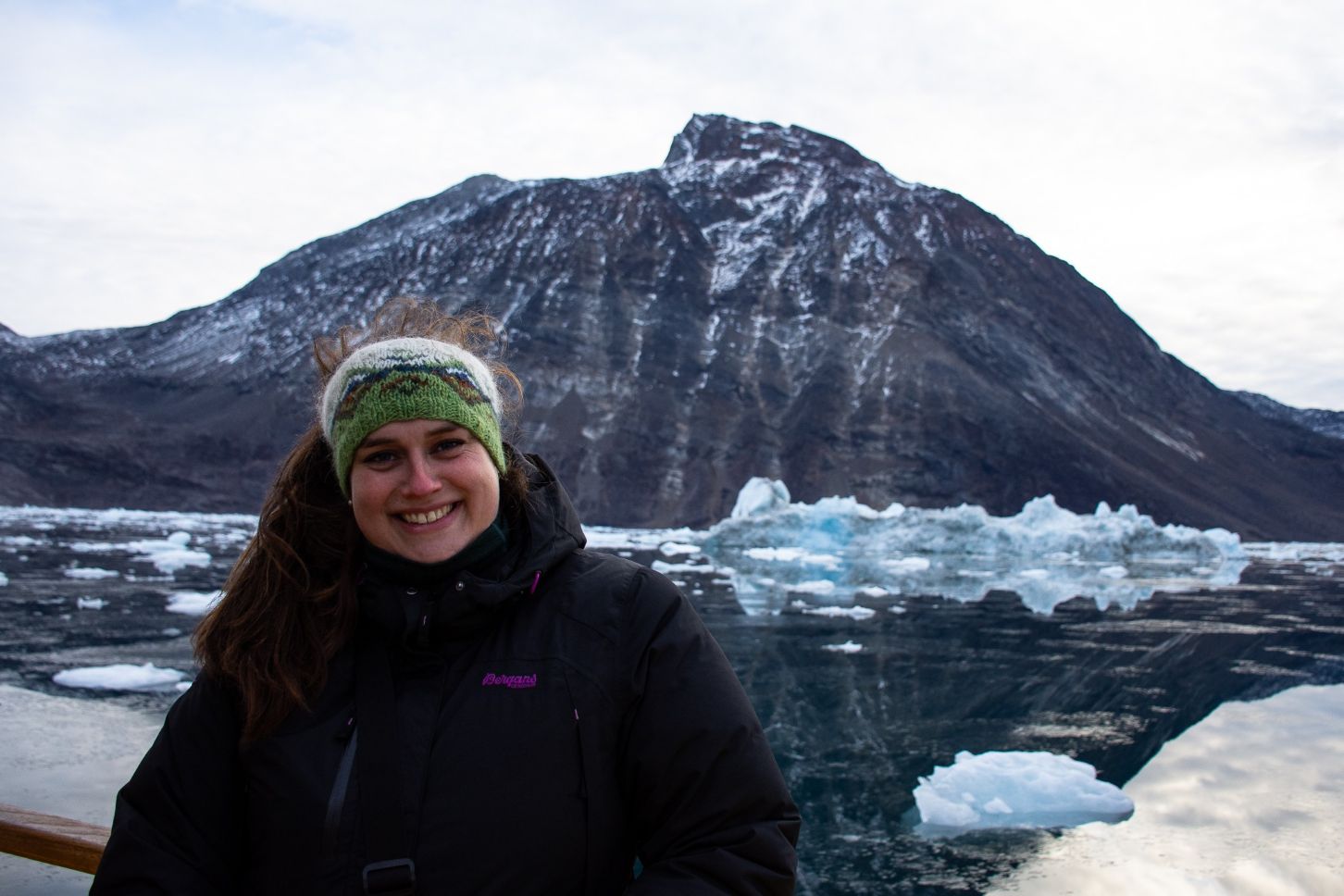
Hilde Woker
Hilde Woker is an expert in international law. She focuses on the law of the sea and Arctic governance and matters such as the situation around Greenland, entering and seizing Russian shadow fleet ships, deep-sea mining and the Biodiversity Beyond National Jurisdiction Agreement (BBJN). She lived in the Arctic for several years (in Tromsø, Norway).