

In Memoriam Erik Deul 1958 – 2026
On March 13, Dr. Erik Deul passed away at the age of 67. He leaves behind his wife Wilma, children Caroline and Wouter, and grandchildren Joris, Stach, Viggo, Archie and and a granddaughter expected later this year. Erik served as head of ICT at Leiden Observatory for 35 years, and later also at the Leiden Institute of Physics, until his retirement last year.
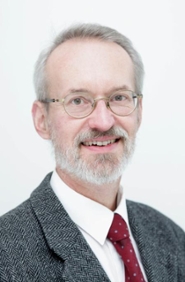
Yet he was much more than that, being also a highly valued staff member. In recognition of his outstanding work and leadership in developing and managing ICT systems that support scientific research at Leiden University, he was awarded a royal decoration and appointed Knight of the Order of Oranje-Nassau.
Visit the online condoleance website here
Online Condoleance website Erik Deul 1958 – 2026.
Erik Deul was born on July 23, 1958 in Hilversum, the Netherlands, where he completed his secondary education. In 1988 he obtained his PhD from Leiden University with a dissertation entitled ‘Interstellar Dust and Gas in the Milky Way and M33.’ Using newly available data from the Dutch infrared space telescope IRAS, developed in collaboration with partners in the United States and the United Kingdom, he demonstrated that both our own Milky Way and nearby galaxies contain vast regions rich in cosmic dust. This work significantly advanced our understanding of how stars and galaxies form, since stars are born in regions abundant in dust and gas, and stars themselves are the fundamental building blocks of galaxies. In many ways, Erik was already working with what would later be called ‘Big Data’. Following his work on IRAS, he was asked to help lead the data analysis for DENIS (Deep Near Infrared Survey of the Southern Sky), a European project led by France. He played a key role in producing a reliable catalogue of sources—about 17 million in total—which at the time represented an unprecedented volume of astronomical data.
Erik Deul subsequently joined the Koninklijke/Shell Exploration and Production Laboratory (KSEPL) in Rijswijk, the Netherlands. However, the academic world continued to appeal to him, and in 1990 he returned to Leiden as a scientific systems programmer at Leiden Observatory, part of Leiden University. There he helped address the rapidly growing stream of data produced by modern optical, infrared, and radio telescopes, making an important contribution to the research infrastructure on which astronomers depend. During the years of Erik’s service, astronomy in Leiden grew from a relatively small group—once shaped by figures such as Jan Oort and Henk van de Hulst—into a large and internationally recognised institute, educating many generations of students and doctoral candidates.
Astronomical research relies heavily on advanced computing, and over the past decades the computing infrastructure at Leiden Observatory expanded enormously to support the growing data streams from modern telescopes and instruments. Erik played a central role in building and shaping this infrastructure and in establishing a dedicated ICT team that provided essential support for researchers. Under his guidance the team also contributed to the computing needs of the Leiden Institute of Physics (LION) and the Leiden Instrument Makers School (LIS).
Those who worked with him remember not only his deep technical knowledge but also his thoughtful and considerate style of leadership. He valued the people behind the work and fostered a stable and highly capable team. Through his expertise and his positive and cooperative attitude, Erik helped bridge the much more specialized ICT requirements of the observatory with the more general needs of the wider university, earning the respect of colleagues across the institution.
Erik was deeply devoted to Leiden Observatory and to the university, and he willingly took on many responsibilities that went well beyond the formal scope of his position. Often working quietly behind the scenes, he helped develop practical systems that kept the institute running smoothly. He created software to support the administration of student records, room allocations, and event schedules, and he also built and maintained the observatory’s websites as well as those for many of the conferences hosted in Leiden. In this way he was often ahead of his time, providing solutions long before such tools became widely available through standard software packages.
He also took great care in the everyday functioning of the institute. In an environment with many visiting researchers and temporary staff, the allocation and preparation of offices required constant attention. Erik oversaw this work with a strong sense of fairness and with genuine attention to the needs of individuals, often personally ensuring that workspaces were properly equipped.
Beyond the observatory itself, Erik played an important role in the development of large-scale computing facilities for the wider university. Drawing on his technical expertise, organisational ability, and clear vision, he helped lay the groundwork for a central high-performance computing environment that would serve researchers across many disciplines. He was also regularly asked to provide advice to other institutes outside the Netherlands, including the European Southern Observatory, and participated actively in the annual worldwide Astronomical Data Analysis Software & Systems conference.
In addition to his professional achievements, Erik will be remembered by colleagues and friends for his kindness, calm presence, and willingness to help others. He took pride in enabling the work of scientists and students, often preferring to work quietly in the background while ensuring that everything functioned as it should. Former Observatory members from across the world sing his praise, sighing that they wish things were as well organized in their institute as they are in Leiden. Many at Leiden Observatory and beyond benefited from his knowledge, his dedication, and his generosity with his time: Erik truly made a difference in our lives.
He will be greatly missed by his family, friends, and the many colleagues who had the privilege of working with him.