
2,343 search results for “light” in the Public website
-
Building tabernae
This project focuses on urban commercial space in Roman Italy and deals with the impact of economic growth on urban communities in the late Republic and the Imperial period (200 BCE – 300 CE).
-
Visiting Researchers
Visiting Researchers at the Leiden University Institute for History
-
Archive
On this page, you will find the recordings of the Tuesday Talks since April 2025. Recordings of the precursor to the Tuesday Talks, This Week’s Discoveries, are also available here.
-
Mutation-Driven Modulation of GPCR Pharmacology: Insights from Adenosine and Serotonin Receptors
This thesis seeks to investigate how cancer-associated mutations affect the pharmacological properties of selected GPCRs—primarily A2AAR and 5-HT2CR—through a combination of ligand binding assays, signaling readouts, kinetic profiling, and cellular functional assays.
-
New University Sports Centre
In February 2026, Leiden University’s new Sport Centre opened on a prominent new site directly on the Campusplein. Its relocation brings sport visibly into the heart of campus life, with the outdoor fields seamlessly connected to the building. Substantially larger than its predecessor, the centre offers…
-
Whose best interests?
How are children’s rights and welfare protected in the Dutch 'gezinslocaties' (family reception centres)?
-
Fire use in human evolution: A genetic approach
Are traces of fire use detectable in ancient hominin genomes?
-
Expression in music: Semantics and emotion
Music and language both communicate through sound, including timing and pitch. While language mainly conveys semantic meaning, instrumental music does not, and is typically seen as expressing emotion. This project investigates how well listeners recognize intended expressive feelings in music, instructed…
-
About the programme
Within the two-year Astronomy master’s programme, you can choose from seven specialisations, ranging from fundamental or applied astronomy research in cosmology, instrumentation or data science, to combinations of astronomy research with education, management or science communication.
-
Yasmin Shafei - Dangerous Deviants: A History of Care for the Mentally Ill in Egypt
This lecture will be hosted on Thursday, 14 May 2026 at 6:00 pm - 7:00 pm.
-
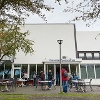 University Sports Centre
Goliuspad 22, Leiden
-
DISMANTLE: Disability and Mobility Aids in Northwestern-European Textual, Literary, and Artistic Evidence, 1100-1500
A mixed qualitative/quantitative approach to medieval disability aids using both literary and artistic sources.
-
Production and Online Processing of Tonal Coarticulation in Standard Chinese: Evidence from L1 Speakers and L2 Learners
PhD defence
- Meet our staff
-
Caste: A Global History
Lecture, Book Talk
-
16 Years: From Wrongful Conviction to Justice - The Story of Jeffrey Deskovic
Film screening
-
Landscape Theory: Post-68 Revolutionary Cinema in Japan
On the 28th of September Go Hirasawa successfully defended a doctoral thesis and graduated.
-
Van Marum Colloquia
The "Van Marum Colloquia" are a collaborative lecture series between the LION and LIC institutes, focusing on fundamental and applied surface science.
-
Why are plants not black?
All kinds of reasons have been put forward for why plants apparently fail to make maximum use of the available light. None of these reasons can explain why after two billion years of evolution they are not black, like industrial photovoltaic solar cells. Are we missing something?
-
‘All of Leiden will join in with the Seeing Stars experiment’
What will happen if the lights in a large part of the city are switched off? How many stars can you see without all that light pollution? This is what researchers, artists and the residents of Leiden are going to investigate during Seeing Stars Leiden on 25 September. ‘Leiden is the ideal place for…
-
‘Doing a PhD is never boring!’ How Guido Stam built a microscope that can measure bacteria without causing harm
A microscope with incredible sharpness that leaves samples unharmed – Guido Stam helped develop one. During his PhD research, he combined light and electrons to study biological samples. ‘We can now measure things that simply weren’t possible before.’
-
First step in converting solar energy using ‘artificial leaf’
Two things are needed to produce fuel from sunlight: an antenna that harvests light, and a light-driven catalyst. The most efficient antennae contain bacteria. An international team headed by Huub de Groot imitated them and discovered how they function.
-
Visualising the nanoworld
Visualising cell proteins without invasive techniques is possible with the help of fluorescence. During a lecture of the Natuurwetenschappelijk Gezelschap Leiden on 18 January, winner of the Spinoza Prize 2017 and founder of the field of single molecule optics Michel Orrit explained how this works.
-
Student cleans up archival data and uncovers two stellar cocoons
While investigating 16 years of images of young stars from a retired astronomical camera, Leiden master's student Sam de Regt discovered that two of those stars were still enveloped in birth clouds. Never before has anyone captured these two stars in so much detail. He publishes his data-cleaning method…
-
From Gesture to Language
Like any language, the natural sign languages (henceforth: SLs) of deaf communities differ from each other in their grammars and lexicons. A growing number of studies indicates that SLs make use of the gestures of hearing speakers to build linguistic structure. This implies that variation and similarities…
-
Exploring the Universe
Astronomers want to understand the Universe, from the Big Bang to the present day, and what the future will hold. In Leiden they focus on two key questions: ‘How did stars and planets originate’ and ‘How were galaxies and black holes formed in the young Universe?’ A new generation of telescopes – just…
- Week 4: 29 January–4 February
-
Auxin
Mathematical and computational analysis of the dynamics of polar transport of the plant hormone auxin.
-
Athens
Athens is universally known as a symbol of democracy, philosophy, and ancient Greek aesthetics. Some of the most famous classical monuments, including the Parthenon and the temple of Hephaestus, can be found here.
-
The Ra's al-jinz project (Oman)
The Ra’s al-jinz project tackles economic diversification and social complexity in non-urban societies, from the perspective of Eastern Arabia, by exploring the Early Bronze Age settlement of Ra’s al-jinz RJ-3.
-
Tarsus
After the advent of Islam in the 7th century C.E., the strategic geographical position of Tarsus (its proximity to the sea and to the mountain pass leading to inland Anatolia) made this town the de facto capital of the thughur, a historical and geographical term created by Muslim geographers qualifying…
-
Numismatics in Leiden: more than two sides to the same coin
Numismatic research of Roman coin hoards in the Netherlands. The use of numismatic sources is incorporated in Claes’s research project “Dialogues of Power”. This project aims to analyse the legitimising dialogue between Roman emperors and their Germanic legions during the so-called “crisis of the third…
-
Astronomers map the cosmic spider web
An international team of astronomers from Leiden Observatory and others, has for the first time mapped a piece of the dark, cosmic web. The research strengthens the hypothesis that the young universe consisted of huge numbers of small groups of newly formed stars. The astronomers publish their findings…
-
Quantum theater show with Leiden script a big hit among 1600 Amsterdam children
Physicists from Leiden University wrote the script and ensured that every experiment in the performance was scientifically accurate. The kickoff of the major educational project of the Amsterdam Light Festival was a huge success — and there’s much more to come.
-
How deep is a mirror?
Light reflects from a mirror, but where exactly does this reflection happen? Well, it depends, Martin van Exter and Corné Koks discovered. Their precise calculations, published in Optics Express, are important for designing optical cavities for quantum communication.
-
DWDD University uses Leiden Physics experiments
In the latest episode of DWDD University on 'Light', Prof. Robbert Dijkgraaf used a number of experiments from the Leiden Physics Practicum Lab. He showed why the sky is blue, that light is a wave phenomenon, how magnetism and electricity are connected and that white light consists of all colors of…
-
Surface Plasmons Measured for Faster Internet
Leiden physicists use a new method to measure so-called surface plasmons. Researching these particles could lead to new light-based technology, including faster internet.
-
A suitcase containing quantum inspiration on a trip across Europe: ‘We gained new insights’
A suitcase as a messenger of quantum science. That is the idea behind QuanTour, a project connecting researchers from 12 European universities. In December, the suitcase landed in Leiden. A month later, it is time to pass the baton to Copenhagen. But what happened to it in Leiden?
-
Important Effect Observed in Development of Quantum Storage
Rare-earth materials are prime candidates for storing quantum information, because the undesirable interaction with their environment is extremely weak. Consequently however, this lack of interaction implies a very small response to light, making it hard to read and write data. Leiden physicists have…
-
Hunting for life’s building blocks at minus 250 degrees Celsius
James Webb life’s building blocks
-
Dick Stufkens Prize 2017 awarded to chemist Sven Askes
The Dick Stufkens Prize 2017 for the best PhD thesis of the Holland Research School of Molecular Chemistry (HRSMC) is awarded to Dr Sven Askes. In his thesis
-
A multi-million grant to keep the biological clock healthy
Dutch researchers are joining forces to conduct research together with a series of societal partners to keep the biological clock healthy in our modern 24-hour society. The BioClock consortium will receive a research grant of no less than 9.7 million euros for this. It is one of the projects that receive…
-
Depression and Suicide Prevention
Our mission is to improve the description, prediction, understanding and the prevention and treatment of mood disorders, including unipolar and bipolar depression, as well as suicidal thoughts, feelings, and behaviors. To tackle this ambitious mission, we focus on several research streams.
-
The Power of Technology in the Bronze Age Eastern Mediterranean
The Case of the Painted Plaster
-
A double-edged sword: religious discourses and LGBTQIA+ inclusion
The role of religion in the identity construction of LGBTQIA+ folks
-
Islam and culture
Thanks to its early civilisation and continuous mix of influences, the Muslim world has a rich and varied culture. The study of material culture, books, stories, films and increasingly television series teaches us about the structure of modern-day Muslim societies.
-
The Trio: masters of creation
The Trio, a people living in Suriname and Brazil, are ‘masters of creation’. Their immense knowledge of nature and materials enables them to live in the jungle. Archaeologist Jimmy Mans follows the Trio.
-
Futuring Heritage: Indigenous Perspectives on Conservation in the Eastern Himalayas
Exploring the intersection of environmental conservation, indigenous cultural expectations, and human-nonhuman relationships in the Eastern Himalayas. Developing inclusive approaches to ecological preservation through community-centered research.
-
Language variation at home and abroad: the case of P'urhepecha in Mexico and its US diaspora
By documenting lexical and morpho-syntactic patterns among P’urhepecha speakers in Mexico and the US diaspora, this project will investigate the sources of language variation. The ensuing online dialect atlas will serve as an online resource for speakers, learners and researchers of the language.
-
SOLID: Solidarity under strain - A legal, criminological and economic analysis of welfare states and free movement in the EU
Analysing the ways in which immigration structurally challenges and changes the organization and conceptual boundaries of national welfare states.