219 search results for “brexit cancer metastasis” in the Student website
-
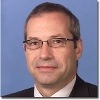 Gregorius Luyten
g.p.m.luyten@lumc.nl | 071 5266674
-
 Marije Niemeijer
m.c.niemeijer@lacdr.leidenuniv.nl | 071 5276105
-
 Manfred Wuhrer
m.wuhrer@lumc.nl | 071 5269111
-
 Tessa Hagens
t.m.s.hagens@lacdr.leidenuniv.nl | 071 5275706
-
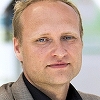 Henri Versteeg
h.h.versteeg@lumc.nl | 071 5263872
-
 Sjaak Neefjes
j.j.c.neefjes@lumc.nl | 071 5263800
-
 Jos Jonkers
j.m.m.jonkers@lacdr.leidenuniv.nl | 071 5272727
-
 Hein Putter
h.putter@lumc.nl | 071 5279705
-
 Peter ten Dijke
p.ten_dijke@lumc.nl | 071 5269270
-
 Frits Koning
f.koning@lumc.nl | 071 5269111
-
Koos van der Hoeven
j.j.m.van_der_hoeven@lumc.nl | 071 5269111
-
From research to practice: Leiden researchers awarded European grant
Various Leiden researchers have been awarded a European grant to explore the commercial or societal potential of previous research.
-
Leiden technology research receives funding from NWO and businesses
A CT scanner to treat eye cancer, energy-efficient software for the future and a test to identify male chick eggs. Three projects by researchers from Leiden University are to receive funding from research funder NWO’s Open Technology programme, to which the business sector also contributes.
-
Countering nerve pain caused by chemotherapy with new drug
Nerve pain is one of the most common side effects of chemotherapy. It is therefore one of the biggest reasons for cancer patients to stop treatment early. Darcy Reynolds worked on new drug candidates against this pain during her bachelor's thesis. She developed a new series of molecules that increase…
-
Ten Leiden students receive prize for outstanding achievement
Ten Leiden students have received a prize from the Royal Holland Society of Sciences and Humanities (KHMW). They were nominated by their degree programme. Who are these students?
-
Andrew Gawthorpe wins the Carla Musterd Award for Teaching
At the latest Institute Council meeting in November, the institute’s biannual prize for teaching was awarded. The award is named after Carla Musterd, a former, highly valued member of staff, who was famous for her unflinching dedication to teaching standards and excellence. The award was created to…
-
Mirjam Oomens: ‘Healthcare professionals should be cautious about survival prognoses’
Mirjam Oomens was working on her PhD research on language in the consulting room when she was diagnosed with metastatic cancer. Four years later, she has made it her mission to encourage doctors and other healthcare professionals to make fewer statements about life expectancy. 'Such a conviction can…
-
Who are the winners of the Psychology Prizes of 2024?
Psychology teacher of the year is Evelien Broekhof. The Master Thesis Awards are for Yanna Naeije and Arian Memarpouri. Mirjam Wever wins the PhD Paper Prize; Jip Aarts wins the PhD Wild Card: Academic Citizenship. Congratulations!
-
ERC grant for Sebastian Pomplun to precisely influence gene expression
In order to stop a whole range of diseases or disorders at their source, you would have to be able to switch certain genes on or off. Sebastian Pomplun wants to develop substances that can do this very precisely. For example, he wants to disrupt cancer processes and make cells produce an important missing…
-
Leiden’s poo can help rid patients of resistant gut bacteria
Transferring poo from healthy donors to the intestines of chronically ill people has beneficial effects on these recipients’ gut bacteria, also in the longer term. This is the conclusion of research by the Leiden University Medical Center (LUMC) and the Netherlands Donor Feces Bank (NDFB).
-
What does a cell eat? This new tool makes it visible
What if you could watch a single cell eat in real time? This could answer questions about diseases such as cancer. PhD candidate Yixuan Wang has developed a glowing chemical tool that makes this possible, revealing how living cells take in nutrients.
-
Financial matters
What are the costs involved in studying abroad and how can you finance your stay? Avoid unexpected expenses by researching financial matters thoroughly in advance.
-
‘It’s a complete stalemate in Belarus’
What with coronavirus, the American elections and the Brexit botheration, we had almost forgotten that something miraculous happened in 2020: the repressed people of Belarus rallied against dictator Alexander Lukashenko, who has been in power for 26 years. Months later, what remains of the protest?…
-
New professor Suzan Verberne aims to bring large language models and search engines closer together
Suzan Verberne has been appointed professor of Natural Language Processing at the Leiden Institute of Advanced Computer Science (LIACS) from 1 October. Verberne has been at LIACS since 2017 as group leader of the Text Mining and Retrieval group.
-
“You look well,” said the oncologist, but she didn't feel that way at all
Leiden psychologists Janine Westendorp and Liesbeth van Vliet have investigated types of communication that seriously ill patients may experience as harmful. The results of this research were published in the American journal Cancer. And the results have now also been published as a poster for education…
-
Christa Tobler presents at the conference of the EFTA Court
On 15 October 2021, the EFTA Court held its annual conference in Luxembourg, this year under the title 'People in the EEA'. The EFTA Court is in charge of cases arising under the law of the European Economic Areas (EEA) in the EEA/EFTA states Iceland, Liechtenstein and Norway. Christa Tobler was invited…
-
Language that comforts: The power of communication in healthcare
For people who are seriously ill, an empathetic doctor can make a world of difference. Psychologist Janine Westendorp examined helpful and harmful communication in the consulting room. ‘It’s very important to stress that you are always there supporting the person, even if there’s no cure.’
-
Gijs Zebregts: ‘I want to give hope to fellow sufferers of leukaemia’
Gijs Zebregts had just graduated from International Studies when he was stricken with acute leukaemia. A stem cell donor brought relief. Now he is going to cycle from Florence to Rotterdam to raise money and awareness for the donor bank.
-
Leiden scientists join national effort to advance nanomedicine
A Dutch consortium has received €6.7 million to accelerate the development of nanomedicines together with patients. Researchers from Leiden University play a key role in the project.
-
‘Pharmacogenetics will become part of patient care’
Does medicine make patients feel better or worse? We are getting better at predicting this from people’s DNA profiles, says Professor Jesse Swen. ‘It never fails to fascinate me how one DNA base pair can have such a huge effect on treatment with medication and the outcome.’
-
Five Leiden contributions to NWO Perspectief projects
Five consortia within the Perspectief programme that include Leiden researchers have received funding to start their research projects. These projects focus on (further) developing technological innovations, with societal and economic impact at their core.
-
From nanoscale to whole organism: at the Cell Observatory, researchers study life in detail
About forty microscopes, various laboratories, and some 15,000 zebrafish: that’s Sylvia le Dévédec's workplace. She is one of the managers of the Leiden Cell Observatory, a unique facility accessible to all researchers.
-
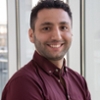 Serkan Aslan
s.aslan@lacdr.leidenuniv.nl | 071 5275919
-
 Jelle Goeman
j.j.goeman@lumc.nl | 071 5269700
-
 Pieter Hiemstra
p.s.hiemstra@lumc.nl | 071 5269111
-
 Olaf Dekkers
o.m.dekkers@lumc.nl | 071 5269111
-
 Adam Cohen
a.f.cohen@lumc.nl | 071 5269111
-
Mini organs-on-chips: an alternative to drug testing on animals
Mini organs-on-chips allow us to study how diseases develop and how drugs work. Although the technology is not new, it is becoming increasingly advanced. PhD candidate Bart Kramer hopes it will eliminate animal testing in the future.
-
Let the robot lend a hand in the pharmacy (it’s more sustainable too)
Can a robot help prepare cancer medication in a hospital pharmacy? That’s what hospital pharmacist Tjerk Geersing investigated in his PhD research. He compared manual and automated preparations in terms of quality, efficiency, and safety. He graduated on 19 March.
-
How ‘sleeping’ microorganisms can determine the fate of a population
Microorganisms that temporarily ‘go to sleep’ play an important role in the evolution and survival of a population. Mathematician Shubhamoy Nandan conducted research on the effect of this characteristic called ‘dormancy’ in a novel mathematical model.
-
A mathematical three-step rocket helps biologists study tumour blood vessels
Koen Keijzer combined three mathematical models into one unified system capable of making meaningful predictions about how cells form blood vessels. This helps biologists studying the chaotic, leaky blood vessels found in and around tumours.
-
Question fire for ambassadors Germany and France during debate
Europe lives! This became clear last Friday when students debated with the French ambassador to the Netherlands, H.E. Luis Vassy, and his German colleague, H.E. Dirk Brengelmann, on a range of topics relating to Franco-German relations and the European Union.
-
Leiden University and University of Edinburgh to deepen collaboration
A delegation from the University of Edinburgh recently visited Leiden University to deepen their collaboration. What makes Edinburgh such an attractive partner?
-
175 years of the Constitution: ‘Its dryness makes it a success'
175 years ago, the Netherlands took great strides towards parliamentary democracy with a revamped Constitution. Where does the Constitution stand today?
-
Europa Lecture: Paying tribute to those who apply European regulations at the national level
The tenth Europa Lecture was delivered by Corinna Wissels, State Councillor at the Administrative Jurisdiction Division of the Dutch Council of State, deputy justice of the Dutch Trade and Industry Appeals Tribunal and member of the EU-UK Withdrawal Agreement arbitration panel.
-
Daan Weggemans: 'Digital security is not just for specialists'
Within a single generation, the digital world has changed completely: from a technical niche for ‘nerds’ to a reality that affects everyone. Cyberattacks, data breaches and system failures can disrupt essential social processes. How can we ensure that our society remains digitally resilient?
-
Surprising results of research on counterterrorism: 'Assumptions surrounding Trump may be wrong’
It poured down when Alexander Gallo received his diploma from West Point Military Academy. A bad sign, people said back then. It was June 2001, three months before 9/11. The now 46-year-old American fought in Iraq, did research in Afghanistan and stands in Leiden today, defending his dissertation on…
-
Race against time: Helping the Netherlands secure almost 20 million Pfizer vaccines
The whole world is waiting anxiously for sufficient supplies of coronavirus vaccines. As Launch Navigator at Pfizer, alumnus Dennis de Mik must help ensure that the Netherlands receives 19.8 million doses of the Pfizer/BioNTech vaccine. How is he going about this and how has his Bio-Pharmaceutical Sciences…
-
Students build software for real customers
Students gain practical experience while clients receive a solution to their software needs: the student software company LUdev hits two birds with one stone. ‘Through LUdev, students learn what else is involved in software development besides programming.’ Interested? You can now submit new projects…
-
X-ray mirrors: useful in space, but also for radiation therapy
A special type of mirror to reflect X-rays has more possible applications than space research. Targeted radiation therapy for cancer, for example. Next to his full-time job, physicist David Girou mapped out the possibilities. He will receive his PhD on 14 June.