
CML talents receive Stans Award 2026
CML grants three Stans Awards each year, for the best student thesis, best PhD paper, and best outreach from the past year. The CML staff nominated students and colleagues and this year’s jury Prof. Martina Vijver & Prof. Willie Peijnenburg made the final decision.

Best student thesis 2025
Gijs van der Velden, who graduated in 2025 from CML’s master programme Biodiversity & Sustainability, won the best student thesis prize for his thesis on pond bats titled “To rest or to roam - quantifying functional habitat requirements of the pond bat (Myotis dasycneme) for resting and active behavior”.
Abstract
As vital players in many terrestrial ecosystems, insectivorous bats in Europe are of high conservation priority and protected by international law. However, ongoing human expansion and land-use change have profoundly altered their habitats, and understanding their habitat use is essential for effective conservation planning. Nevertheless, behavioral states, particularly night resting, are rarely considered when quantifying habitat use. This study presents the first GPS-tracking-based quantitative assessment of habitat use in the pond bat (Myotis dasycneme), a vulnerable water-trawling specialist, across distinct active and resting behaviors while away from the roost. Combining high-resolution GPS tracking with tri-axial accelerometry, we distinguished active (foraging and commuting) from resting states and used generalized linear mixed models to examine their functional habitat use in relation to relevant land cover types and landscape metrics. We found that pond bats spent a substantial amount of nighttime resting between active bouts, with over half of resting occurring outside buildings. They used diverse, simple-shaped freshwater bodies and riparian areas to support active behaviors and consistently avoided cultivated land, whereas they relied on mosaics of open and closed vegetation, primarily forest edges and isolated trees close to foraging water bodies, to facilitate non-building night resting. Conservation of pond bats requires maintaining foraging habitats (e.g., diverse water bodies with riparian vegetation) and commuting features (e.g., regular-shaped water banks), while preserving or providing landscape-specific night-resting structures near foraging areas. Integrating behavior-specific habitat use, especially night-resting sites, is crucial for effective bat conservation and targeted landscape management.
Best PhD paper 2025
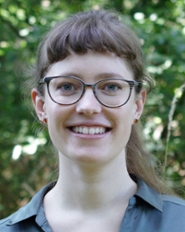
This years winner is Amelie Müller, she won the prize for the paper 'Time-explicit life cycle assessment: a flexible framework for coherent consideration of temporal dynamics'. Amelie started her PhD in December 2022, so just entered her fourth year. Her work focuses on refinement of Life Cycle Assessment methodology and on bio-based materials.
Abstract
Systems change over time, but existing life cycle assessment (LCA) methods are not well equipped to assess these changes. This work proposes a novel framework for time-explicit LCA to better assess changing systems over time. The computational structure is grounded in conventional matrix-based LCA calculations, with the temporal dimensions added as additional rows and columns. Complex temporal dependencies can be unravelled with a graph traversal algorithm and convolution. Information on changing technology landscapes can be seamlessly integrated from existing prospective LCA tools. An implementation of time-explicit LCA is provided in the open-source python package bw_timex, part of the Brightway ecosystem. This allows users to apply the framework to their own case studies.
Time-explicit LCA can be used for assessing any product system and impact category. By considering when processes and emissions occur and what the state of the systems is at these timings, it can provide more representative results compared to conventional LCA. This is particularly valuable for long-lived products in temporally variable or fast-evolving systems.
Best outreach 2025
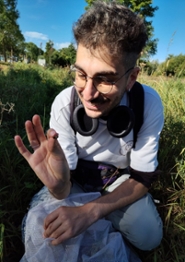
This year’s outreach prize has been awarded to Thanasis Moraitis, who joined CML as a PhD Candidate in 2024, working on insect biodiversity in urban areas.
Abstract
Throughout 2025, during the fieldwork for their PhD, they engaged with multiple citizens, informing them about the project, the majestic nature one can find in the city, showing them (especially to intrigued children) some of the collected samples and inspiring them to explore green areas around them. Moreover, along with CML Postdoc Joeri Morpugo, Thanasis joined the 2025 edition of Leidens Ontzet Science Fair, bringing insect samples and a stereoscope for the audience to see how an insect looks like… really up-close! Children with their parents, fellow students and our elderly neighbours took some time to see butterfly scales, hoverfly eyes and dragonfly legs. The love and enthusiasm of the audience, despite the light rain, was heartwarming. Finally, Thanasis mentioned their activism for queer representation in academia as a form of outreach, this time towards the inside of our academic community, to showcase that gender identity and expression have nothing to do with one’s research performance and integrity.
Stans Award
At the initiative of one of the Environmental Science students, Dr. Constance Eikelenboom, an ecotoxicologist then nearing her retirement, in 1986 the CML Students Award is created as a motivational prize for exceptional publications. As Ms. Eikelenboom is known informally as ‘Stans’, it’s soon termed the Stans Award. It’s awarded annually and throughout the years it turned into three prizes, as we know them today: best PhD paper, best student thesis and best outreach from the past year.