‘Universities are changing, but they remain essential to society’
From academic freedom to security and medical breakthroughs: during the 451st Dies Natalis on 9 February, the speakers reflected on the role of universities in a world of social and geopolitical tensions.
The new Rector Magnificus, Sarah de Rijcke, and the new President of the Executive Board, Luc Sels, led the cortège for the first time from the Academy Building to the Pieterskerk. After the professors had taken their seats, Sels opened the Dies Natalis with stirring words.
With geopolitical tensions, nationalism and AI on the rise, universities are coming under increasing pressure, he warned. Online learning platforms are challenging the notion that only universities provide access to high-level knowledge. Sels said the role of universities is shifting. ‘They may be losing their monopoly on knowledge, but they remain the beating heart of research networks.’
-
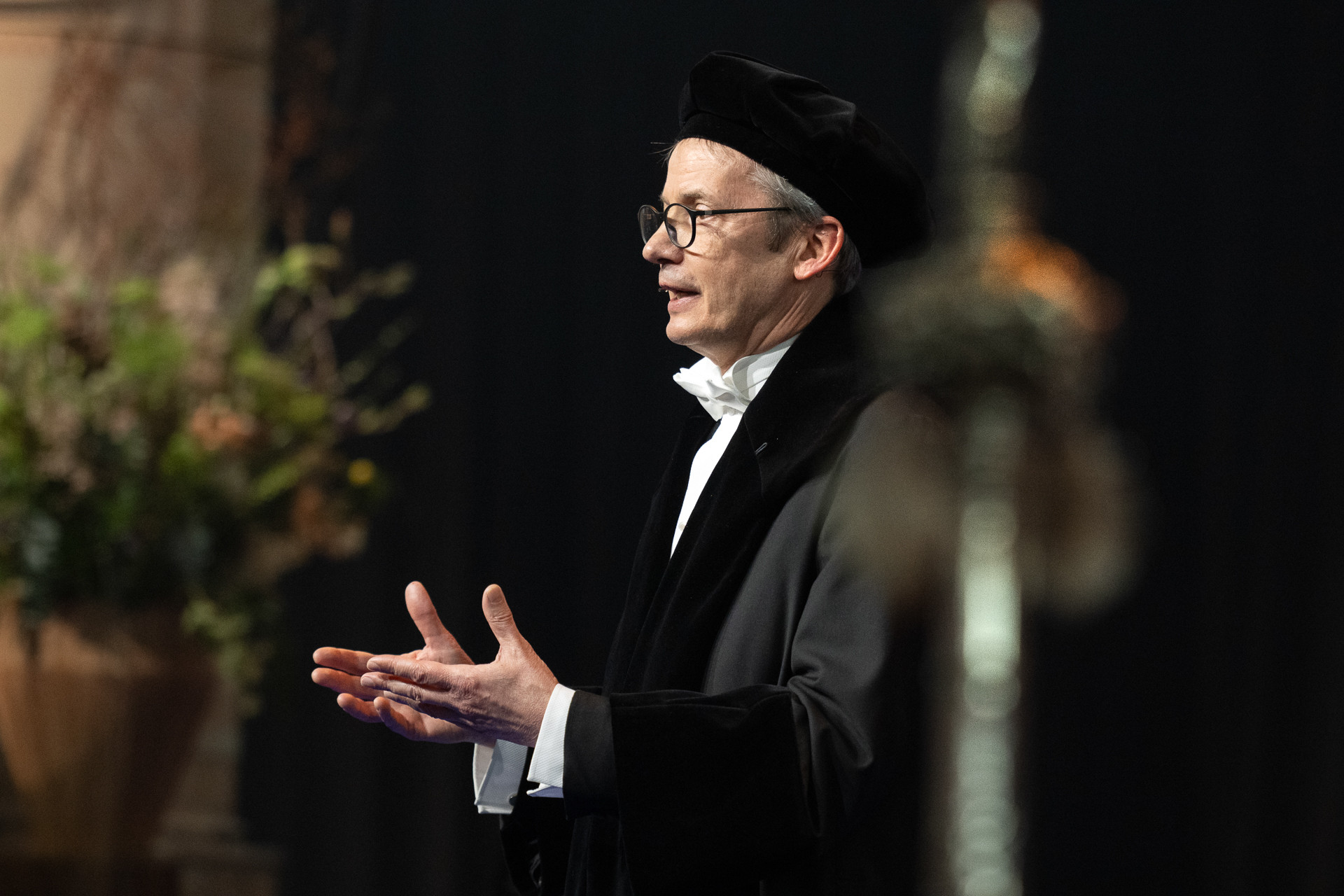
Luc Sels: ‘I wish you a courageous university.’ -
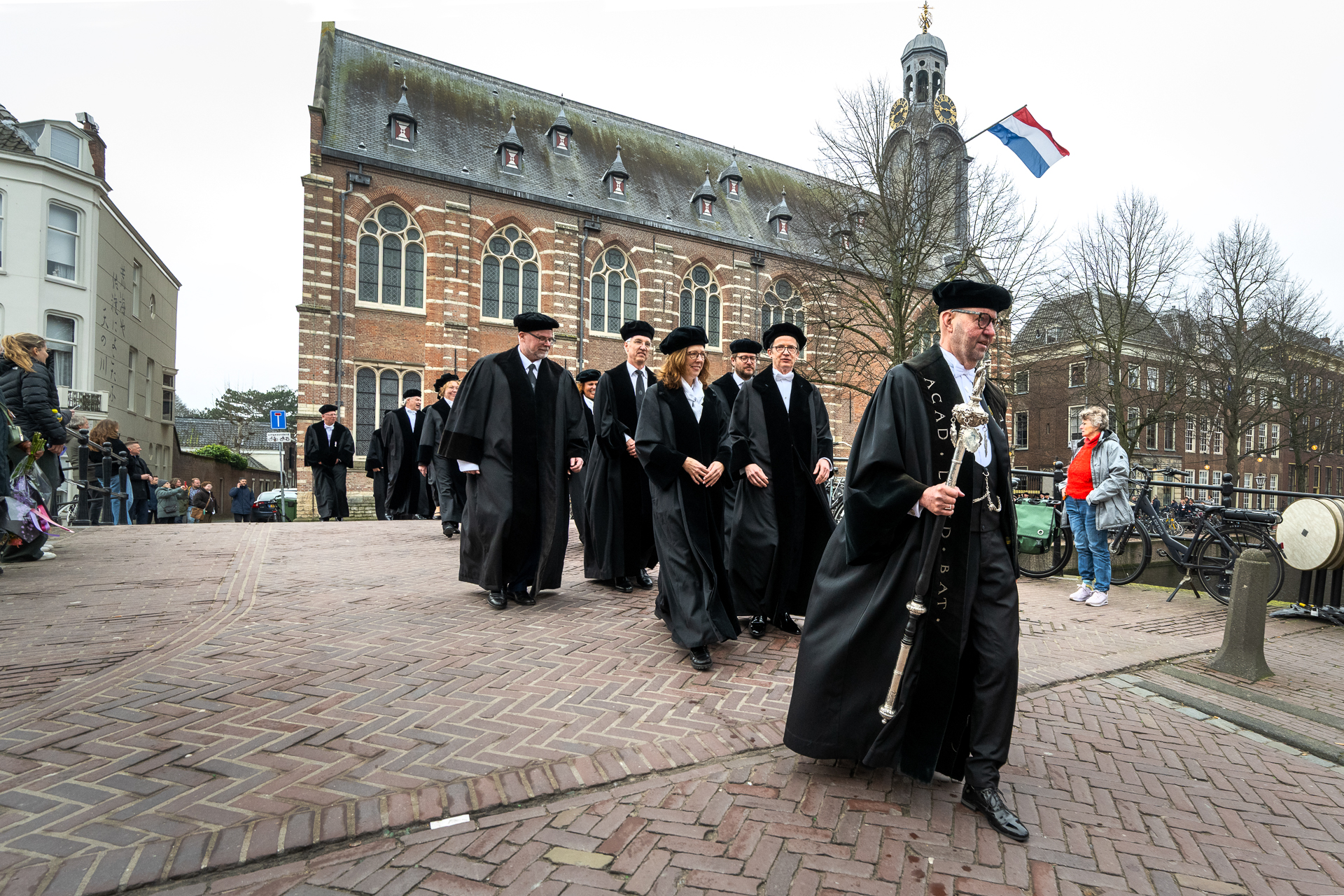
The new Rector Magnificus, Sarah de Rijcke, and the new President of the Executive Board, Luc Sels led the cortège for the first time. -
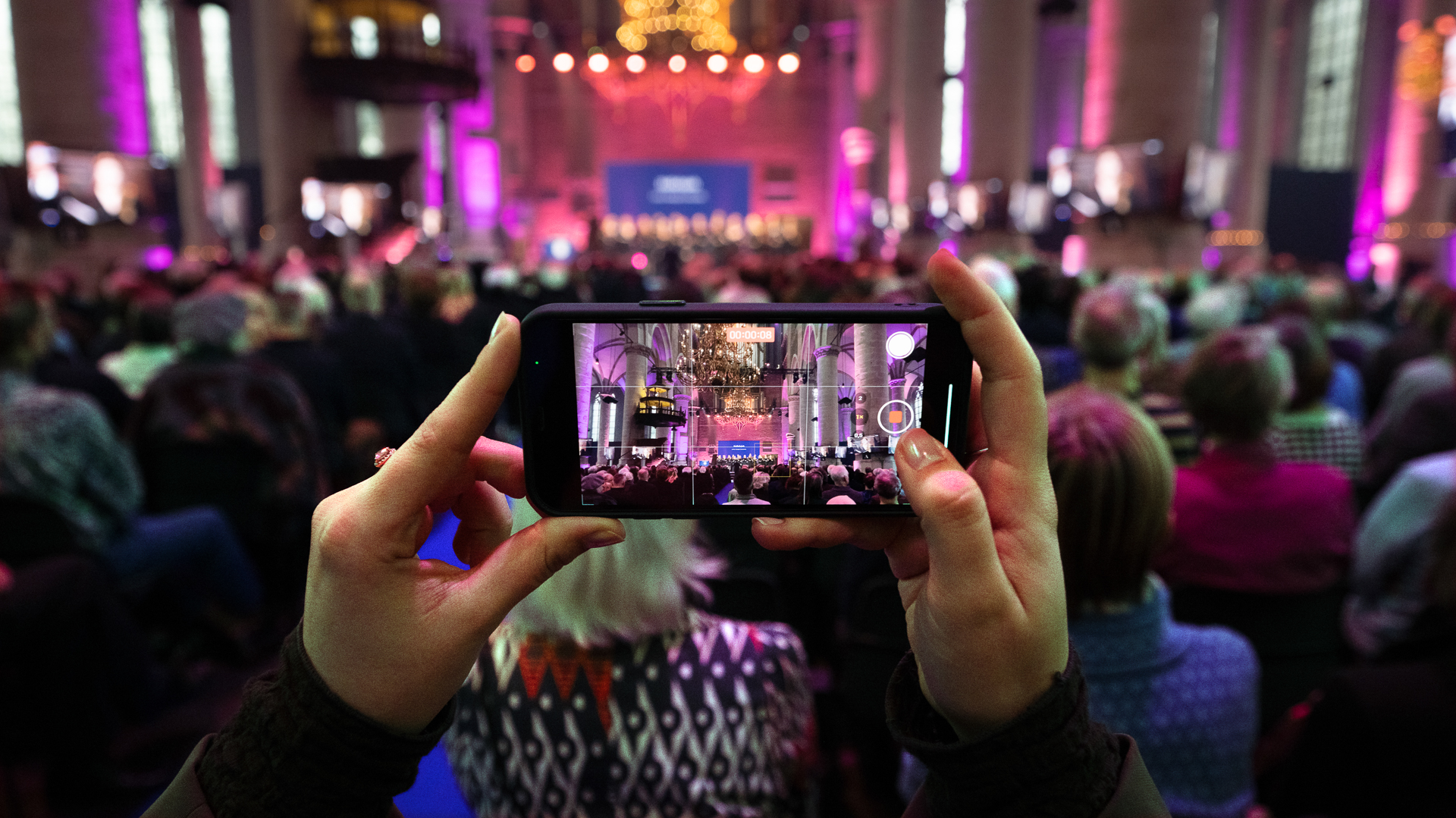
A full Pieterskerk.
Calls for a useful university
Yet universities are feeling the strain of democratic backsliding and political interference. Autonomy and academic freedom can no longer be taken for granted. They need unequivocal defence, said Sels. Calls for a ‘useful university’ are growing louder, and the value of the humanities, social sciences and behavioural sciences is increasingly questioned. These disciplines are indispensable for understanding societies, human behaviour and the lessons of history, Sels maintained. He concluded on a warm note: ‘I’m proud to wear this gown.’ He called on others to be proud of the university. ‘I wish you a courageous university.’
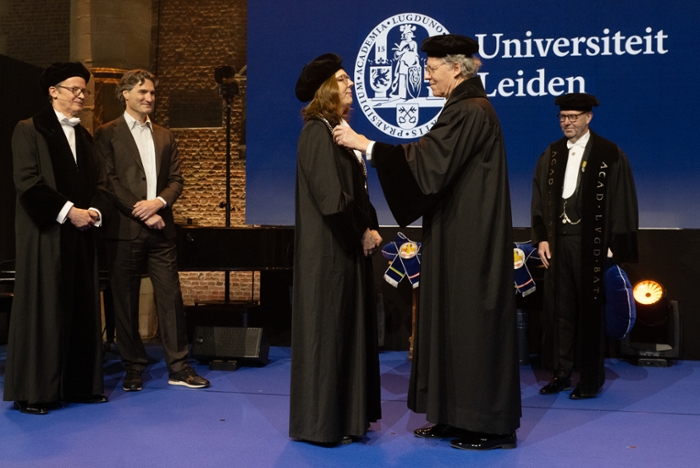
Chain of office for new Rector Magnificus
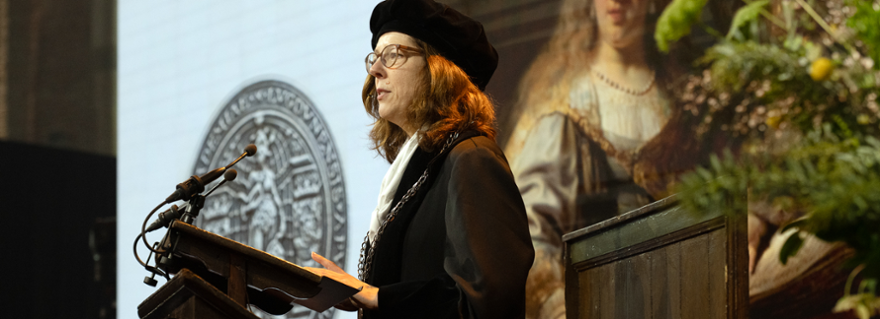
A special moment during the ceremony was the transfer of the rectorship to Professor Sarah de Rijcke. In front of the academic community, De Rijcke received the chain of office before delivering her inaugural Dies Natalis address. She reflected on the societal and geopolitical unrest that is affecting the daily lives of students and staff. ‘Sometimes their engagement takes the form of protest; that is part and parcel of a vibrant democracy. When that happens, what matters is that we continue to question one another’s arguments from a place of knowledge and care.’
She warned that discussions about scientific quality should not become battles over cultural positions or political identities. ‘If science becomes merely a symbol in such struggles, a careful pursuit of knowledge and commitment to self-critique, public trust will crumble. Science and politics inevitably intersect. What matters is that science is more than a symbol in political debate.’
The new Rector Magnificus urged her audience to look more closely at the body of knowledge about science itself. ‘My plea is that we, as a university, actively draw on that knowledge, and the people and institutions that sustain it, to keep the public debate about science and the role of universities alive.’ She highlighted the richness of the university in terms of its diversity of backgrounds, experiences and perspectives. ‘Students learn best when we place these differences side by side and bridge them with care and curiosity. This diversity is what gives our academic knowledge its quality and value. Together, we are one university.’
-
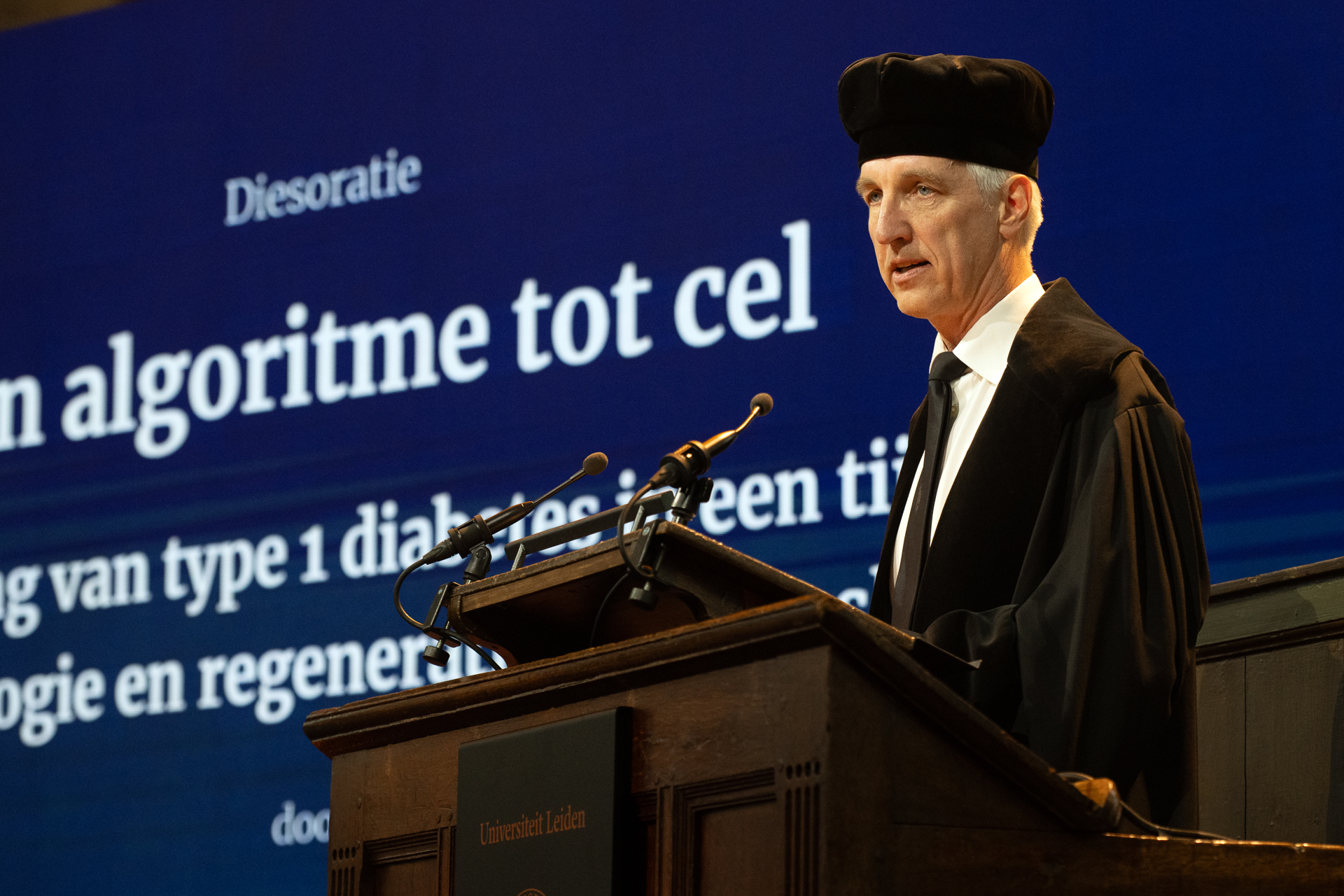
Eelco de Koning explains how new technologies to cure disease also raise questions. -
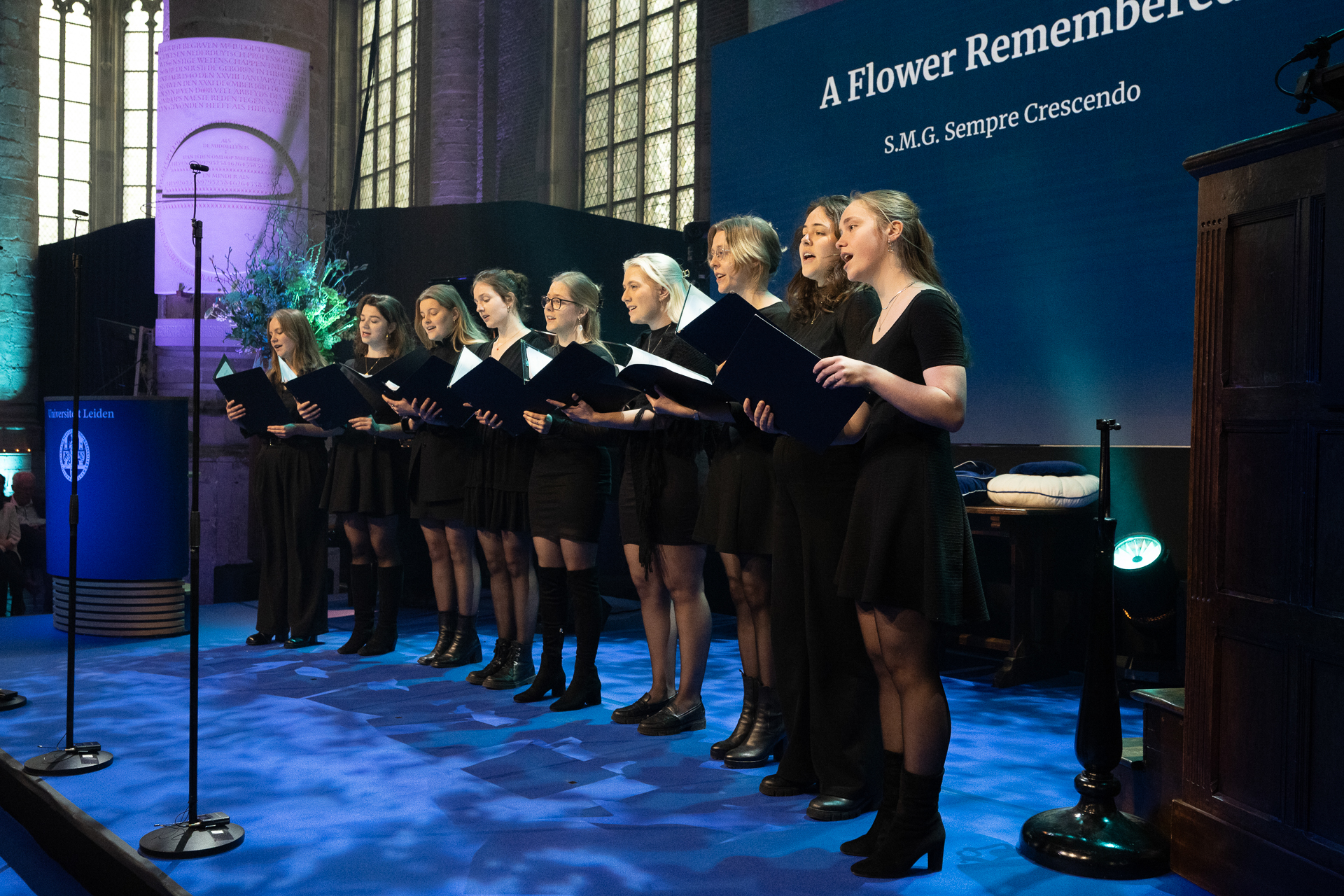
S.M.G. 'Sempre Crescendo', one of the oldest student music ensembles in the world, performed during the Dies Natalis.
Oration by Eelco de Koning
‘Doctor, do you think I’ll ever see a cure for type 1 diabetes?’ That’s a question Dies Natalis orator Eelco de Koning, Professor of Diabetology at the Leiden University Medical Center, is regularly asked. There are many possible routes to a cure, and each brings further questions, he explained. His own work focuses on using regenerative medicine to cure the disease. In the lab, his research group grows insulin-producing cells from stem cells within a month, and can introduce genetic modifications to these cells. ‘This opens the door to treatments that don’t require immunosuppressants. And that means: hope. Not just for a small group but ultimately for everyone with type 1 diabetes.‘
‘But that hope comes with new questions,’ De Koning continued. ‘Who will be first to benefit? How do we integrate these treatments into our healthcare system? What does this mean for justice and solidarity? These are ethical and societal issues. At this university, we do more than investigate how something works. We explore what it means when it works. Medical ethicists, health economists, psychologists and patients themselves have all been involved in this research from the beginning.’ De Koning also hopes that type 1 diabetes treatments will reach patients more quickly thanks to Cure One: a new research centre arising from a collaboration between Stichting Diabetes Onderzoek and the LUMC, which focuses on a cure for type 1 diabetes.
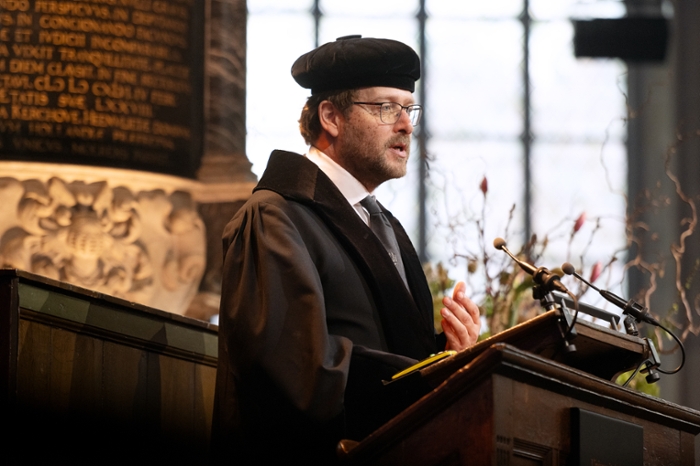
Oration by Dennis Broeders
In his oration, Dennis Broeders, Professor of Global Security and Technology, took the audience back to a 2016 UN meeting in Geneva. There, he observed diplomats and technology experts talking at cross purposes about ‘security’. For diplomats, the term referred to questions of war and peace, whereas for the tech specialists, it concerned the security of the internet as a technical network. This moment, he said, underscored how even the most fundamental concepts can carry entirely different meanings. It also illustrated the importance of bringing together diverse perspectives and languages, which is at the heart of the new Bachelor’s in Cybersecurity and Cybercrime, launched this academic year.
Broeders went on to highlight the significance of ‘upcode’ and ‘downcode’: the rules and values embedded in software and policy. At a time of geopolitical tensions, marked by the war in Ukraine and the dominance of American tech companies, he argued that safeguarding fundamental freedoms is more crucial than ever. ‘Investments in security and autonomy ultimately serve freedom.’
Referring to Leiden’s motto Praesidium Libertatis, Broeders emphasised that academic freedom relies on social engagement and independence. At a time of rising external pressures, he stressed the vital responsibility of the university to uphold its core values and to pass them on to researchers, policymakers and the cyber-diplomats of the future.
-
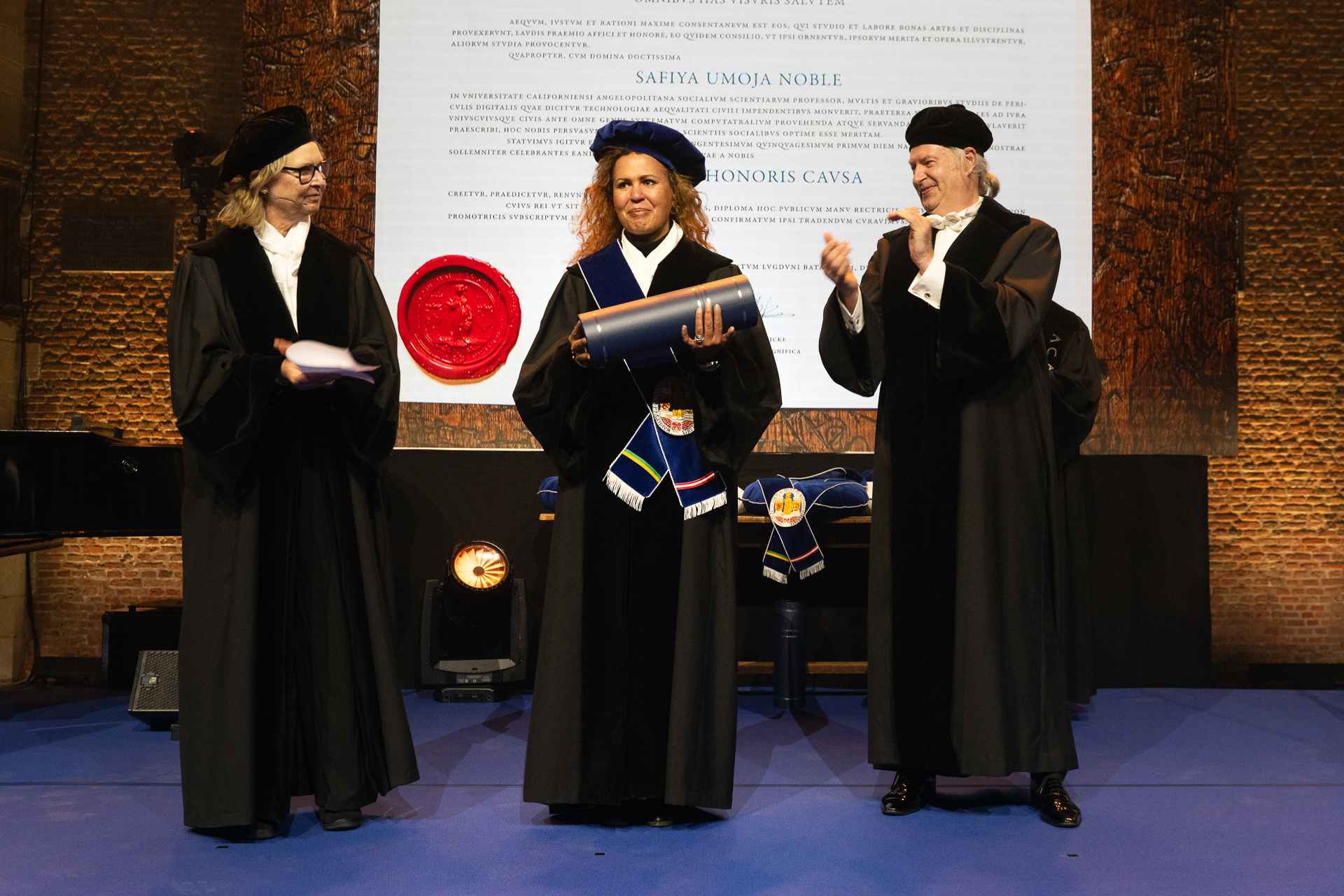
Safiya Umoja Noble is awarded an honorary doctorate by Marja Spierenburg, Professor of Anthropology of Sustainability and Livelihood. -
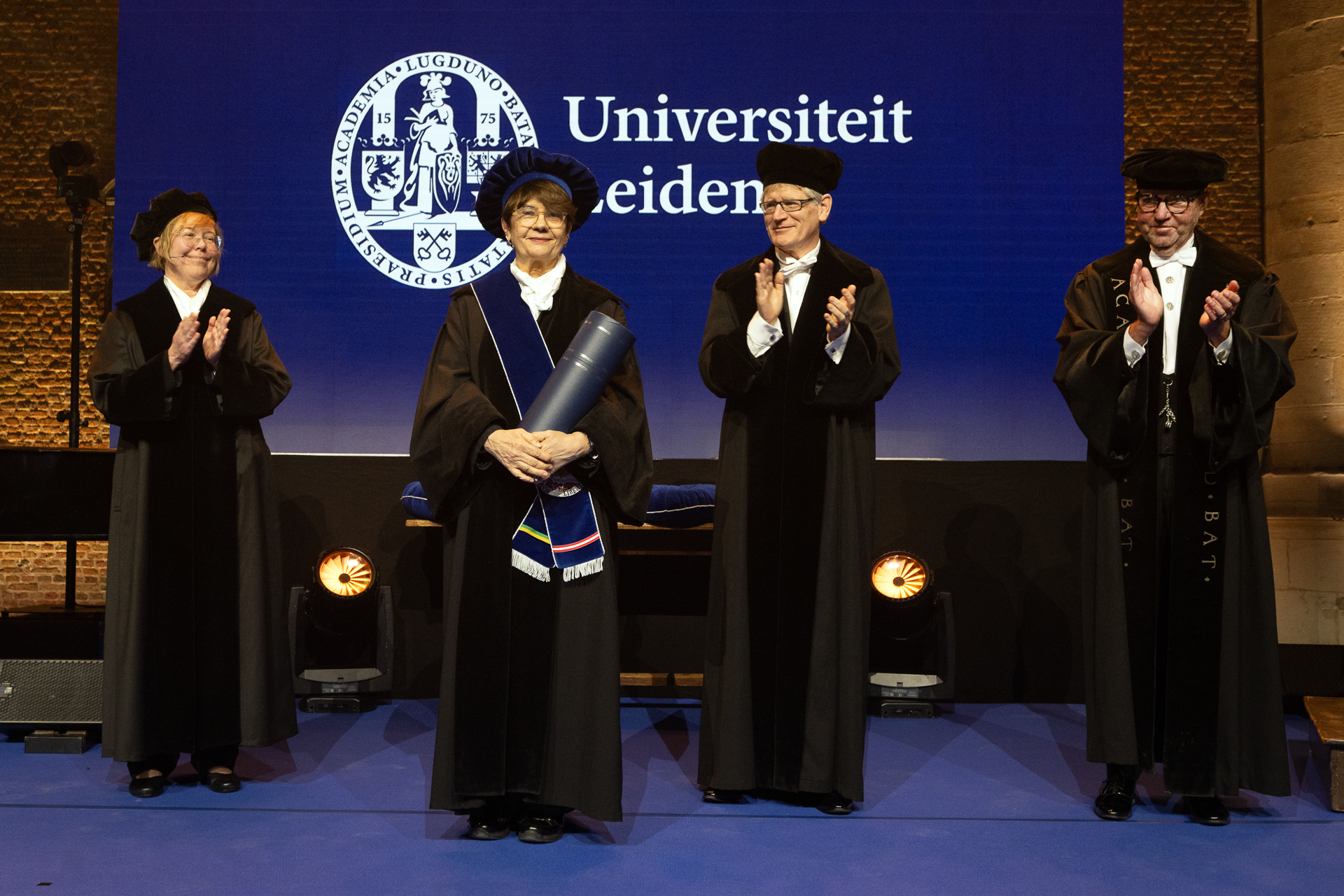
Catherine Malabou receives an honorary doctorate from Susanna Lindberg, Professor of Continental Philosophy.
Honorary doctorates
During the Dies Natalis, honorary doctorates were awarded to two people who have made unique contributions to research, teaching and society.
Professor Safiya Umoja Noble (University of California, Los Angeles) has earned global recognition as a pioneer in digital inequality, algorithmic discrimination and the social impact of technology on minority groups. Noble shows how seemingly neutral (digital) technologies can amplify social inequality and affect people’s access to knowledge, opportunities and rights. Her work has sparked a broad debate about the need for transparency, regulation and ethics in the tech sector.
During the ceremony, she said: ‘It is time that we invest resources into the organisations of societies that benefit all, not just a few. [...] we must put technology and the billions of dollars of investment in it, in its proper context, in balance with the many other human needs for housing, education, clean food, water and air, and for networks of care and joy.’ Visibly moved, she concluded by saying: ‘I’m honoured to be working on these problems as a researcher, together with you.’
Philosopher Catherine Malabou received an honorary degree for her innovative contributions to continental philosophy and her interdisciplinary approach. She has been a continuous champion for the humanities in a globalised world, and has urged philosophers to be more open toward the natural and social sciences, for example to the consequences of new information technologies.
She also made the following appeal in her acceptance speech: ‘The humanities are often described as being under threat. Sometimes they are said to be too slow, too critical, too abstract, or insufficiently aligned with the demands of innovation. In a time of acceleration, automation and calculation, however, the humanities do not oppose science or technology. They insist on thinking them – and on thinking with them.’
Rector De Rijcke closed the ceremony with the following remarks: ‘I hope you have enjoyed the programme and that it’s given you something to reflect on.’ Then, as tradition states, the whole Pieterskerk sang the national anthem.
Watch the ceremony again
Due to the selected cookie settings, we cannot show this video here.
Watch the video on the original website or