
How Leiden University is taking action against cancer
One in two people will be diagnosed with cancer. World Cancer Day on 4 February raises awareness of the impact of this devastating disease. Leiden University is conducting various studies aimed at preventing and controlling cancer. Below are just a few examples.

More or less chemotherapy?
Researchers are using statistics to determine the right dose of chemotherapy. Chemotherapy is a challenging treatment with a considerable impact, especially for young patients. Doctors don’t want to give patients too high a dose, but they need to give them enough to fight the cancer cells. It’s a delicate balance. Professor of Applied Mathematics, Marta Fiocco, has been using statistics since 2024 to map the effects of adjustments to the chemotherapy dosage.
New ways to develop cancer treatments
Discovering and developing new drugs is a lengthy, high-risk and expensive process. And new treatments often prove to be effective in a subset of patients. Funded by the National Growth Fund, the Oncode Accelerator project aims to address this by innovating the initial phase of therapy development.
Leiden University is an active Oncode Accelerator partner and is leading three of the ten consortia in the programme. Professor Gerard van Westen is coordinating the AI platform that is using AI to help discover new drugs. Mario van der Stelt is coordinating the Small Molecules workstream, focusing on translating fundamental discoveries into new anti-cancer drugs. And Professor Sjoerd van der Burg is coordinating the Therapeutic Vaccines workstream, where researchers are looking at how the immune system can be used to fight cancer.

Better communication with cancer patients
After hearing the words ‘You have cancer’, patients and their loved ones enter a period of difficult decisions, intensive treatments, side-effects, worry and an uncertain future. Healthcare providers play a crucial role in informing and supporting patients and their loved ones during this process. But there are complaints in the medical community about this communication. Psychologist Janine Westendorp looked at how this could improve.

Viruses to fight prostate cancer
Researchers from the Leiden University Medical Center (LUMC) have shown that using viruses is a promising approach in combatting prostate cancer. This is one of the most common forms of cancer in men, with around 13,000 men in the Netherlands being diagnosed with it each year.
Read more: ‘LUMC researchers use viruses to fight prostate cancer’

Fewer side-effects thanks to light
Sylvestre Bonnet and his research group are developing a form of chemotherapy that only works when you shine light on it. This greatly reduces side-effects: whereas regular chemotherapy drugs also poison healthy cells, this form of chemotherapy ensures that the drugs only work once they have reached the tumour and light has been shone on it.
Read more: ‘Heavy metals have a bad reputation but they also cure cancer’
Using patient immune cells to fight lymphoma
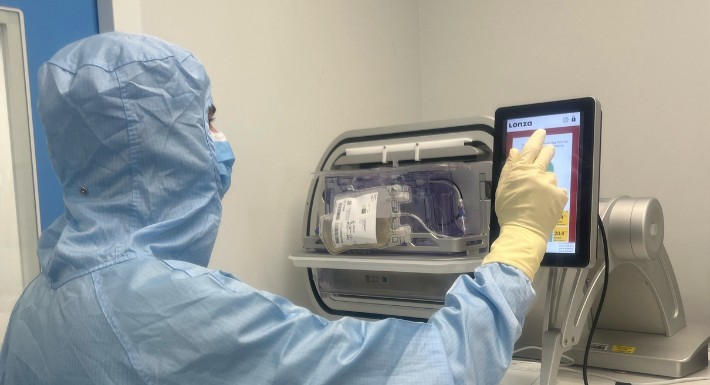
The Leiden University Medical Center (LUMC) can now start treating aggressive lymphoma within seven days instead of four weeks. This is because of an in-house laboratory that produces genetically altered immune cells. This can mean the difference between life and death.
Read more: ‘Cancer therapy with engineered immune cells significantly reduced’