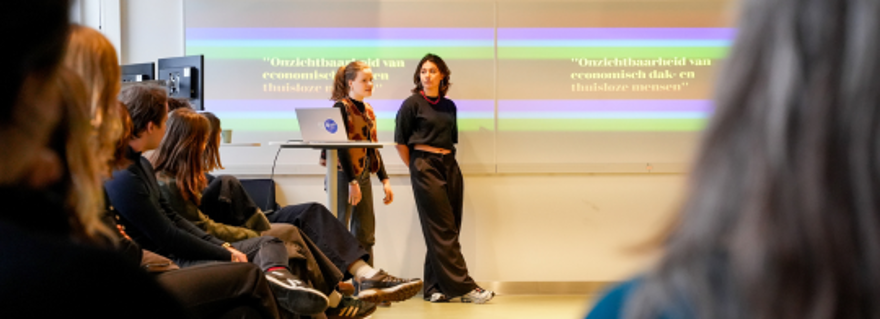
'Students are focussing on what is possible and then come up with concrete solutions'
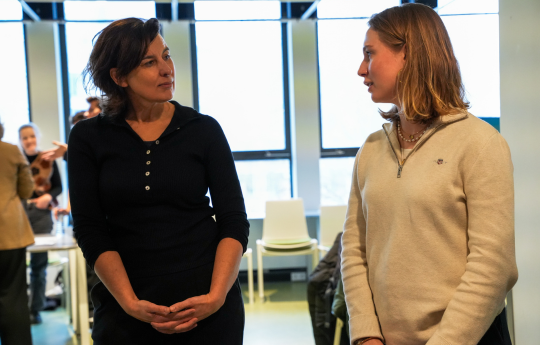
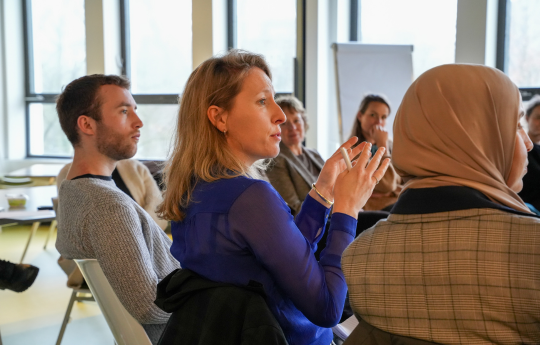
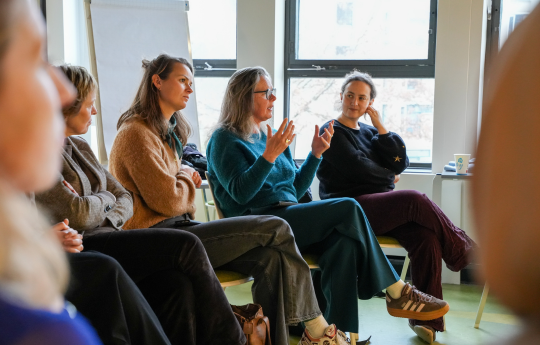
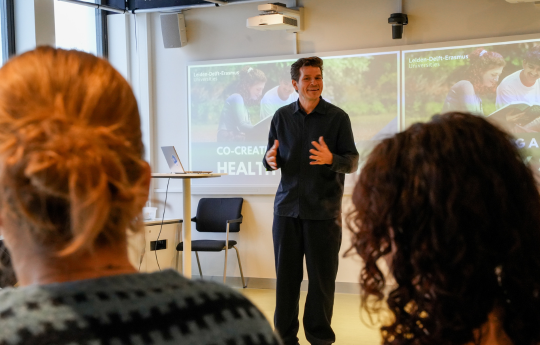
On January 30th, students from the interdisciplinary LDE minor "Co-creating a Healthy Society" presented their findings to external clients, such as the Municipal Health Service (GGD) and the Municipality of Leiden. The minor started two years ago. Led by Sandra van Dijk and Coen Wirtz, it is now a solid minor that is popular among students.
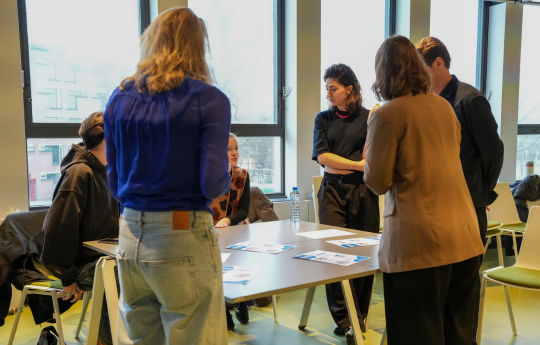
The presentations were an inspiring closure of a minor in which students from a wide range of programs collaborated on current health issues in society.
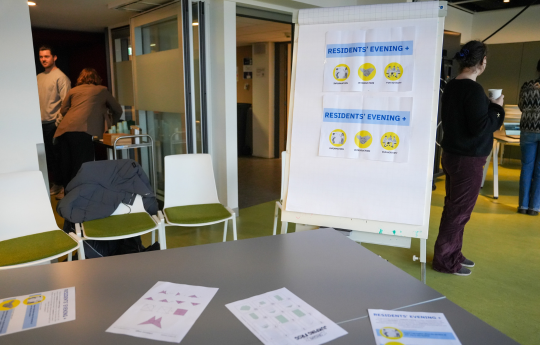
Marga van Moorsel (Municipality of Leiden): 'The students' assignment was to increase the resilience and mental well-being of displaced persons from Ukraine. Two interdisciplinary groups presented two completely different and both interesting approaches in co-creation with Ukrainian residents themselves: one group focused on physical development and its requirements, while the other group looked at improving access to a stress-management program.'
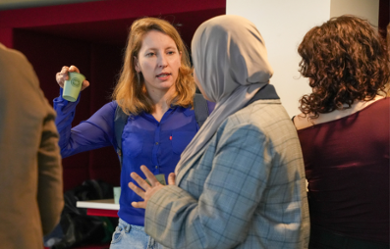
The minor is a collaboration with Leren met de Stad (Learning with the City) and the universities of applied sciences. Over the past 20 weeks, students have been taking courses on a healthy society from the perspectives of Psychology in Leiden, Medical Sociology and Public Administration in Rotterdam, and Architecture in Delft. They then combined their knowledge and applied it to make a social impact beyond the university walls.
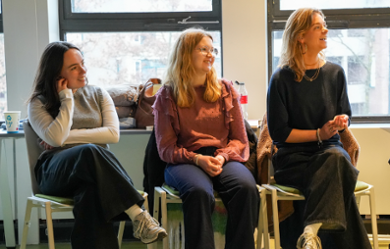
Silke (Urban Studies) & Sofie (Psychology): 'We conducted research on economic homelessness. It was fun, but also quite intense, working on the same topic for six months. At the same time, it ensures you gain truly in-depth knowledge. Urban Studies is inherently interdisciplinary, but that wasn't so true for Psychology. It was actually interesting to bring it all together. And it was great to gain practical experience!
Hanane El Mrini, policy advisor at the UWV (Employee Insurance Agency), was very enthusiastic about the interventions to improve labor market participation for migrants with a background in healthcare: 'It's interesting to see how students work. Even though they can't influence everything, they look at what is possible and then come up with concrete solutions.'