

How should we measure progress? Rutger Hoekstra nominated for prestigious Frontiers Planet Prize
Well-being economist Rutger Hoekstra has been named as one of the 26 National Champions of the international Frontiers Planet Prize. He is receiving this recognition for cutting-edge research conducted with his co-authors, in which they advocate an alternative way of measuring societal progress.
The prestigious Frontiers Planet Prize is awarded each year for academic research that offers solutions to global environmental problems. As a National Champion, Hoekstra will represent the Netherlands on 18 January 2027 in the international final at the World Economic Forum in Davos. There, the three winning academics will each receive 1 million USD towards research.

A false impression
‘The honorary title of National Champion is a fantastic recognition of our research into better ways of measuring progress,’ responds Hoekstra. At present, economic growth is often considered a measure of progress, and as a result, great importance is attached to gross domestic product (GDP). In his view, this creates a false impression. After all, average income says nothing about the often vast discrepancies between rich and poor or about actual well-being within a country. Nor does it say anything about the state of nature or whether the level of prosperity is sustainable. And yet, he notes, GDP continues to be a key policy objective in many countries.
New measurement methods
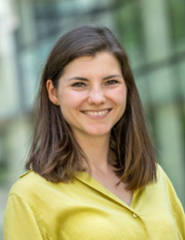
Hoekstra has been researching alternatives to GDP for many years now, and in 2019 he published the book ‘Replacing GDP by 2030’. In 2024, he also published the article entitled ‘Beyond GDP’ in The Lancet Planetary Health on this subject, in collaboration with his Leiden University colleagues Annegeke Jansen, Ranran Wang and Paul Behrens. This research forms part of the WISE Horizons project, in which academics work on developing new ways to measure societal progress. Jansen is the article’s lead author and also advocates a different measurement system. She notes: ‘GDP falls short as a measure of societal progress. We need to work with indicators that better reflect the true needs of people and societies.’
Fifty years in review
In their article, the researchers bring together 50 years of international research into alternatives to GDP. Many economists, sociologists and environmental scientists have previously attempted to develop other indicators for measuring progress. However, Jansen feels that there is still no clear replacement for GDP: ‘Nowadays, there are dozens of systems and indices, which actually causes confusion and makes it difficult to develop a common alternative.’
Back to the core
Hoekstra explains that the team from Leiden University is trying to bring order to this fragmented field. Their analysis shows that most alternative measurement methods ultimately revolve around three core questions: well-being (what is the average quality of life?), inclusion (how fairly is that well-being distributed?) and sustainability (can that level of well-being be maintained in the future?).
A dashboard of indicators
Instead of introducing a single new index, the researchers propose measuring progress using a dashboard of indicators. The dashboard could include figures on well-being, inequality and sustainability. The researchers say that applying this kind of measurement system on a broader scale would require international collaboration.
Interest from the UN
Hoekstra and Jansen have been advising a United Nations expert group working on a new framework for measuring sustainable development. The group is expected to publish a report this spring, using a similar dashboard strategy, says Hoekstra. That process could result in a global system for measuring well-being, inclusion and sustainability. Jansen adds that there is a clear interaction between science and international policy processes: ‘We provide the scientific basis, but ultimately, it’s down to international organisations to create international consensus.’
A different compass
Hoekstra finds it remarkable that their research has been selected for the Frontiers Planet Prize, given the calibre of the other candidates: ‘Many of the projects that were nominated have a direct focus on biodiversity or climate change, while our work revolves around economic statistics.’ Yet he does feel that the project aligns well with the prize’s objective: ‘As long as we continue to measure societal progress by economic growth, the pressure on the environment will keep on increasing. If we want to remain within the planet’s limits, we need a different compass.’