Jasper’s day – Puzzling, PhDs and partnerships
Jasper’s day moves seamlessly from puzzling at the coffee corner to PhD policy and a strategic partnership with Peking University — showing that science is about people as much as it is about connection.
Jasper Knoester is the dean of the Faculty of Science. How is he doing, what exactly does he do and what does his day look like? In each newsletter, Jasper gives an insight into his life.
7 May
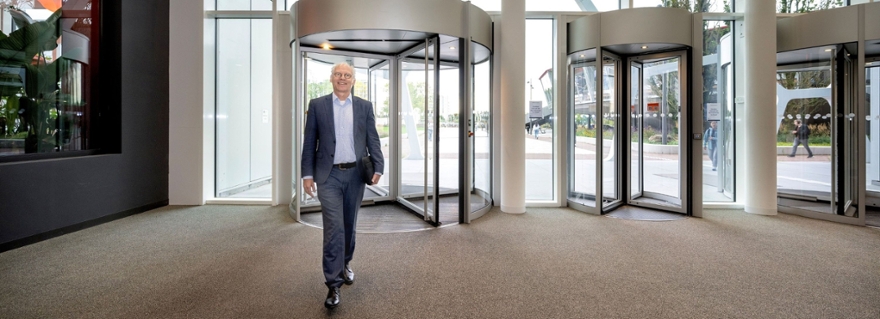
‘On this sunny Thursday, I happily cycle to the Gorlaeus Building. I have a varied agenda today. In the office, I make tea and look at the progress of the jigsaw puzzle by the coffee machine. Progress seems minimal. It is, of course, the May holiday, and those who are here are clearly working hard. Or am I seeing an interesting phenomenon — that puzzling is also a social activity? That is certainly how it worked at home when I was young: there was often a puzzle on the table, but the real pleasure lay in sitting together, chatting and fitting the pieces. Many personal dilemmas and family matters were resolved over a puzzle. Perhaps something to introduce more structurally into the workplace?
I start with a meeting with one of the scientific directors (WD). Here too, a dilemma is on the table, though we discuss it without a jigsaw puzzle. We agree on an approach and make arrangements about who will do what.

Collaboration with Peking University
Next, I attend the reception of a delegation from the School of Pharmaceutical Sciences at Peking University (PKU), one of China’s top two universities. Through LACDR, we have recently built intensive contacts with PKU, initiated by PKU alumnus Tingjie Guo, now an assistant professor with us. One concrete outcome is that a group of exchange students from PKU is now spending a semester at LACDR, which has already led to a research collaboration.
We have a productive discussion about structurally expanding the collaboration and the possible funding for this. It will require commitment on both sides, but everyone agrees that there are valuable opportunities for researchers and students. We sign a Memorandum of Understanding, providing a basis for developing more specific collaborations in the near future.
After a meeting with another WD, there is the Science Council, the monthly formal meeting of the WDs and myself. Today, the focus is on PhD matters. Also present are the Dean of our Graduate School, Erik Danen, and our confidential adviser for PhD candidates, Annemarie Meijer. We discuss experiences with the new training and supervision plan. We also have an open discussion about the requirements we set for a thesis, and we review the annual report of the confidential adviser.
1000 PhD candidates
With around 1,000 PhD candidates in the faculty, these are important topics. It is a useful discussion. We all recognise that every PhD journey has its own story, centred around the candidate and their supervisors. At the same time, many shared experiences offer general lessons to make the PhD trajectory — which is inherently challenging and therefore not without stress — a successful adventure.
Erik also mentions that LPDP, a major research funder in Indonesia, has awarded us sixteen four-year PhD positions in selected themes. He calls on the WDs to ask interested staff to submit a short description of potential projects, so that we can put these positions to good use as soon as possible. This award from LPDP shows that it pays off to, as a faculty, consistently invest in international contacts and collaborations.
-
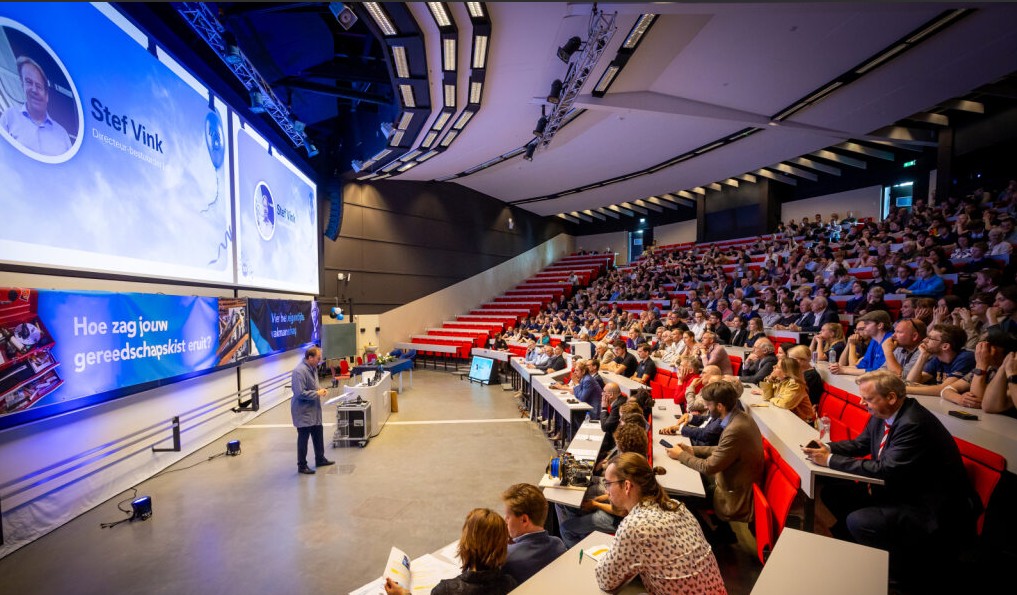
The celebration of 125 years LiS -
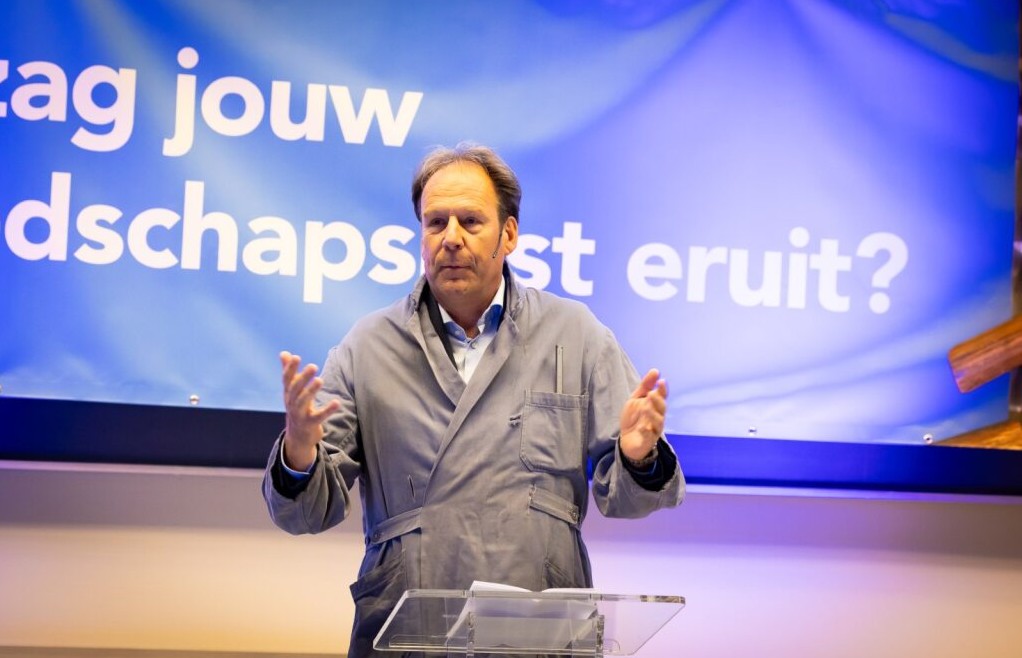
Director Stef Vink opens the symposium to mark the 125th anniversary -
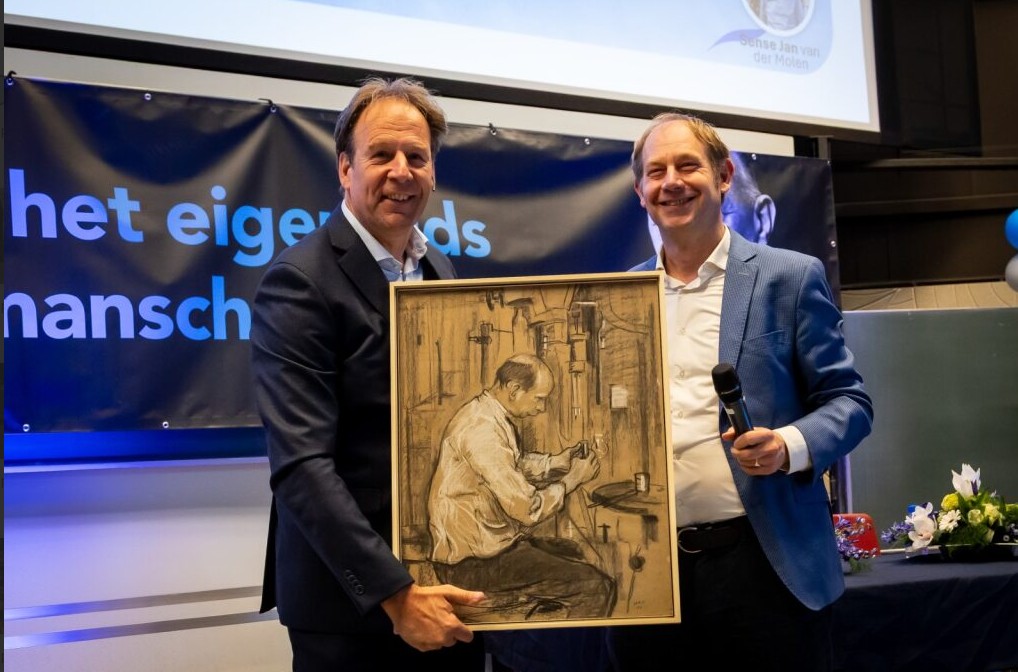
Sense Jan van der Molen - scientific director of LION, presents the gift on behalf of Leiden Science: a chalk drawing of technician Gerrit-Jan Flim by Harm Kamerlingh Onnes, brother of Heike Kamerlingh Onnes
LiS 125 years
After another meeting with a WD, I walk to the ‘schotel’, where our neighbours from the Leiden Instrument Makers School (LiS) are celebrating their 125th anniversary. LiS was once founded by Heike Kamerlingh Onnes, our Nobel Prize winner in Physics in 1913, for the liquefaction of helium. The long tradition of craftsmanship in high-precision instrumentation remains essential to much of our research; the symbiosis between LiS and our faculty is highly successful, and we have recently reinforced it further through collaboration within the national Beethoven programme for semiconductor technology.
The celebration today therefore feels a bit like our own. I enjoy the panel discussions, the engaging visuals and the impressive examples of instruments developed and demonstrated by LiS students.
After the symposium, I head into town, where I end the working day with dinner with our guests from Beijing and colleagues from LACDR. We continue discussing the plans made today. It is clearly a successful visit, and I am sure we will see each other again within a year, here or in China. I drive home, catch up with the family and briefly watch the news. I turn in early, as I need to be in Groningen at 10 tomorrow morning — which means an early start.’