1,118 search results for “stem and plant formation” in the Staff website
-
Research
Leiden University offers researchers extensive facilities and support at every stage of their academic career. Here you will find more information on funding, policy, and publishing, as well as answers to questions such as: How do I arrange a PhD track? Which research grants are available? And what…
-
Formative & summative assessments
Depending on its purpose, assessment can support ongoing learning, provide final evaluations, or help students reflect on their own progress.
- Conflict Resolution Seminars @Leiden
-
Membership journalistic platform The Conversation
Would you like to share your academic news with the world? Since 1 January 2024, Leiden University has been a partner of The Conversation, an international not-for-profit news platform that unlocks academic knowledge for a wide audience.
-
Storytelling Lab: Using story-based discourse to boost your career
Career development, Communication, Transferable skills
-
Secrets of Self-confidence
Personal development, Transferable skills
-
Scientific Conduct for PhDs (Social and Behavioural Sciences)
Research, Transferable skills
-
English Academic Writing for PhD candidates
Research, Communication, Transferable skills
-
Digital Authoritarianism in the Making: Repression and Resistance on the Russian Internet
Book talk
-
Creativity for beginners
Arts and leisure, Arts and leisure
-
Scientific Conduct for PhDs (Science)
Research, Transferable skills
-
450 trees for Leiden: join us
Leiden University and Stadslab Leiden invite you to improve the Leiden and The Hague environment with 450 extra trees – a living reminder of 450 years since the Relief of Leiden and the foundation of Leiden University.
-
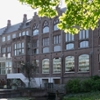 P.J. Veth
Nonnensteeg 1-3, Leiden
-
Tracking the origin and evolution of molecules in space
How do molecules originate and evolve in space? And how does that ultimately determine the chemical composition of planets and their atmospheres? The Dutch Astrochemistry Network (DANIII) receives 1.6 million euros from NWO to find out. A large group of Leiden astronomers and chemists is contributing:…
-
Gijs Zebregts: ‘I want to give hope to fellow sufferers of leukaemia’
Gijs Zebregts had just graduated from International Studies when he was stricken with acute leukaemia. A stem cell donor brought relief. Now he is going to cycle from Florence to Rotterdam to raise money and awareness for the donor bank.
-
The rocking researcher: Marjolein Fokkema connects disciplines with algorithms and pop songs
From predicting Alzheimer’s to the growth of organisms: psychologist Marjolein Fokkema’s algorithms can be used in many disciplines. They also provide inspiration for her songs, theatre shows and life lessons. What drives this rocking researcher?
-
Leideners and researchers learn from each other at the Science Market
3 October University has become something of a tradition: a bit of science among the Leidens Ontzet celebrations. During the new and improved edition, the WetenschapsWarenMarkt (Science Market), visitors spoke to researchers about the nitrogen problem, making organs and the city’s connections with A…
-
Archaeologist Amanda Henry traces ancient diets and human adaptability with a Vici grant
Dr Amanda Henry has secured a prestigious Vici grant for her groundbreaking research project, Hominin FoodWays: Changing Diet and Food Processing Across Climate Frontiers. This five-year study, set to begin in September, aims to unravel the dietary adaptations of Eurasian hominins between 1.8 and 0.9…
-
From the griffon vulture to Physcia biziana: record number of rare species in campus BioBlitz
What a result! The Higher Education BioBlitz recorded 3,155 species, smashing our target of 2,500. Thanks to your efforts, Leiden University made an impressive eight ‘very rare’ finds. A result that gives hope for our biodiversity.
-
Solar panels and sedum on the roof of Snellius: A first for Leiden University
One of the largest roofs at Leiden University, that of the Snellius building, has recently been equipped with 590 solar panels and 57,000 sedum plants, making it the largest combined roof in the Benelux. The roof was officially opened on Monday 10 October by Annetje Ottow and Martijn Ridderbos, President…
-
Barbara Gravendeel appointed new scientific director of Hortus Botanicus Leiden
Barbara Gravendeel has been appointed as the new scientific director of Hortus botanicus Leiden. Additionally, she has been named Professor of Plants and Society. Gravendeel succeeds Paul Keßler, who held the position for nineteen years. Currently, she works as a group leader at Naturalis Biodiversity…
-
Knowledge Café — A Healthy Living Environment for Everyone
Knowledge Café
- University Teaching Qualification (UTQ/BKO)
-
Staff symposium on student well-being: Resilience through connection
Conference
-
Tamara Danilyuk wins the EUROTOX 2023 Early Career Award
I am thrilled to share the exciting news of being honored with the 2023 Early Career Award at the EUROTOX conference held in Ljubljana, Slovenia. This recognition, presented by ECETOC (European Centre for Ecotoxicology and Toxicology of Chemicals) and dedicated to the memory of Dr. Christa Hennes, holds…
-
From a child in the orchard to director of the botanical garden
At the age of six, Barbara Gravendeel already knew what she wanted to be: a biologist. The seed was planted in the garden of her childhood home: an old orchard surrounded by a large hedge. Since 1 May, she has been the scientific director (prefect) of the Hortus botanicus in Leiden, and all the pieces…
-
New research at the Hortus: the delimitation of the genus Uvaria L.
In the tropical rainforests of Southeast Asia the soursop family (Annonaceae) can be found. The genus Uvaria is a part of this family, but it has not yet been described entirely correctly. That is what Annas Rabbani will be studying during the next four years as a PhD student at the Hortus botanicus…
-
Plastics are causing stress to crops (and biodegradable alternatives do too)
Micro- and nanoplastics cause stress to crops such as lettuce and carrots, PhD candidate Laura Julia Zantis found. This can lead to reduced growth and a lower nutritional value. Biodegradable plastics have this effect too, likely because of chemicals they release during degradation.
-
Changing our diet would help absorb global food shocks, such as during the Russia-Ukraine conflict
A plant-based diet could improve the resilience of our food system. Moving to such a diet in the European Union (EU) and United Kingdom (UK) alone could replace almost all the production losses from Russia and Ukraine. That’s what an international team of researchers conclude in Nature Food. Leiden…
-
Educational experiment with polder rice
Is polder rice a feasible circular alternative to cows on peat soil? In May, an experimental trial began, with researchers from Leiden University and Wageningen University & Research (WUR) planting around 3,000 rice plants at the Polderlab near Leiden. The researchers aimed to test rice as a middle…
-
Biology student Martijn Verkuilen wins Unilever Research Prize
Martijn Verkuilen is the winner of the Unilever Research Prize 2022. By transferring DNA from a plant into yeast, he made the first move to produce a new drug for type 2 diabetes. He collected his prize in Wageningen on 24 November.
-
Eleven Open Competition Domain Science XS grants for Leiden researchers
Eleven researchers from Leiden University have been awarded an Open Competition Domain Science ENW XS grant by the Dutch Research Council for their research projects. They are researching how to make software faster and greener, improve cancer detection and reduce anxiety by manipulating the biological…
-
A new look for the Huizinga garden
A lot of green, corners to sit in and paths to stroll along. These were the wishes for the restyling of the garden of the Huizinga building. After some forty years, it was time to give the garden a facelift. The result is a welcoming, green garden with sunny spots and shaded nooks.
-
Plane trees moved to Herta Mohr building
The plane trees from the forecourt of Cluster North have been moved to the Herta Mohr building (Cluster South). The trees could not remain in their original location because of the forthcoming renovation of Cluster North. They have been moved already in advance of the flowering season. In June, the…
-
Dr. Henry in Nature: How Ancient People Fell in Love with Carbs
In 2011, Dr. Amanda Henry published her findings from dental plaque picked from the teeth of Neanderthals who were buried in Iran and Belgium between 46,000 and 40,000 years ago. Plant microfossils trapped and preserved in the hardened plaque showed that they were cooking and eating starchy foods including…
-
Fraud and plagiarism
Fraud and plagiarism in assessment can unfortunately be seen everywhere, even among our students. In relation to this, as an examiner you have an important role in safeguarding academic integrity.
-
Introducing: Fadly Rahman and Marleen Reichgelt
Fadly Rahman and Marleen Reichgelt recently joined the Institute for History within the NWO-funded project 'Epistemic actors. The role of Indonesians in the making of knowledge in the colonial era’ under the supervision of Fenneke Sysling. Below, they introduce themselves.
-
LUMC participates in pioneering type 1 diabetes research
The promising early results of an international study have shown that insulin-producing cells grown from stem cells can cure the disease. The new Cure One LUMC research centre aims to accelerate this breakthrough.
-
Archaeologist Amanda Henry linked to Naturalis as Professor by Special Appointment on the Evolution of the Human Diet
Starting September 2024, Amanda Henry has started a new role as Professor by Special Appointment on the Evolution of the Human Diet at Naturalis Biodiversity Center in Leiden. She will use this position to draw closer ties between the Faculty of Archaeology and Naturalis, and explore means for public…
-
Wat is er te doen op de Leidse Museumnacht?
Op zaterdag 3 juni vindt de Museumnacht Leiden plaats. Ook dit jaar zijn Leidse wetenschappers en studenten onderdeel van de programmering.
-
National flower: The daisy is everywhere thanks to men with mowers
The daisy has been crowned the Netherlands’ national flower. Rogier van Vugt, Head of Horticulture at the Hortus botanicus, explains why the daisy merits its elevation to national symbol.
-
Unveiling the hidden world of wood
For four years, Vicky Beckers examined thin slices of wood under a microscope, mapping the anatomy of two plant families. Her research helps identify different wood species, benefiting both the timber trade and archaeology.
-
Gorlaeus rooftop garden: from student project to green meeting spot
On top of the Gorlaeus Building’s bike parking sits a hidden green surprise: Leiden’s largest rooftop garden. Since this academic year, the garden has been open to all students and staff.
-
How to involve citizens in your scientific research
Inviting members of the public to help monitor wildlife, photograph plants or conduct samplings. These are some of the many examples of Citizen Science. It is increasingly recognized as effective and impactful for collecting data, but also for engaging the public in scientific research. In Nature reviews…
-
Green Ideas Competition: how can we make the Faculty greener?
Organisation
-
Two Leiden professors appointed KNAW members
The Royal Netherlands Academy of Arts and Sciences (KNAW) announced on 25 April that it has appointed 18 new members. These include Leiden professors Andrew Webb and Jos Raaijmakers.
-
Rob Schilperoort Memorial unveiled at Leiden Bio Science Park
The Rob Schilperoort Memorial will be unveiled at the Leiden Bio Science Park on Saturday 16 September. This gigantic gate stands at the entrance to the park, which is also named after Schilperoort, its founder.
-
Three Leiden papers in top 10 most cited of Journal of Archaeological Science: Reports
At the start of the year a lot of journals publish lists of their most cited papers of the previous year. Three papers published by Leiden archaeologists were ranked in the top 10 of the Journal of Archaeological Science: reports.
-
Combining research and a good cause: Tutoring programme concludes successfully
More than a course. That was the aim of the Leiden Tutoring programme. Through weekly tutoring lessons, students did not just earn five EC. They helped Dutch primary-school children from neighbourhoods with a low socioeconomic status.
-
What rights do donors have?
Collaboration is worthwhile. A joint LUMC and Leiden Law School project has received €142,500 from the Dutch Research Council (NWO). This grant will advance research into the law and ethics of regenerative medicine.