1,017 search results for “community conservation collective” in the Staff website
-
How to be an Academic in a World on Fire: A Hands-On Workshop co-organized by LUGO and OSCL
Lecture
-
Plant occurrence in space and time: the importance of land use, habitat structure, and pollination mode
PhD defence
-
OSCoffee: A Glance at Open Access Book Publishing Platforms
Lecture
-
OSCoffee: Disseminating Knowledge through YouTube
Lecture
-
OSCoffee: Open Educational Resources (OER)
Lecture
-
OSCoffee: From Paywalls to Precedent - Open Science for Law
Lecture
-
OSCoffee: Open Science in Criminology - barriers and opportunities
Lecture
-
OSCoffee: Better coding for reproducible research
Lecture
-
OSCoffee: Open Science and Impact and Valorisation
Lecture
-
OSCoffee: The psychology of biases, and how they influence us as scholars
Lecture
-
OSCoffee: Do we need some kind of national observatory for consultation projects?
Lecture
-
OSCoffee: A bird's eye view of Open Science Developments, Challenges and Future Directions at Naturalis Biodiversity Center
Lecture
-
OSCoffee: Making data reusable in the social sciences
Lecture
-
OSCoffee: Introduction to ReproducibiliTea journal clubs—the what, why, and how
Lecture
-
OSCoffee: Introduction to ReproducibiliTea journal clubs—the what, why, and how
Lecture
-
OSCoffee: Open Science and AI - Synergy or Contradiction
Lecture
-
OSCoffee: How to take your next step in the path to open science
Lecture
-
OSCoffee: Building a data competence center for Population Health Management
Lecture
-
 Amy Eaglestone
Faculty of Social and Behavioural Sciences
a.m.eaglestone@fsw.leidenuniv.nl | 071 5272727
-
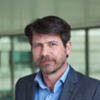 Edwin Bakker
Faculty of Governance and Global Affairs
e.bakker@fgga.leidenuniv.nl | 070 8009506
-
 Federico De Musso
Faculty of Social and Behavioural Sciences
f.de.musso@fsw.leidenuniv.nl | 071 5272727
-
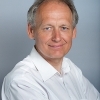 Petr Kopecky
Faculty of Social and Behavioural Sciences
kopecky@fsw.leidenuniv.nl | 071 5273602
-
Arjen Boin
Faculty of Social and Behavioural Sciences
boin@fsw.leidenuniv.nl | 071 5272233
-
 Niels van Willigen
Faculty of Social and Behavioural Sciences
willigen@fsw.leidenuniv.nl | 071 5272727
-
‘The gatekeepers’ van het internet; waarom een ‘gratis’ internet niet bestaat
Of je nu appt, online nieuws leest, of door Instagram scrolt, jouw gedrag wordt gemonitord. Sterker nog: wát jij ziet, wordt door anderen bepaald. Promovendus Aleksandre Zardiashvili onderzocht de impact van online advertenties en de macht van de bedrijven erachter.
-
Leiden students develop highly contagious card game
Infecting each other with viruses and bacteria while protecting yourself with medicines and vaccinations. Sounds like a fun evening, right? Master students Life Science & Technology Rafael Jezior and Dennis de Beeld certainly think so. Together, they developed ImmunoWars: an exciting card game based…
-
Rethinking Responsible Scholarship: ‘It is in so many day-to-day decisions, we forget to pause and reflect sometimes’
Psychologists Anna van ‘t Veer and Eiko Fried will start a scientific integrity workshop tour after the summer, called Responsible Scholarship: Psychology. Their aim: giving the subject a more prominent position in the academic’s mind.
-
OSCoffee: Unintended consequences of the shift towards Gold Open Access publishing
Lecture
-
CML's Stans Award 2021
CML grants three Stans Awards each year, known as the best PhD paper, best student thesis and best outreach from the past year. The CML staff nominated students and colleagues and this year’s jury Prof.dr. Koos Biesmeijer and Prof.dr. Nicole de Voogd made the final decision.
-
How should we use AI? The Islamic world may have an answer
The secular West is struggling with the rise of AI, but so too is Muslim Southeast Asia. What can we learn from each other?
-
Faculty Board responds to your most frequent questions
Following the announcement of revised financial projections at the start of the academic year, the Faculty Board was keen to engage in dialogue with the wider faculty. Through information sessions held at all institutes, at the Faculty Office and in The Hague, we met with many of you to hear your questions…
-
Opening of the Herta Mohr Building: brand new and also recycled location for Humanities
Light, open and green: a description that fits the new, renovated location of the Faculty of Humanities. The official opening of the Herta Mohr Building took place on 8 October, and it has many remarkable features: for example, recycled ‘mushroom columns’, a pedestrian bridge to the University Library…
-
Censorship in cooperation: the representation of the Indonesian massacre in literature
How do you recount historic events if you are not allowed to talk about them? For his dissertation, Taufiq Hanafi tried to find out how a period of mass murder – despite heavy censorship – found a place in Indonesian literature. PhD defence 31 March.
-
Deconstructing a more assertive China: How did its foreign policy change?
Since 2009-2010, the West viewed China as more assertive. Especially after Xi Jinping came to power in 2012, the country abandoned Deng Xiaoping’s ‘low profile’ foreign policy. Friso Stevens explains in his dissertation where this change has come from. The dissertation defence is on 28 March.
-
Curator of the National Museum Marion Anker: ‘History can cause friction'
Marion Anker is a junior curator at the Rijksmuseum, the National Museum of the Netherlands. She studied History in Leiden and Amsterdam. Together with her team, she organised the controversial exhibition ‘Revolusi! Indonesië onafhankelijk!’ What did studying History teach her?
-
Child rights expert sounds the alarm: ‘Global crises are hitting children hardest’
Wars, climate change and the effects of covid have caused a global decline in children’s well-being. In her inaugural lecture Ann Skelton, Professor of Children’s Rights in a Sustainable World, points to the disastrous effects of multiple interacting crises.
-
Buzzing decline: Dutch landscape is losing insect-pollinated plants
The Netherlands is losing plant species that rely on pollination by insects. Leiden environmental scientist Kaixuan Pan demonstrates this after analysing 87 years of measurements from over 365,000 plots. The news is alarming for our biodiversity and food security. ‘75 per cent of our crops and 90% of…
-
How Dutch houses can become almost energy- and CO2-neutral
How much energy and greenhouse gas emissions can Dutch homes save? Xining Yang uses Leiden as an example and shows with his research how enormous the impact can be. At least, if we work harder on becoming more sustainable. Based on the models he developed, Yang will receive his doctorate on 28 June.
-
International Studies degree: a skillset to navigate the world
On Friday 29 August 2025, 370 students received their Bachelor's degree in International Studies. The diplomas were awarded in the historic setting of the Pieterskerk in Leiden. Family members, friends, and staff gathered to celebrate this joyous occasion with the graduates in a packed Pieterskerk.
-
From law student to successful entrepreneur in the water-quality industry
Yousef Yousef (39), a successful entrepreneur in the water-quality industry, recently joined the Advisory Board at Leiden Law School. Read the interview about his career.
-
Back to your roots: Leiden Alumni in Brussels Event
Over 100 Leiden University alumni gathered in the heart of Brussels for the annual Leiden Alumni in Brussels Event on 29 February. The European Banking Federation (EBF) generously hosted the event for the second time at their premises on Avenue des Arts.
-
Lettie Dorst: ‘Translation programmes change how we interpret the world’
Associate Professor Lettie Dorst has received a Vidi grant to research how machine translation programmes such as Google Translate and ChatGPT translate words and expressions used metaphorically. This still regularly goes wrong, resulting in far too literal, incorrect and sometimes incomprehensible…
-
Bonobos, unlike humans, are more interested in the emotions of strangers than acquaintances
Humans and bonobos show striking similarities as well as differences when they see pictures of conspecifics. Both are more interested in photos of conspecifics that show emotion. But while our human attention is more easily drawn to photos of family members and friends that express certain emotions,…
-
Green roofs and tile flipping: research in The Hague on the best approach to climate and species diversity
Does a communal garden provide cool air and warm neighbourly relations? Does an additional row of trees increase biodiversity? These kinds of questions are key in the COMBINED project, on which Leiden scientists and residents of The Hague, among others, can work for six years with 4 million euros from…
-
'The Pieterskerk has always defined Leiden's identity'
Ward Hoskens started ten years ago as an intern at one of Leiden's most iconic buildings: the Pieterskerk. Now he is doing his PhD on the question of how the function of this 'church that is no longer a church' changed over recent centuries.
-
Grants awarded for five innovative psychology research projects
Researchers from the Institute of Psychology have secured NWO Open Competition XS grants, each worth up to €50,000. One of the projects explores how making music together can enhance cooperation. Discover more about all five research projects.
-
Satellite swarms, random walks and a cup of tea
He brings order to chaos and analyses satellite swarms. During his PhD research, mathematician Oliver Nagy delved into random networks and how they reach equilibrium. Along the way, he also developed a handy tool. This knowledge is valuable for calculations related to communication networks.
-
Working towards a sustainable and healthy future
Sustainability, health and wellbeing are key factors during the coming renovation of the iconic South Cluster of the Humanities Campus. The conversion of the original seven ‘houses’ to create a single spacious, light and attractive environment under a glass roof will earn an Excellent Level qualification…
-
‘If we buy these imported products, we are co-responsible for the global decline in biodiversity’
What we buy and consume in Europe often has an impact on biodiversity somewhere else in the world. With a Horizon Europe Funding of 600.000 euros, assistant professor Laura Scherer and her team will develop models to look at the impact of global trade in non-food biomass. ‘After developing the models,…
-
Professor argues: ‘Let nature take its course’
Give organisms like plants and animals the freedom to move, interact and meet their own needs, and they will thrive on their own, says Professor Geert de Snoo. Our interference often ends up doing more harm than good.