
1,098 search results for “machine” in the Public website
-
About the programme
The specialisation combines one year of Computer Science research (60 – 80 EC) with one year of science communication courses, internships and research (40-60 EC).
-
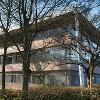 Snellius
Niels Bohrweg 1, Leiden
-
Computer Systems, Imagery & media
The Computer Systems, Imagery & media (CSI) research programme performs research on methods and techniques for the design, implementation and application of advanced computer systems, in particular parallel, distributed and embedded computer systems.
-
About the programme
The two-year Artificial Intelligence programme (120 EC) includes mandatory core courses and electives, as well as a Master's Thesis Research Project.
-
EU privacy and data protection law applied to AI
On 23 April, Andreas Häuselmann defended the thesis 'EU privacy and data protection law applied to AI: unveiling the legal problems for individuals'. The doctoral research was supervised by Gerrit-Jan Zwenne and Bart Custers.
-
Progressive Indexes
Interactive exploration of large volumes of data is increasingly common, as data scientists attempt to extract interesting information from large opaque data sets. This scenario presents a difficult challenge for traditional database systems, as (1) nothing is known about the query workload in advance,…
-
When speech becomes emotional: cross-cultural vocal emotion recognition in Dutch and Korean
On the 16th of December, Yachan Liang successfully defended a doctoral thesis. Leiden University Centre for Linguistics congratulates Yachan on this achievement!
-
Data Science & Artificial Intelligence
Data Science (DS) and Artificial Intelligence (AI) are omni-present and have the potential to be incorporated in various fields. However, in order to live up to this expectation, a good understanding of the techniques, their implications and limitations is required. In this minor you develop insights…
-
Travel plans
When should you plan to arrive in the Netherlands? Find out what to take into consideration when making your travel plans.
-
SAILS Lunch Time Seminar: Derya Soydaner
Lecture
-
Programme structure
The programme guarantees a thorough experience on the frontlines of physics research AND data science. It focuses on research areas where these fields overlap and in the process provides practical training of communicative and computer skills.
-
About the programme
The two-year Bioinformatics programme (120 EC) includes mandatory core courses and electives, as well as a Master's Thesis Research Project. PLEASE NOTE: The specialisation Bioinformatics will no longer accept new students after February 2026. If you're starting date is September 2026 or later, we…
-
Theory of Mind in Language, Minds and Machines: a Multidisciplinary Approach
PhD defence
-
Secure Distributed Machine Learning in Healthcare: A Study on FAIR, Compliance and Cybersecurity for Federated Learning
PhD defence
-
NWO subsidy for archaeological search engine: ‘There is no physical digging involved!’
When you want to analyse big quantities of archaeological data, you run into the issue that searching through excavation reports is extremely time-consuming. If only there existed a search engine specifically focused on querying these reports… But wait, work on an archaeological search engine focused…
-
Inauguration computer cluster GRACE at LIACS
By making two final network connections and entering a command, Martijn Ridderbos (Deputy Chairman of the Executive Board) , Geert de Snoo (Dean of the Faculty of Science) and Bart Hoogervorst (Head of Department Operations ICT Shared Service Centre) ceremonially booted up the university’s latest supercomputer,…
-
Marco Spruit wants to develop a language model to improve healthcare
By making smart use of available data, the health and care of people can be substantially improved. Marco Spruit wants to use language and machine learning in the coming years to identify and solve the biggest care issues in the region of The Hague. He has been appointed Professor of Advanced Data Science…
-
 Samira Rezaei Badafshani
Faculty of Science
rezaei@strw.leidenuniv.nl | 071 5272727
-
 Niloofar Raeyatdoost
Faculty of Science
n.raeyatdoost@liacs.leidenuniv.nl | 071 5274799
-
 Daan Pelt
Faculty of Science
d.m.pelt@liacs.leidenuniv.nl | 071 5274799
-
Jiajie Fan
Faculty of Science
j.fan@liacs.leidenuniv.nl | 071 5272727
-
 Kaifeng Yang
Faculty of Science
k.yang@liacs.leidenuniv.nl | 071 5274799
-
 David Von Dollen
Faculty of Science
d.von.dollen@liacs.leidenuniv.nl | 071 5277058
-
 Fu Xing Long
Faculty of Science
f.x.long@liacs.leidenuniv.nl | 071 5274799
-
Álvaro Serra-Gómez
Faculty of Science
a.serra-gomez@liacs.leidenuniv.nl | 071 5272727
-
 Erwin Bakker
Faculty of Science
e.m.bakker@liacs.leidenuniv.nl | 071 5277115
-
Armel Lefebvre
Faculty of Science
a.e.j.l.lefebvre@liacs.leidenuniv.nl | 071 5272727
-
Xiaohan Wei
Faculty of Science
x.w.wei@liacs.leidenuniv.nl | 071 5274799
-
 Dani Irawan
Faculty of Science
d.irawan@liacs.leidenuniv.nl | 071 5277061
-
 Andre Deutz
Faculty of Science
a.h.deutz@liacs.leidenuniv.nl | 071 5277071
-
 Marie Kempkes
Faculty of Science
m.c.kempkes@liacs.leidenuniv.nl | 071 5274799
-
Next quantum computer comes to the Netherlands
Europe's latest quantum computer is set to arrive in the Netherlands. The Dutch IT cooperative, SURF, which supports education and research institutions, has secured funding from the European EuroHPC programme to make this possible. Researchers from Leiden University will play a key role in the project,…
-
Monthly Reads | Project 0100
Each month we will be spotlighting material we have been reading, or that have been recommended to us that relate to AI and a particular theme.
-
Computational facilities
Beowulf clusters looking for new frontiers.
-
Podcast series Computers don't byte
Leading computer scientists from a variety of fields share their expertise and insights. Dive into the minds of these researchers and learn about real-world applications, the future of AI and related technologies and cutting-edge research. From chatbots to cybersecurity, from quantum to children's stories,…
-
IN THE BEGINNING WAS THE SOUND
How can we understand the drum-set – and thus drummer – as technological? How have technological developments affected change in drum-set performance and drum-set construction? Are the relationships between new technologies and the drummer symbiotic, or one way? To what extent are instruments and (reactive)…
-
Two ERC Consolidator Grants for Leiden researchers
Research on quantum computers and Islamic charities: two Leiden researchers have received a Consolidator Grant from the European Research Council.
-
Multi-objective Evolutionary Algorithms for Optimal Scheduling
Multi-objective optimization is an effective technique for finding optimal solutions that balance several conflicting objectives. It has been applied in many fields of our world, because practical problems usually have more than one desired goal. For example, developing a new vehicle component might…
-
Inhibitor Selectivity: Profiling and Prediction
Less than 1 in 10 drug candidates that enter phase 1 clinical trials actually gets approved for human use.
-
Astronomy and Data Science (MSc)
The Astronomy and Data Science master’s specialisation at Leiden University combines advanced Astronomy courses with relevant courses from the Computer Science programme at Leiden University.
-
OSTrails
OSTrails is a Horizon Europe project enhancing how scientific knowledge is managed and assessed through a FAIR, open system. The Dutch pilot, led by SURF and CWTS, focuses on improving machine-actionable Data Management Plans and linking them with scientific knowledge graphs to boost research interoperability…
-
Interested in sustainable innovation and data?
Are you curious about how science and technology contribute to a sustainable and innovative future? At Leiden University, you’ll explore the world of data, natural laws and living systems. From mathematics to artificial intelligence, from climate challenges to high-tech innovation: you’ll learn to analyse…
-
ELSA Lab Defence
Embedding ethical legal and societal aspects for responsible military AI.
-
Connecting conditionals: a corpus-based approach to conditional constructions in Dutch
On the 26th of January, Alex Reuneker successfully defended a doctoral thesis. The Leiden University Centre for Linguistics congratulates Alex on this achievement!
-
To explore the drug space smarter: Artificial intelligence in drug design for G protein-coupled receptors
Over several decades, a variety of computational methods for drug discovery have been proposed and applied in practice. With the accumulation of data and the development of machine learning methods, computational drug design methods have gradually shifted to a new paradigm, i.e. deep learning methods…
-
Programme structure
The High-Tech Innovation specialisation consists of a 60 EC track alongside the students' core MSc programme: Astronomy, Chemistry, Computer Science, Mathematics and Physics.
-
Replicate yourself in the ‘Virtual Identity Lab’
How do humans construct their self?
-
Hybrid vesicles
Synthetic cells, also known as artificial cells or protocells, have wide ranging applications from drug delivery vectors to cell models. In biotechnology they can function as micro- or nanoreactors with possible applications in biocatalysis and photocatalysis. Phospholipids are by far the most commonly…
-
Finding and valorizing new antibiotics using AI
Antibiotics are a class of medicine most people take for granted. But pathogenic bacteria are becoming more and more resistant to our antibiotics, and this poses a great challenge for future treatments. There is thus a great societal need to identify new molecules that can address new targets and be…
-
Synthetic cells
Synthetic or artificial cells are vesicles, often lipid vesicles, with wide ranging applications from drug delivery to nanoreactors in biocatalysis. We are developing polymer-lipid hybrid vesicles for applications in compartmentalised biocatalysis, in which the polymer has been shown to greatly enhance…