416 search results for “chemical weapons” in the Staff website
-
Gravitation funding for five projects with Leiden researchers
The Advanced Nano-electrochemistry Institute Of the Netherlands (ANION) consortium will receive 23.6m euros in Gravitation funding for research on important electrochemical processes for energy transition. An additional four consortia with members from Leiden have also been awarded funding.
-
‘Doing a PhD is never boring!’ How Guido Stam built a microscope that can measure bacteria without causing harm
A microscope with incredible sharpness that leaves samples unharmed – Guido Stam helped develop one. During his PhD research, he combined light and electrons to study biological samples. ‘We can now measure things that simply weren’t possible before.’
-
Leiden students develop highly contagious card game
Infecting each other with viruses and bacteria while protecting yourself with medicines and vaccinations. Sounds like a fun evening, right? Master students Life Science & Technology Rafael Jezior and Dennis de Beeld certainly think so. Together, they developed ImmunoWars: an exciting card game based…
-
Students help make Maldives more fertile
Its idyllic setting and white sandy beaches have made the Maldives a hotspot for tourists. This provides an income but is a problem for the fragile natural environment. Students from various universities worked with the local people to make the soil more fertile. How did they go about it?
-
Bacteria stunt with established plant-soil feedback theory
‘What I find most alluring about soil life is that you can steer it,’ researcher Martijn Bezemer of the Institute Biology Leiden (IBL) reveals. ‘You can ask: What do you want? And then I can transform the soil into something you need. At least, that is what we thought.’
-
Assessing total environmental impact is becoming even more important
Life cycle assessment (LCA) reveals the total environmental impact of products or production processes, and EU rules are going to make this even more important.
-
Stunning James Webb images show birth and death of massive stars
The James Webb Space Telescope continues to surprise us with stunning pictures, but of what exactly? Astronomer Nienke van der Marel shows with three images how massive stars lead short but explosive lives.
-
Jasper's Day
On January 1st Jasper Knoester started as our new dean. How is he finding it? What kinds of things is he doing and what does his day look like? In each newsletter, Jasper gives a peek into his life as dean.
-
Astronomy through a pinhole
You can make some astounding images using just a box with a hole. Inspired by the celebration of Leiden as the European City of Science, Professor Matthew Kenworthy left several pinhole cameras across the Observatory over the course of 2021. This is how the simplest devices may uncover the greatest…
-
Improving nature’s antibiotic
'What nature made isn’t necessarily an optimized medicine to use in the human body,’ says Professor of Biological Chemistry Nathaniel Martin. That’s why a group of Leiden researchers is making a chemistry-based improved version of the frequently used antibiotic vancomycin. They received an NWO NACTAR…
-
From droplets in the freezer to the inception of a potent new antibiotic
What started as an idea during a social gathering led to an unexpected breakthrough in research on resistant bacteria. Biologists and chemists from Leiden developed a new substance that proves to be effective against bacteria resistant to antibiotics. They published their discovery in Nature Chemist…
-
Starting the new year together: these are the winners of faculty awards
A beautiful speech by vice-dean Bart de Smit, a mini-lecture on exoplanets and the presentation of three faculty awards. That's how we started the new year at the faculty. Together with colleagues and students, we raised our glasses to a new year full of great collaborations, science and education.
-
Contributing to cancer research in your own way: three PhD candidates on their work within Oncode Accelerator
Accelerating the development of new cancer medicines by joining forces—that’s the mission of Oncode Accelerator, a Dutch consortium that recently welcomed three Leiden-based PhD candidates. Under the guidance of Gerard van Westen, Marc Boef, Remco van den Broek, and Lucina-May Nollen are exploring how…
-
Lost sulfur in the universe found in salt on dust and pebbles
An international team led by astronomers at Leiden University has shown in laboratory experiments that sulfur can bind with ammonium under icy cosmic conditions and form a salt that sticks to dust and pebbles. The resulting sulfur salt not only helps to explain the mystery of the missing sulfur gas,…
-
News but nothing new: many pesticides in Dutch swimming and natural waters
There has been a lot of media attention for the report recently completed by the Institute of Environmental Sciences (CML) from Leiden University. However, it has long been known that Dutch surface water contains too many toxic pesticides. ‘We will have to improve our ways of life together with many…
-
These colleagues keep you safe: ‘Being an emergency responder is useful outside of work too’
Do you know what to do if a rubbish bin catches fire, a student takes ill or a colleague falls off their bike? Our emergency responders do. They are ready to evacuate buildings, fight fires and offer first aid. Why not join the team?
-
‘I am curious and full of passion for understanding molecular chemistry’
Since May, Assistant professor BioTherapeutics Lu Su works in our faculty. Although she is still young, she already worked in many different fields and co-operated on two publications in big scientific journals. How did she become so successful and what motivates her to keep researching the possibilities…
-
From discovery to business: 'In the lab, we often don't realise that we are working to help an immense number of patients'
'It gave our team a big boost to hear that our work was valuable,' says medical chemist Elmer Maurits about the moment they won the Venture Challenge. With their company Iprotics, they want to develop a drug that can better treat patients with autoimmune diseases and blood cancers. 25,000 euros of prize…
-
The energy transition under the nanoscope: Gravitation funding for ANION project
Bringing together chemists and physicists to thoroughly investigate how electrochemical processes work on the smallest scale. That is the goal of the new Advanced Nano-electrochemistry Institute of the Netherlands, or ANION for short. The consortium receives a Gravitation funding of 23.6 million euros…
-
How to make an old antibiotic a hundred times more potent
Nathaniel Martin, Professor of Biological chemistry, wondered what would happen if you take an antibiotic that has been known for 70 years and try to improve it with the latest tools of modern chemistry. Turns out it can become up to a hundred times more potent and prevent the growth of some drug-resistant…
-
Inventors with a nose for technology
Amidst the lathes and welding machines of the Fine Mechanics Department, Emiel Wiegers is working concentratedly on a metal cylinder. He and his colleagues design and construct components for researchers' set-ups. ‘We are a bunch of inventors who enjoy helping the researchers in our Faculty.’
-
For the first time, astronomers witness the dawn of a new solar system
International researchers have, for the first time, pinpointed the moment when planets began to form around a star beyond the Sun. Using the ALMA telescope, in which the European Southern Observatory (ESO) is a partner, and the James Webb Space Telescope, they have observed the creation of the first…
-
LION Image Awards
On 15 January, the winner of the famed LION Image Award will be announced. Submissions ranged from the famous 3d printed microboat to an eerily abstract graph depicting a Majorana fermion.
-
Man-made antibodies may change the future of drug development – here’s why
Sometimes an idea seems so logical and elegant at first glance, that you later wonder why no one thought of it before. Two researchers from LACDR have teamed up to develop a completely synthetic alternative to antibodies—one that mimics their size, shape and function, but which is cheaper, more stable,…
-
Fighting gliobastoma brain tumours with two grants
Few researchers see potential in research on glioblastoma, an incurable brain tumour. Alexander Kros brought together colleagues who are up to the challenge. European research funder ERC recently made 10.6 million euros available, a year earlier NWO provided 3 million euros. ‘In six years, we certainly…
-
Faculty of Science kicks off the Academic Year with a vibrant talk show
The Faculty of Science launched the new Academic Year on 21 September with a special We Are Science talk show. Dean Paul Wouters starred in his role as talk show host and received a wide variety of guests.
-
Tirong Guo discovered materials that bring efficient artificial photosynthesis closer
After hard work in the lab, Chemist Tirong Guo has developed a group of materials that provide a stable and efficient foundation for artificial photosynthesis. Will this enable the large-scale production of hydrogen and other useful compounds in the most sustainable way possible? Guo will defend her…
-
Surprise: No methane on the night side of exoplanet WASP-43b
The night side of exoplanet WASP-43b, to the surprise of astronomers, does not appear to contain methane. It is likely that extreme winds do not allow enough time for methane to form in detectable amounts. This is the conclusion of an international team of scientists, with Leiden and Amsterdam contributions,…
-
Powerful new Leiden 'super antibiotic' may overcome resistance
The prestigious journal Science Translational Medicine has published a study by researchers from the Institute of Biology Leiden (IBL) on a potent new antibiotic that can overcome resistance. ‘The idea was to tweak the original antibiotic and create a next-generation drug’, says Nathaniel Martin, professor…
-
New education director for LST: 'I want to guard the quality of this unique programme'
Marco van Eijk is the new Educational Director of the Bachelor's Life Science and Technology (LST). Since 1 September he has been responsible for ensuring the quality of the programme. ‘LST is a unique programme and everyone has to keep working hard for that. That is my main task.’
-
Studying ferritin: ‘we hope this will eventually give more insight into Alzheimer's’
Martina Huber, Jacqueline Labra Munoz research Alzheimer's disease. They study ferritine, iron storage in the brain. An inbalance of iron could play a role in this form of dementia.
-
‘You should never cut corners when it comes to staff safety’
When Robin Hartman walks through or around the buildings of the Faculty of Science (FWN), he’s always alert. He looks up, around, and behind him, constantly aware of his surroundings. As the head of emergency response (BHV), the safety of staff and students is his top priority.
-
The lifecycle of a cigarette filter
The university is launching a campaign to focus extra attention on our smoke-free university locations. The University is using aptly named cigarette barrels to try to show clearly just how many cigarette filters are being saved from the environment. How harmful are these cigarette filters to the e…
-
Supermassive black holes: how do you study something that is invisible?
How are supermassive black holes born? That is the question astronomer Elena Maria Rossi is trying to answer. But how do you investigate something you cannot see?
-
ERC Consolidator Grants for six Leiden researchers
From the effects of hormone fluctuations in women via the interior structure of giant planets to the prehistory of the languages: six Leiden researchers have been awarded a Consolidator Grant by the European Research Council.
-
Measuring water with your smartphone
You might take photos and selfies with your phone's camera, or scan a QR code. But there is much more you can do with it. Astronomer Olivier Burggraaff developed a phone attachment that allows you to take measurements of surface water with your smartphone. He will receive his PhD on 13 December.
-
Improving safety assessment of nanoparticles
How safe are the nanoparticles in transparent sunscreen, anti-odour socks and bacteria-resistant plasters? Although microbes are present on all organisms, the tools that estimate the safety of nanomaterials still hardly take them into account. Bregje Brinkmann explored the role of these microbes during…
-
Student Talk: Venus as Potentially Habitable Planet
Lecture
-
Transformation and sublimation of interstellar ices: insights from laboratory experiments and astronomical observations
PhD defence
-
Civility, not opinions, was the real surprise in student debate
The student debate in Leiden’s Stadsgehoorzaal promised to be ‘the key to your vote’. That may sound hyperbolic, but what this well-attended debate did achieve was increased trust in politics. ‘They even let each other finish their sentences’, the flabbergasted students concluded at the end.
-
How to make green hydrogen
Lecture, Tuesday Talks: Science Insights
-
LCN2 Seminar October 2023
Lecture
-
Can patterns save ecosystems from collapse?
Lecture, Tuesday Talks: Science Insights
-
€10.6 million for innovative toolboxes to tackle brain cancer
Researchers at the Universities of Amsterdam (Uva) and Leiden together with the Netherlands Cancer Institute and Oncode Institute have received a €10,6 million ERC Synergy Grant to develop innovative therapeutic approaches to target glioblastoma. This is a deadly primary brain tumour for which no curing…
-
In memoriam Jan Zaanen 1957-2024: The universe in a speck of rusting copper
This Thursday, January 18th 2024, our esteemed colleague Jan Zaanen passed away. Jan was one of our star scientists, larger than life, with an unabashed, boisterous drive for the best of physics at the Institute Lorentz, at the Leiden Institute of Physics and in the full international scientific community.…
-
Thiosugars: Reactivity, methodology and applications
PhD defence
-
Multifunctional Polypept(o)ide Miktoarm Star Polymers for Advanced Drug Delivery
PhD defence
-
Bridging the gap between physics and chemistry in early stages of star formation
PhD defence
-
Opening Exposome-Scan research facility
Conference, Opening
-
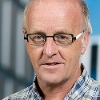 Willie Peijnenburg
Faculty of Science
peijnenburg@cml.leidenuniv.nl | 071 5272727