320 search results for “chemist weapons en ethics” in the Staff website
-
How to make an old antibiotic a hundred times more potent
Nathaniel Martin, Professor of Biological chemistry, wondered what would happen if you take an antibiotic that has been known for 70 years and try to improve it with the latest tools of modern chemistry. Turns out it can become up to a hundred times more potent and prevent the growth of some drug-resistant…
-
The energy transition under the nanoscope: Gravitation funding for ANION project
Bringing together chemists and physicists to thoroughly investigate how electrochemical processes work on the smallest scale. That is the goal of the new Advanced Nano-electrochemistry Institute of the Netherlands, or ANION for short. The consortium receives a Gravitation funding of 23.6 million euros…
-
Sugar chemistry – Wouter Remmerswaal’s unrelenting pursuit of understanding
The dark matter of biology: clumps of sugar molecules that, for example, form sugary webs around pathogens. We know very little about them. Wouter Remmerswaal threw all his talent into the challenge – both in the lab and as a modeller – and succeeded. He received his PhD on 12th September.
-
Gravitation funding for five projects with Leiden researchers
The Advanced Nano-electrochemistry Institute Of the Netherlands (ANION) consortium will receive 23.6m euros in Gravitation funding for research on important electrochemical processes for energy transition. An additional four consortia with members from Leiden have also been awarded funding.
-
Tracking the origin and evolution of molecules in space
How do molecules originate and evolve in space? And how does that ultimately determine the chemical composition of planets and their atmospheres? The Dutch Astrochemistry Network (DANIII) receives 1.6 million euros from NWO to find out. A large group of Leiden astronomers and chemists is contributing:…
-
How to hijack natural destruction in cells: ‘We need to understand it through and through’
Destroying proteins from the Golgi apparatus of the cell in a controlled manner. That is the focus of chemist Marta Artola’s pioneering research. By developing a groundbreaking technology to target specific proteins in the Golgi, Artola aims to unlock new ways for drug development. For this ambitious…
-
The Nobel Prize in Chemistry went to an AI model (and rightly so)
Not experiments and lab coats, but computers and artificial intelligence: this year's Nobel Prize in Chemistry went to the inventors of the groundbreaking AI model, AlphaFold. This programme accurately predicts protein structures based on their genetic code—a crucial step in understanding biological…
-
Tirong Guo discovered materials that bring efficient artificial photosynthesis closer
After hard work in the lab, Chemist Tirong Guo has developed a group of materials that provide a stable and efficient foundation for artificial photosynthesis. Will this enable the large-scale production of hydrogen and other useful compounds in the most sustainable way possible? Guo will defend her…
-
Gerard van Westen Invited as Speaker at Palace Symposium ‘Biological Design Through Artificial Intelligence’ Highlighting a Sustainable Future
AMSTERDAM – On the evening of Tuesday, November 19, the Palace Symposium took place at the Royal Palace Amsterdam, with this year’s theme being ‘Biological Design Through Artificial Intelligence’. His Majesty the King and Her Majesty Queen Máxima hosted the event, and Princess Beatrix was also present…
-
Hunt for cheap metals that help store sustainable energy
Storing energy is one of the biggest challenges in the energy transition. Hydrogen could be a solution. Chemist Daan den Boer is researching how to make the chemical reaction needed to store energy in hydrogen as cheap and efficient as possible.
-
Sebastian Pomplun joins Oncode Institute to accelerate breakthroughs in cancer research
Sebastian Pomplun manages to reach proteins with drugs even where this was thought impossible. That is why he and his research group have been allowed to join Oncode Institute. With nine others, he had been selected from 72 applicants to contribute to Oncode Institute's mission: to accelerate breakthroughs…
-
Campus Square renamed: Rosalind Franklin Square
On World DNA Day 25 April, Leiden University is pleased to focus the spotlight on Rosalind Franklin, whose name was given earlier this month to the Campus Square on the Leiden Bio Science Park. This square will now be known officially as the Rosalind Franklin Square.
-
ERC-grant for Sebastian Pomplun to cure disease by controlling gene expression with synthetic transcription factors
Sebastian Pomplun receives an ERC starting grant of 1.85 million Euros in five years. He wants to develop synthetic transcription factors that can enter cells and activate or deactivate specific genes. For example to disrupt cancer-related processes or to trigger the production of an important missing…
-
Our ties with Israeli universities
Leiden University has recently received various petitions from students and staff concerning our ties with Israeli universities. We have also held extensive discussions with the University Council in response to questions raised on the subject. We think it important that our partners and research projects…
-
Symposium on technology and privacy should offer new insights
Video conferencing from your sitting room and algorithms on social media that know your interests: new technology is an increasingly integral part of our lives. At the same time there is a growing call to protect our privacy, and this is causing friction, at the University too. In part because of the…
-
 Michael Richardson
Faculty of Science
m.k.richardson@biology.leidenuniv.nl | 071 5275215
-
 Martin Berger
Faculty of Archaeology
m.e.berger@arch.leidenuniv.nl | 071 5272727
-
A Dutch Robespierre? Dissertation sheds new light on Leiden revolutionary Pieter Vreede
Leiden patriot Pieter Vreede fought for greater popular influence. Historian Dirk Alkemade reveals how this pioneer used radical means to shape Dutch democracy.
-
A call about cameras and privacy
Technology and privacy, trust and mistrust. A discussion about this broke out when the University installed scanners and students protested. On Wednesday 2 February experts from Leiden University will explore this topic at the eponymous symposium. We called Roy de Kleijn, as a computer scientist and…
-
Leiden researchers predict seller success on dark web markets
Researchers from Leiden University have developed a method to predict which sellers will be successful in illegal online marketplaces. This could help the police track down big players on the dark web, the hidden part of the internet.
-
Leiden technology research receives funding from NWO and businesses
A CT scanner to treat eye cancer, energy-efficient software for the future and a test to identify male chick eggs. Three projects by researchers from Leiden University are to receive funding from research funder NWO’s Open Technology programme, to which the business sector also contributes.
-
Minors in AI, Data & Digitialisation in Delft, Leiden and Rotterdam
The universities of Delft, Leiden and Rotterdam are working together to show their students what artificial intelligence (AI) means for their own field. Three AI minors will start in the 2022 – 2023 academic year and will answer questions such as: ‘How best can you use AI in your research discipline?’…
-
Research with animals
For conducting experiments involving animals, you need a project license and a valid research plan. On this page, you will read what this entails and how to submit these documents. You will also find other relevant information regarding conducting research involving animals here.
-
Introduction to Qualitative Interviewing for PhD Candidates
Research, Transferable skills
-
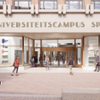 Spui Campus
Spui 5, The Hague
-
Scouring the brain for causes of psychiatric illnesses
What happens in the brains of people with psychiatric illnesses? With a €23.23 million gravity grant, scientists from different fields will search for biological causes over the next decade. ‘By joining forces, we hope to improve diagnosis and treatment for patients with these diseases.’
-
Sibel Bahtiri is one of the new Faces of Science: ‘I want to show how we’re finding alternatives to animal testing’
PhD candidate Sibel Bahtiri is one of the new Faces of Science. In videos and blogs, she will show what life is like as a young researcher.
-
Do the security check before entering into international collaborations
Security
-
 Hans Mol
Faculty of Humanities
h.mol@hum.leidenuniv.nl | 071 5271646
-
Hanna Swaab
Faculty of Social and Behavioural Sciences
hswaab@fsw.leidenuniv.nl | 071 5274060
-
 Annelies Schulte Nordholt
Faculty of Humanities
a.e.schulte@hum.leidenuniv.nl | 071 5272170
-
 Maria Gabriela Palacio Ludeña
Faculty of Humanities
m.g.palacio.ludena@hum.leidenuniv.nl | 071 5272189
-
 Gelijn Molier
Faculteit der Rechtsgeleerdheid
g.molier@law.leidenuniv.nl | 071 5277592
-
 Peter van Bodegom
Faculty of Science
p.m.van.bodegom@cml.leidenuniv.nl | 071 5277486
-
 Henning Lahmann
Faculteit der Rechtsgeleerdheid
h.c.lahmann@law.leidenuniv.nl | 071 5278838
-
 Hester Ruigendijk
Faculty of Social and Behavioural Sciences
h.a.h.ruigendijk@fsw.leidenuniv.nl | 071 5271361
-
Werken aan een effectiever malariavaccin
In het Leids Universitair Medisch Centrum wordt gewerkt aan de ontwikkeling van een nieuw malariavaccin dat effectiever is dan de huidige vaccins.
-
Finally solved: how the body's own marijuana spreads through the brain
Since its discovery thirty years ago, it remained a mystery: how does the body’s own marijuana move between nerve cells in the brain? Mario van der Stelt and his research group have now uncovered the answer. This insight could aid the development of new treatments for pain and neurological disorders…
-
Bacteria full of potential: searching for new antibiotics through genetic on–off switches
Collaborating and learning from other fields – that is what bioinformatician Hannah Augustijn enjoys most about doing research. During her PhD at Leiden University, she developed new ways to search within bacteria for the antibiotics of the future.
-
Hunting for life’s building blocks at minus 250 degrees Celsius
James Webb life’s building blocks
-
Ecologist Michiel Veldhuis is the Discoverer of the Year 2020
Michiel Veldhuis received the most public votes for the C.J. Kok Public Award and may therefore call himself Discoverer of the Year. Veldhuis researches how climate change affects savannah ecosystems in Africa and how we can protect them.
-
‘Science isn’t about memorising a textbook’
How do you engage students? Sander van Kasteren knows how to do that like no other. ‘He compares immune cells to Pokémon and doesn’t just give information; he tells stories,’ students say about their favourite lecturer, Sander van Kasteren. The Professor of Molecular Immunology passionately teaches…
-
A foldable smartphone? STIBNITE searched for the perfect semiconductor
Roll-up solar panels, bendable phone displays, or better computer chips… The EU project STIBNITE investigated the next generation of semiconductors, made from organic materials based on carbon, nitrogen, and boron. The project has now concluded. During the Open Science Debate on 1 July, the group will…
-
Promising new technique to treat cancer receives NWO grant
Biological chemist Nathaniel Martin and his team received an NWO grant to examine how blocking a specific enzyme in our body, NNMT, could be helpful in the treatment of some cancers. Trials with mice have been promising, and together with the Netherlands Cancer Institute, Martin wants to take the next…
-
New technology could make hard-to-recycle plastics recyclable
Cookware handles, electrical plugs, brake pads. Unlike other plastics, these ‘thermosets’ cannot simply be melted down and reshaped, making them difficult to recycle. Chemist Roxanne Kieltyka and her team are now exploring a way to make these materials recyclable, potentially transforming the way we…
-
Seeking new concepts to treat diseases
Scientific Director of the Leiden Academic Centre for Drug Research (LACDR) Hubertus Irth: ‘We test substances and look for new concepts for treating disease.’
-
Planet-forming discs around young low-mass star differs fundamentally from one around sun-like star
Using the James Webb Space Telescope, an international team of researchers, including Leiden Professor of Molecular Astrophysics Ewine van Dishoeck, has discovered a palette of hydrocarbons in a planet-forming disc around a young, low-mass star. The results confirm that discs around very lightweight…
-
Leiden-developed drug candidate ready for final clinical trial phase
Bringing your drug candidates to patients is what many academic chemists dream about, but the road to this goal is long and bumpy. Now, Leiden small molecule nizubaglustat is ready for phase 3 clinical trials. This is thanks to a €132 million funding secured by the biotech spin-out Azafaros.
-
ERC Advanced Grant for six Leiden researchers
The European Research Council (ERC) has awarded an Advanced Grant to six Leiden researchers. It awards these significant grants to established principal investigators for ground-breaking, high-risk research.
-
Academic freedom, protests and a safe campus: where are we and how are we going to move forward?
Leiden University has had a turbulent week. There have been protests inside and outside our buildings that have evoked reactions, and students and staff have felt unsafe. We want with this message to look back at the past week and look forward to the future. What happened and how do we now want to move…