290 search results for “e cell” in the Student website
-
 T.E. Jaroszek
Faculty of Humanities
t.e.jaroszek.2@umail.leidenuniv.nl | +31 71 527 2031
-
 Luisa Pinto e Netto
Faculteit der Rechtsgeleerdheid
l.c.pinto.e.netto@law.leidenuniv.nl | 071 5272727
-
 Rita de Sousa e Silva
Faculty of Science
a.r.de.sousa.e.silva@cml.leidenuniv.nl | 071 5272727
-
 Johannes (Hans) G.E.M. Fraaije
Faculty of Science
j.fraaije@lic.leidenuniv.nl | 071 5272727
-
Wilhelmina E. Jansenfonds
Master
-
Japanese Brush Techniques (sumi-e)
Arts and leisure, Arts and leisure
-
 Micha Drukker
Faculty of Science
m.drukker@lacdr.leidenuniv.nl | 071 5276271
-
 Dennis Claessen
Faculty of Science
d.claessen@biology.leidenuniv.nl | 071 5275052
-
 Willem Fibbe
Faculty of Medicine
w.e.fibbe@lumc.nl | 071 5262271
-
 Frank Schaftenaar
Faculty of Science
f.h.schaftenaar@lacdr.leidenuniv.nl | 071 5276051
-
 Douwe Atsma
Faculty of Medicine
d.e.atsma@lumc.nl | 070 5262020
-
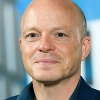 Erik Danen
Faculty of Science
e.danen@lacdr.leidenuniv.nl | 071 5274486
-
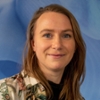 Noortje Dannenberg
Faculty of Science
n.dannenberg@biology.leidenuniv.nl | 071 5275075
-
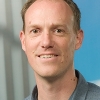 Joost Beltman
Faculty of Science
j.b.beltman@lacdr.leidenuniv.nl | 071 5274323
-
 Tessa Vergroesen
Faculty of Science
t.m.vergroesen@biology.leidenuniv.nl | 071 5272727
-
 Luuk Reinalda
Faculty of Science
l.reinalda@lic.leidenuniv.nl | 071 5272727
-
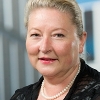 Ewa Snaar-Jagalska
Faculty of Science
b.e.snaar-jagalska@biology.leidenuniv.nl | 071 5272727
-
 Saloni Saxena
Faculty of Science
s.saxena@biology.leidenuniv.nl | 071 5274950
-
 Marjolein Crooijmans
Faculty of Science
m.e.crooijmans@biology.leidenuniv.nl | 071 5275075
-
How cells talk by pulling on a fibre network
Mechanics play a larger role in blood vessel formation, and other developmental biology, than previously thought. Cells appear to respond to mechanical signals, such as pressure. Through the extracellular matrix, a network of fibrous proteins, cells can supposedly exchange those mechanical signals over…
-
Bacteria without cell wall gobble up DNA from environment
A bacterium hiding from the immune system and picking up bits of DNA from its environment. The result: gaining new traits, such as better protection against antibiotics. Fortunately, we have not found such a damning scenario yet. However, PhD student Renée Kapteijn did find the first clues, which…
-
Greater understanding of specialised cell could prevent strokes
Ilze Bot wants to reduce the prevalence of cardiovascular diseases. Her research focuses on mast cells, which protect us from infections but can also make us ill.
-
forming embryo to cancer metastasis: the significance of collective cell movement
Luca Giomi has the first results of his ERC consolidator grant. He discovered that epithelial cells move collectively but in different ways, depending on the scale you look at. It is hexatic at small scales, and becomes nematic at larger scales: it is a multiscale order. This collective movement of…
-
 Arthur Ram
Faculty of Science
a.f.j.ram@biology.leidenuniv.nl | 071 5274914
-
 Christine Mummery
Faculty of Medicine
c.l.mummery@lumc.nl | 071 5269300
-
 Serkan Aslan
Faculty of Science
s.aslan@lacdr.leidenuniv.nl | 071 5275919
-
Stiffness and viscosity of cells differ in cancer and other diseases
During illness, the stiffness or viscosity of cells can change. Tom Evers demonstrated this by measuring such properties of human immune cells for the first time. ‘The stiffness of certain cells could be a way to make a diagnosis,’ Evers said. He defended his thesis on March 26th.
-
collagen to canvas: interactive artwork brings the world between our cells to life
What’s really happening in the space between the cells in your body? With the Collagen Canvas project, students from Leiden University invite you to explore this question by blending science with art. This interactive artwork immerses you in the dynamics of the extracellular matrix—the invisible structure…
-
First patient in the Netherlands successfully treated with stem cell gene therapy
Researchers from the Leiden University Medical Center (LUMC) have successfully used stem cell gene therapy to treat a baby with the severe congenital immune disorder SCID. An important milestone: it is the first time stem cell gene therapy of Dutch origin has been administered to a patient, and also…
-
How cells determine the fate of proteins (and can we do it too?)
Cells in our bodies are often threatened by errors in our own proteins. The FLOW consortium, comprising scientists from various institutions including Leiden, is poised to meticulously map out for the first time how cells control proteins, correcting or removing faulty ones. This endeavour holds promise…
-
 Joey Zuijdervelt
Faculty of Science
j.l.zuijdervelt@lacdr.leidenuniv.nl | 071 5276227
-
How to hijack natural destruction in cells: ‘We need to understand it through and through’
Destroying proteins from the Golgi apparatus of the cell in a controlled manner. That is the focus of chemist Marta Artola’s pioneering research. By developing a groundbreaking technology to target specific proteins in the Golgi, Artola aims to unlock new ways for drug development. For this ambitious…
-
Leiden chemists discover new ways in which single-celled organisms organise their DNA
It has only recently been discovered that single-celled organisms (bacteria and archaea) also have histones—proteins that structure DNA. Now, Leiden PhD candidate Samuel Schwab has found that the histones in these organisms are much more diverse than previously thought. Schwab and his colleagues describe…
-
 Peter Bouwman
Faculty of Science
r.j.p.bouwman@lacdr.leidenuniv.nl | 071 5276105
-
 Bas ter Braak
Faculty of Science
s.j.ter.braak@lacdr.leidenuniv.nl | 071 5272727
-
technique uncovers disease-related changes in tiny droplets within our cells
Understanding the behaviour of tiny droplets in our cells could aid the search for new treatments. A team of Leiden researchers has developed a groundbreaking method to study how these droplets transition from liquid to solid. This change plays a role in various diseases, including neurodegenerative…
-
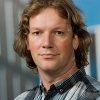 Joost Willemse
Faculty of Science
jwillemse@biology.leidenuniv.nl | 071 5274986
-
 Sylvia Le Dévédec
Faculty of Science
s.e.ledevedec@lacdr.leidenuniv.nl | 071 5274285
-
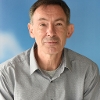 Herman Spaink
Faculty of Science
h.p.spaink@biology.leidenuniv.nl | 071 5275055
-
A tail with a twist: how the tokay gecko grows a completely new body part
When the tokay gecko loses its tail, a new one grows from resident stem cells at the stump. Each tissue type - muscle, bone, blood vessels and skin - develops from specific stem cells. This discovery by Luthfi Nurhidayat holds potential implications for advancing regenerative medicine in humans. Nurhidayat…
-
 Alireza Mashaghi Tabari
Faculty of Science
a.mashaghi.tabari@lacdr.leidenuniv.nl | 071 5274425
-
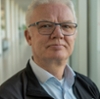 Bob van de Water
Faculty of Science
water_b@lacdr.leidenuniv.nl | 071 5276223
-
 Remko Offringa
Faculty of Science
r.offringa@biology.leidenuniv.nl | 071 5275097
-
 Cecile Herbermann
Faculty of Science
c.j.herbermann@lacdr.leidenuniv.nl | 071 5272727
-
 Ferdinand Teichert
Faculty of Science
f.m.a.teichert@lacdr.leidenuniv.nl | 071 5272727
-
 Nina Schulten
Faculty of Science
n.schulten@lacdr.leidenuniv.nl | 071 5272727
-
Max Fernkorn
Faculty of Science
m.fernkorn@lacdr.leidenuniv.nl | 071 5272727
-
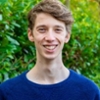 Ruben de Vries
Faculty of Science
r.j.de.vries@lacdr.leidenuniv.nl | 071 5276228
-
 Eliane Züger
Faculty of Science
e.a.k.zuger@lacdr.leidenuniv.nl | 071 5276227
-
 Yubin Guo
Faculty of Science
y.guo.11@lacdr.leidenuniv.nl | 071 5276227